

 Phoenix 24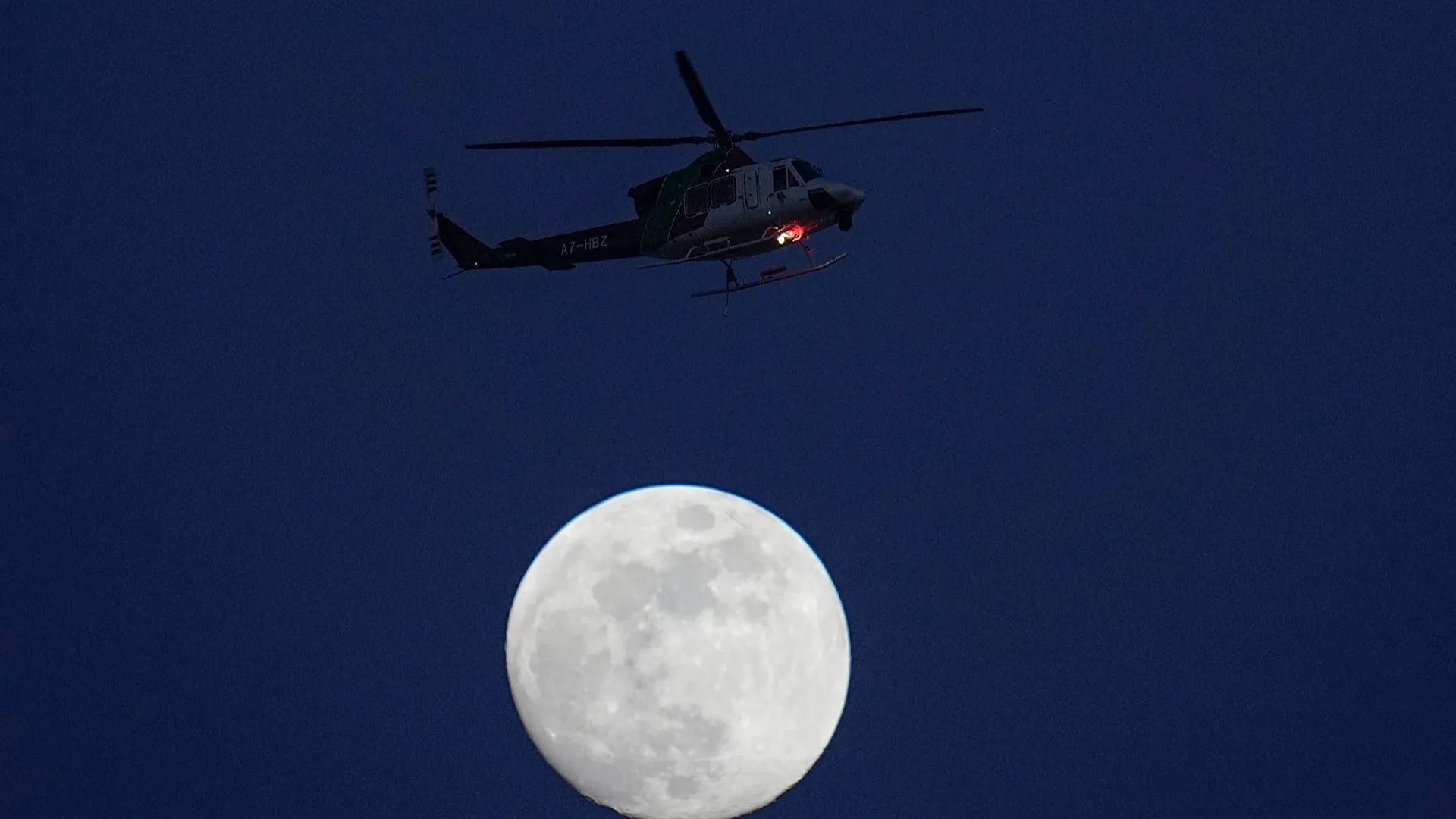
Training missions now carry strategic weight.
Doha, March 2026. A military helicopter crash in Qatari territorial waters has left seven people dead, including members of both Qatari and Turkish personnel, in an incident that underscores how even routine operations in the Gulf now unfold under the shadow of broader regional tension. Official accounts indicate the aircraft went down during a training mission, with early signs pointing to a technical failure rather than hostile action.
The composition of the victims matters. The dead reportedly included Qatari military personnel alongside Turkish military and technical staff, reflecting the depth of operational integration between both countries. This was not an isolated national exercise, but part of a defense relationship that has grown steadily more interdependent over the past decade. Turkey’s military footprint in Qatar has long symbolized more than bilateral cooperation. It represents a shared security architecture in which training, logistics and force readiness are increasingly fused.
At the technical level, the crash may appear to belong to a familiar category: an accident during routine activity. But in the current geopolitical climate, routine has become a relative concept. The Gulf is operating under heightened alert as tensions linked to Iran, the United States and Israel continue to reshape military calculations across the region. In that environment, training flights are no longer neutral exercises. They function as extensions of preparedness, deterrence and strategic signaling.
That is where the significance of the crash expands beyond aviation. Joint military activity between Qatar and Turkey is designed to reinforce regional defense capacity, particularly in contexts involving airspace protection, missile threats and rapid-response coordination. When an accident occurs within that framework, the questions do not stop at mechanical reliability. They also touch operational tempo, equipment strain and the pressure placed on crews working in a climate of sustained readiness.
There is a deeper structural layer as well. Qatar’s defense posture relies heavily on alliances, and Turkey is one of its most important military partners. That means risk is shared. A crash involving mixed crews is not simply a tragic event inside one armed force. It is a reminder that the burden of regional instability is now distributed across integrated security systems. When something fails, the consequences move across alliance lines as quickly as the cooperation itself.
Official responses have emphasized continuity, signaling that the incident will not alter the broader trajectory of Qatari-Turkish military cooperation. That is consistent with how defense partnerships behave under pressure. Accidents are publicly framed as technical setbacks, absorbed into the institutional narrative and managed in a way that avoids any suggestion of strategic weakness. The priority is to preserve confidence, both internally and externally.
Still, the more important reading lies beneath the official calm. Every accident in a high-alert environment becomes part of a larger stress pattern. Equipment fatigue, accelerated training cycles and geopolitical uncertainty interact in ways that do not always become visible immediately. A technical failure may explain the crash, but it does not fully explain the conditions in which such failures become more consequential.
The deeper story, then, is not only about one helicopter. It is about the environment through which it was flying. In a region where escalation remains a constant possibility, even training missions acquire strategic meaning. And when one of those missions ends in death, the event reveals more than operational loss. It exposes the pressure accumulating beneath the surface of a security order trying to look stable while preparing for the opposite.
La narrativa también es poder. Narrative is power too.