

 Phoenix 24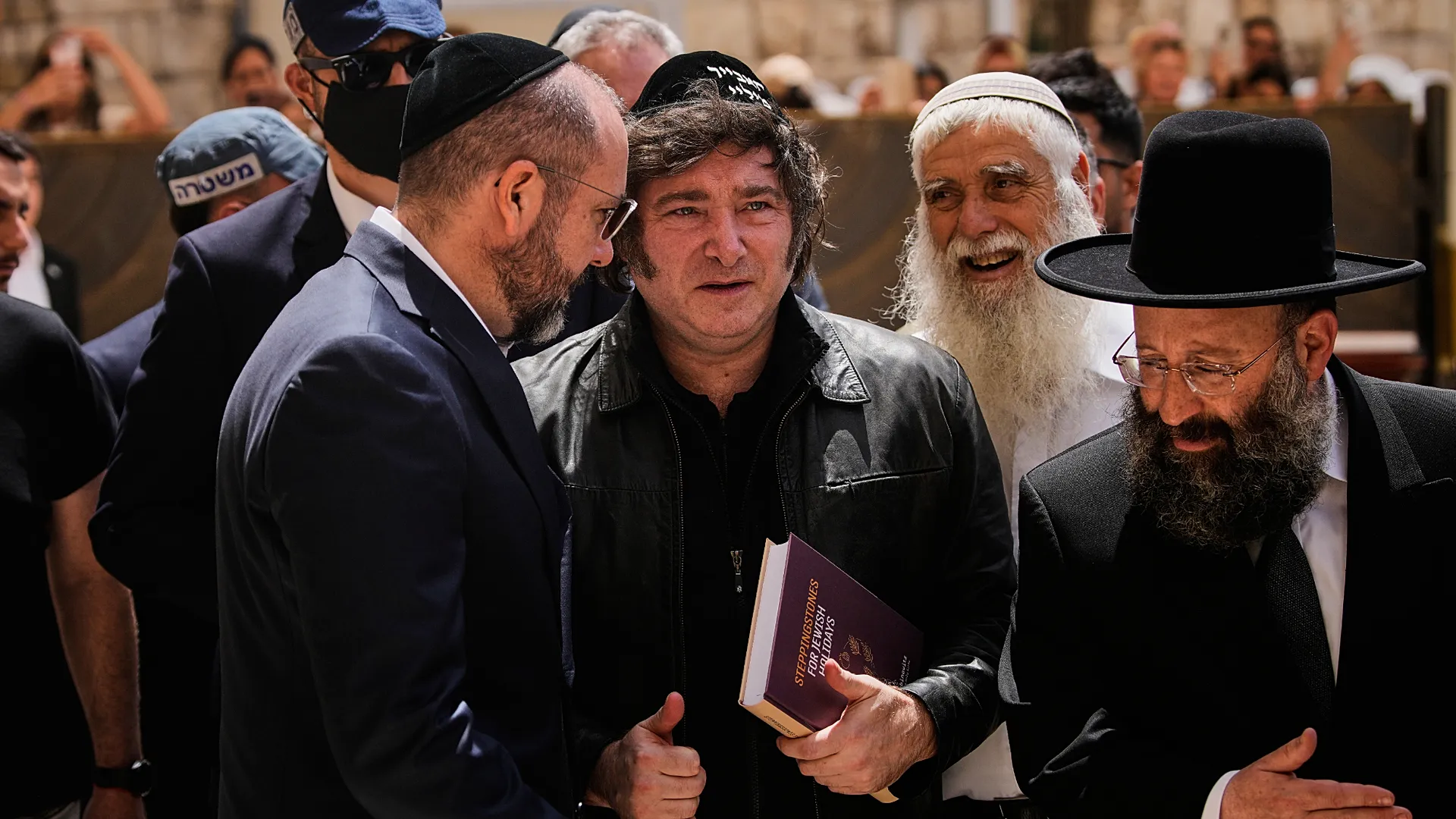
A medal can also redraw alliances.
Jerusalem, April 2026
Javier Milei’s reception of Israel’s presidential medal is more than a ceremonial gesture wrapped in diplomatic praise. It marks the consolidation of a foreign policy line that has moved Argentina into a narrower and more exposed circle of governments willing to align with Israel in explicit political terms. The language surrounding the distinction, centered on Milei’s “moral clarity,” is not accidental. It signals that Israel is rewarding not only bilateral warmth, but also the public firmness of a leader who has chosen visibility over ambiguity in one of the most polarized theaters of contemporary geopolitics.
That matters because Milei’s relationship with Israel has not been built through routine protocol or cautious incrementalism. Since taking office, he has sought to frame the bond as part of a larger worldview, one that links civilizational rhetoric, ideological conviction, anti-terror language, and a sharper alignment with Western strategic narratives. In Latin America, where governments often prefer rhetorical flexibility on Middle East affairs, Milei has taken the opposite route. He has treated support for Israel not as a secondary diplomatic file, but as a defining expression of his broader international identity.
The medal therefore functions as more than recognition. It is a signal to multiple audiences at once. For Israel, it elevates Milei as proof that outspoken international backing remains possible even in a period marked by reputational strain, diplomatic criticism, and growing global discomfort over the conduct of war. For Milei, it offers an opportunity to reinforce his image as a leader who translates ideological posture into statecraft. The symbolism is reciprocal, but the strategic utility is mutual. Both sides gain from transforming political affinity into a visible architecture of legitimacy.
This is where the event becomes larger than the ceremony itself. Diplomatic honors often appear ornamental, but in moments of global tension they can serve as instruments of narrative construction. By distinguishing Milei in these terms, Israel is effectively placing him inside a moral and geopolitical frame that exceeds bilateral relations. He is being presented not simply as an ally, but as a leader whose support carries ethical and strategic significance. In international politics, that kind of framing matters because it shapes how alliances are read, amplified, and remembered.
For Argentina, however, such clarity comes with consequences. The stronger the symbolic alignment, the more difficult it becomes to preserve diplomatic elasticity in a region that remains fragmented in its approach to Israel and the broader Middle East. Some Latin American governments have taken openly critical positions, others have tried to preserve a cautious balance, and many continue to operate through calculated ambiguity. Milei has chosen a path that rejects that ambiguity altogether. That makes Argentina more legible on the global stage, but it also places the country more directly inside polarized international currents.
There is a domestic dimension as well. Milei’s political style thrives on sharp distinctions, symbolic confrontation, and the rejection of neutral language. His foreign policy increasingly mirrors that same logic. Instead of presenting diplomacy as a field of calibrated nuance, he presents it as an arena where moral definition is itself a strategic asset. That approach has clear advantages in terms of visibility and brand coherence. It allows him to project conviction, differentiate himself from regional predecessors, and reinforce the image of a presidency that prefers ideological certainty to institutional hesitation.
Yet this model of statecraft also narrows the margins for repositioning. The more a leader fuses symbolic gestures with geopolitical doctrine, the harder it becomes to later soften tone without appearing inconsistent. A medal, in that sense, is not just a reward. It can also become a marker of commitment. What is being honored publicly in Jerusalem today may later shape expectations in multilateral forums, bilateral negotiations, and future crises where silence or distance would once have been diplomatically available. Recognition creates memory, and memory creates pressure.
That is why this episode should not be read as a decorative scene in a foreign visit. It is part of a deeper transformation in how Milei is choosing to situate Argentina in the international system. He is wagering that ideological sharpness can produce diplomatic capital, that symbolic alignment can be converted into strategic relevance, and that visibility itself can function as power. Israel, for its part, is validating that wager by elevating him as one of the clearest voices in its favor beyond its traditional political base.
In that sense, the real story is not the medal resting in Milei’s hands. The real story is the kind of foreign policy grammar it represents: less neutral, less elastic, more exposed, and far more dependent on conviction as performance. What appears ceremonial on the surface is, in reality, a carefully staged declaration of alignment. And in a fractured global order, alignment is never just symbolic for long.
Behind every data point lies intent. Behind every silence, a structure.