

 Phoenix 24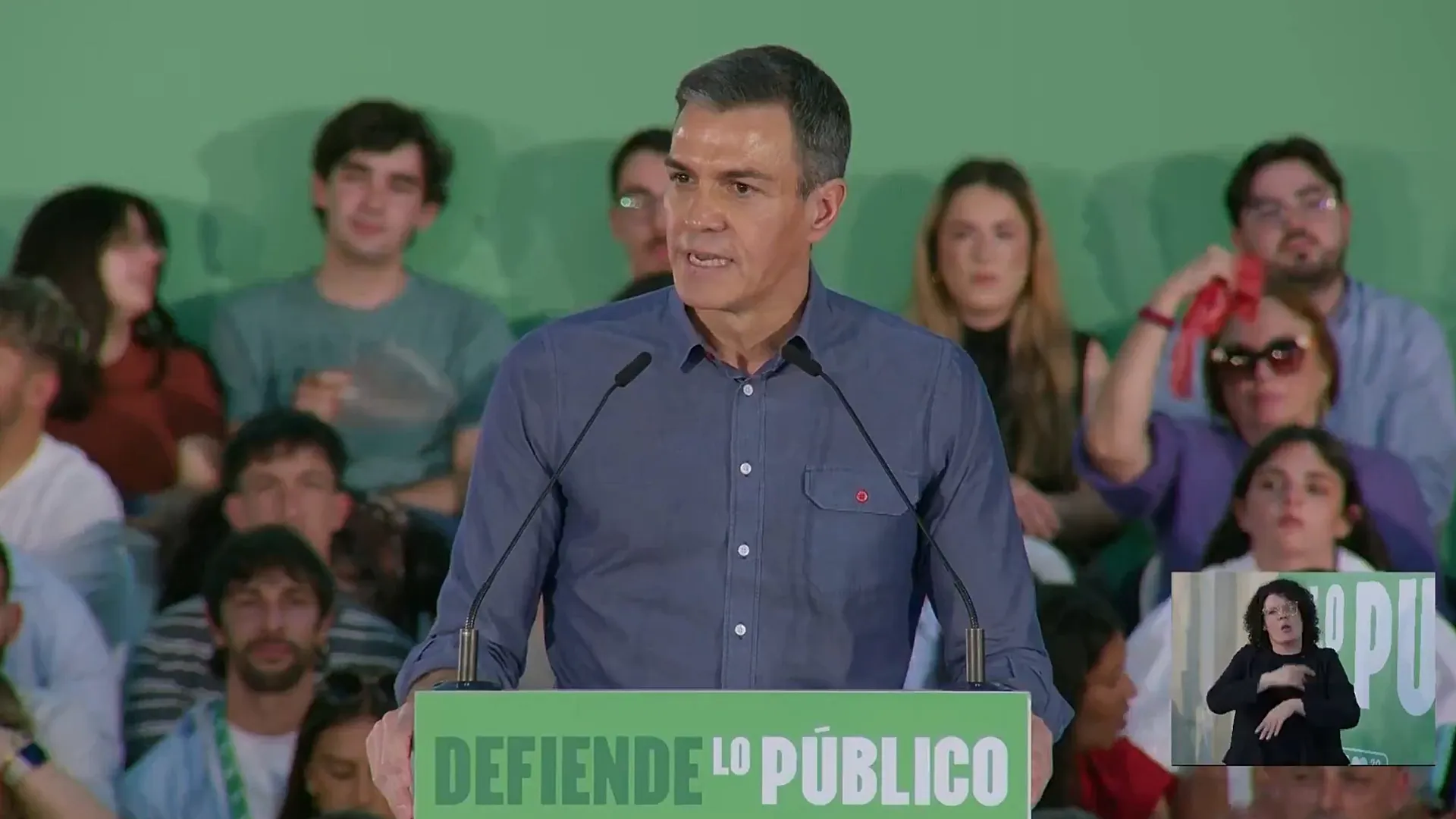
Europe is being forced to choose.
Gibraleón, Spain — April 2026
Pedro Sánchez has turned Spain’s dispute with Israel into a formal European confrontation. Speaking at a PSOE rally in Gibraleón, he said the Spanish government will take to the European Union a proposal to break the EU’s association with Israel, giving a concrete political deadline to a position that had already been hardening in recent days. The move matters because it shifts the issue from national rhetoric into the legal and institutional machinery of Brussels, where symbolic condemnation and binding action do not carry the same weight. It also places Spain at the center of a wider test over whether the Union is still willing to enforce its own political language when one of its key external relationships becomes morally and strategically costly.
What Madrid has done is not merely raise the temperature of the debate. It has converted a question of outrage into a question of treaty logic. Sánchez had already urged the EU to suspend the Association Agreement with Israel, arguing that respect for human rights and democratic principles is an essential element of that framework, and later said Israel was violating several of its articles. That matters because once the disagreement is framed in those terms, Europe can no longer present the issue as a passing diplomatic quarrel. It becomes a credibility test for the bloc’s external doctrine, especially for leaders who have long defended values based foreign policy but often stop short of applying it when the geopolitical terrain grows uncomfortable.
The Spanish initiative enters a divided European field rather than a unified one. Several member states had already supported similar moves, while others had opposed them. That split is crucial because it reveals that the real conflict is no longer only about Israel. It is also about the internal character of the European Union itself, about whether consensus in Brussels still functions as a vehicle for common action or has become a mechanism for postponement when the subject touches trade, alliance management, and politically sensitive security narratives.
The economic dimension makes the confrontation harder to dismiss as posture. The EU remains Israel’s largest trading partner, with a relationship valued at more than 45 billion euros a year, which means any suspension or rupture would carry consequences far beyond the language of protest. This is where Sánchez’s move becomes strategically disruptive. He is not asking Europe to issue another statement of concern. He is asking it to consider whether a relationship of major commercial and diplomatic relevance can continue under the same framework while allegations of human rights violations and treaty breaches remain on the table.
Public pressure has made that dilemma more difficult to contain within elite diplomacy. A citizens’ initiative in support of Palestine has already crossed the threshold that obliges the European Commission to examine the matter. The street, in other words, is beginning to narrow the maneuvering room of the institutions. Sánchez appears to understand that timing. By placing Spain visibly at the front of this argument, he is not only trying to influence Brussels, but also constructing a political contrast inside Europe between governments willing to turn principles into procedure and governments that still rely on ambiguity as a form of strategic management.
That is why this episode is larger than one rally speech and larger than one bilateral rupture. If Spain succeeds in dragging the debate into a formal European process, the Union will be forced to clarify whether its democratic clauses are instruments of enforcement or merely ceremonial language attached to useful relationships. If the proposal stalls, the outcome will be revealing as well, because it will expose once again the distance between European normative vocabulary and European operational behavior. Either way, Sánchez has already changed the frame. He has taken a conflict that many preferred to manage at the level of controlled indignation and pushed it into a zone where Europe must now decide whether its principles are architecture or ornament.
Beyond the news, the pattern.
Más allá de la noticia, el patrón.