

 Phoenix 24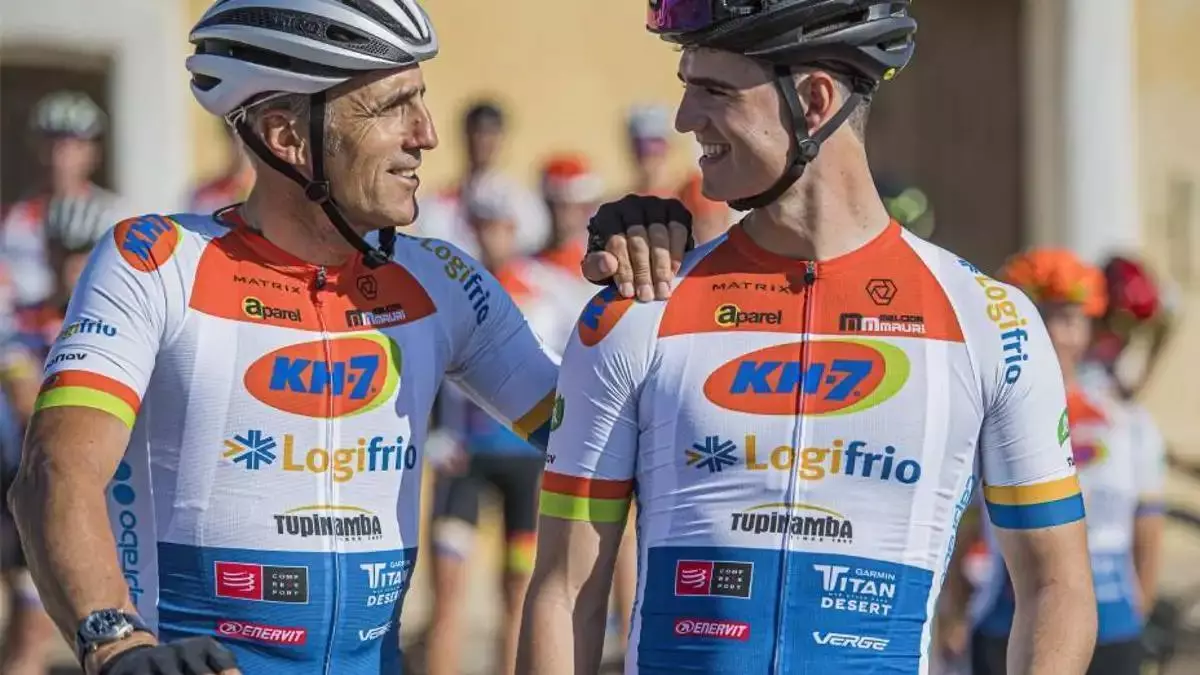
An extraordinary sporting legacy meets a different definition of success.
Palma de Mallorca, Spain.
Miguel Induráin Jr., son of the five-time Tour de France champion, has reflected on his decision not to pursue professional cycling despite growing up with one of the most recognizable surnames in the sport. His comments, revisited in recent Spanish sports coverage, reveal a relationship with cycling that has evolved from competitive ambition into professional involvement and personal enjoyment. Rather than attempting to reproduce his father’s achievements, he has developed a career connected to the bicycle industry.
Born in 1995, the year his father secured his fifth consecutive Tour de France, Miguel Jr. grew up surrounded by an extraordinary sporting legacy. He began cycling at the age of 12 and eventually competed against riders who would reach the professional peloton, including Enric Mas, Marc Soler and Iván García Cortina. For several years, becoming a professional cyclist was a genuine ambition.
That objective changed when he encountered the demands of higher-level competition. In an earlier interview with Spanish radio program El Transistor, he explained that he pursued the professional pathway until the age of 21 but ultimately recognized that it was not the right career for him. Moving from junior competition into the amateur ranks exposed him to a substantially different competitive environment, particularly on demanding climbs.
Despite the inevitable comparisons, Induráin Jr. insists that his surname never became an unbearable burden. He acknowledges that spectators recognized him as the champion’s son, but says he did not experience that attention as negative pressure. His father’s achievements were an established part of family life rather than a standard he believed he had to equal.
The relationship between father and son offers revealing details about the champion’s character. Miguel Jr. recalls that Induráin rarely recounted stories from his professional career at home. One memorable exception involved watching footage of the 1995 Tour de France ascent to La Plagne, where the champion explained how rivals gradually lost contact as he maintained his characteristic pace.
That approach remains recognizable when they ride together. According to his son, Induráin continues climbing with a remarkably consistent rhythm, rarely standing on the pedals or revealing visible signs of fatigue. His most frequently repeated racing advice was equally straightforward: eat, drink and stay in another rider’s slipstream.
Their shared participation in the 2020 Titan Desert provided another opportunity to experience cycling together, this time outside the familiar environment of professional road racing. Miguel Jr. described the demanding event as an opportunity to spend several days riding alongside his father and uncle.
Today, his connection to the sport extends into the cycling business in Mallorca, where he has worked in specialist retail and helped organize rides and social cycling activities. His experience illustrates a distinction that competitive sport sometimes obscures: participation does not have to culminate in a professional contract to remain meaningful.
The Induráin name belongs to cycling history, but its significance has taken different forms across generations. For Miguel Jr., the bicycle remains part of everyday life, independent of podiums, records or comparisons with his father.
Phoenix24: periodismo sin fronteras. / Phoenix24: journalism without borders.