

 Phoenix 24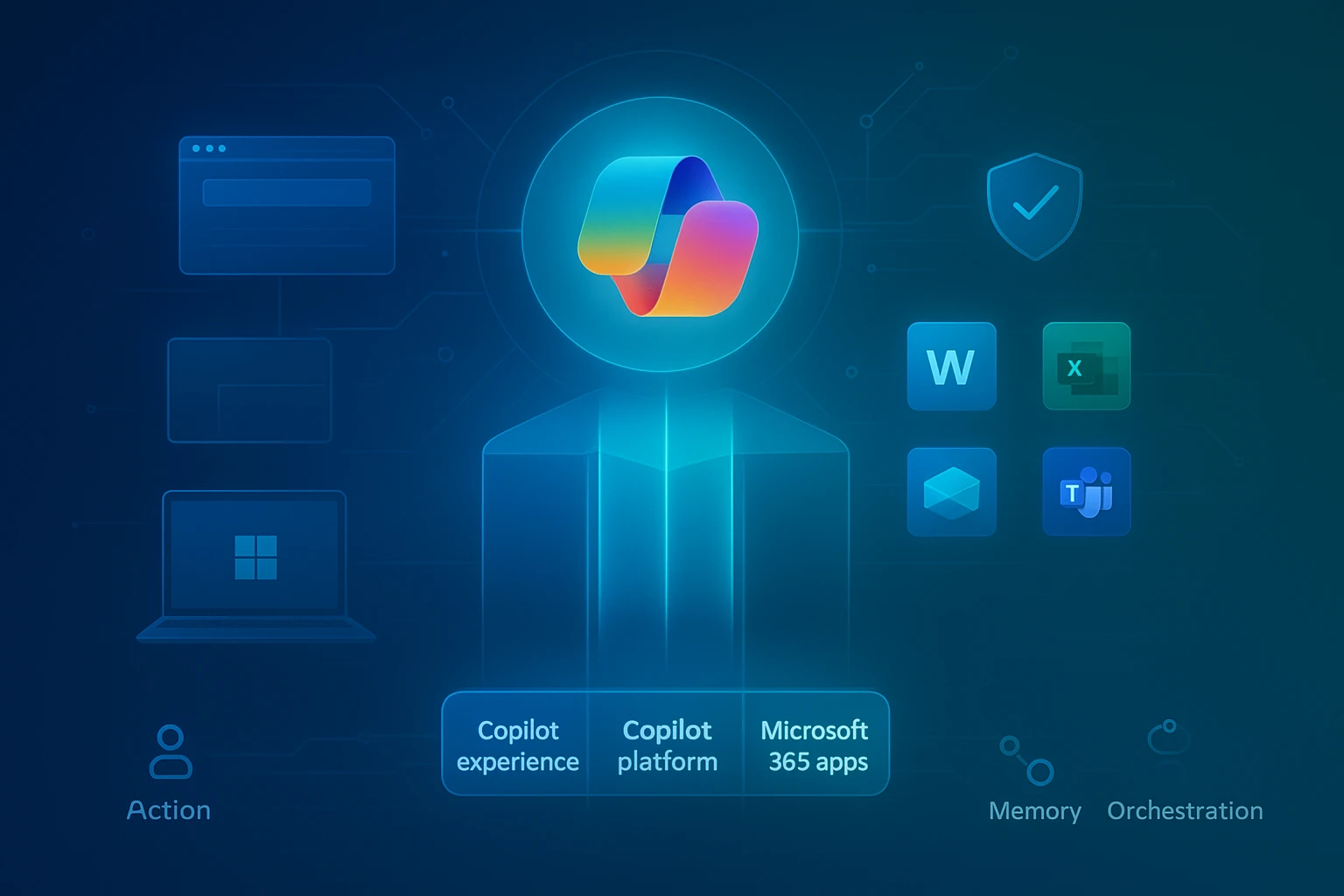
The company is redrawing its internal map.
Seattle, March 2026
Microsoft has reorganized its artificial intelligence division around Copilot, moving to unify the product’s consumer and commercial teams under a single leadership structure. The change comes as the company seeks to accelerate adoption of its AI assistant in a market where competition has intensified and pressure is growing to turn artificial intelligence into a durable product business.
Under the new structure, Jacob Andreou will lead the Copilot experience across both consumer and enterprise segments, taking responsibility for design, product, growth and engineering. Microsoft presented the move as part of an effort to create a more coherent operating model for Copilot, reducing fragmentation between the versions aimed at general users and those built for workplace productivity.
The reorganization also changes the role of Microsoft AI chief Mustafa Suleyman. Rather than remaining closely tied to day-to-day Copilot product management, Suleyman is being given more room to focus on the company’s model-building ambitions and its broader push toward more advanced AI systems. The shift suggests that Microsoft wants clearer separation between product execution and long-term AI capability development.

This is not just an administrative adjustment. It reflects a deeper strategic tension shaping the AI industry. Companies are under pressure to improve underlying models while also proving that AI assistants can become widely used, commercially viable products. For Microsoft, Copilot sits at the center of that challenge because it is both a flagship of the company’s AI identity and a test of whether that identity can translate into sustained adoption across different user groups.
The decision to merge consumer and commercial teams suggests that Microsoft sees growing value in a unified Copilot experience rather than in maintaining separate internal tracks. That may help simplify product development, align priorities and reduce the friction that often appears when enterprise tools and mass-market experiences evolve in parallel rather than together. It also signals that Microsoft wants Copilot to function less as a collection of related tools and more as a central platform identity.
The timing is also significant. The market for AI assistants has become increasingly crowded, with Microsoft, Google, OpenAI and other companies all trying to define how users interact with generative AI in work and everyday settings. In that environment, internal coherence becomes a competitive issue. A fragmented product structure can slow execution, complicate decision-making and weaken the speed at which a company responds to rivals.
Microsoft’s announcement was framed as a leadership update, but the underlying message is broader. The company is concentrating authority around Copilot at the product level while redirecting part of its top AI leadership toward the development of more advanced systems. That dual move shows Microsoft treating product adoption and frontier capability as related but distinct fronts, each requiring sharper internal focus.
For now, the reorganization signals that Microsoft is still actively recalibrating how it wants Copilot to evolve. The company is not stepping back from the AI assistant race. It is tightening the structure behind it, betting that a more unified product organization and a clearer division of leadership responsibilities will strengthen its position in the next phase of AI competition.
Phoenix24: clarity in the grey zone. / Phoenix24: clarity in the grey zone.