

 Phoenix 24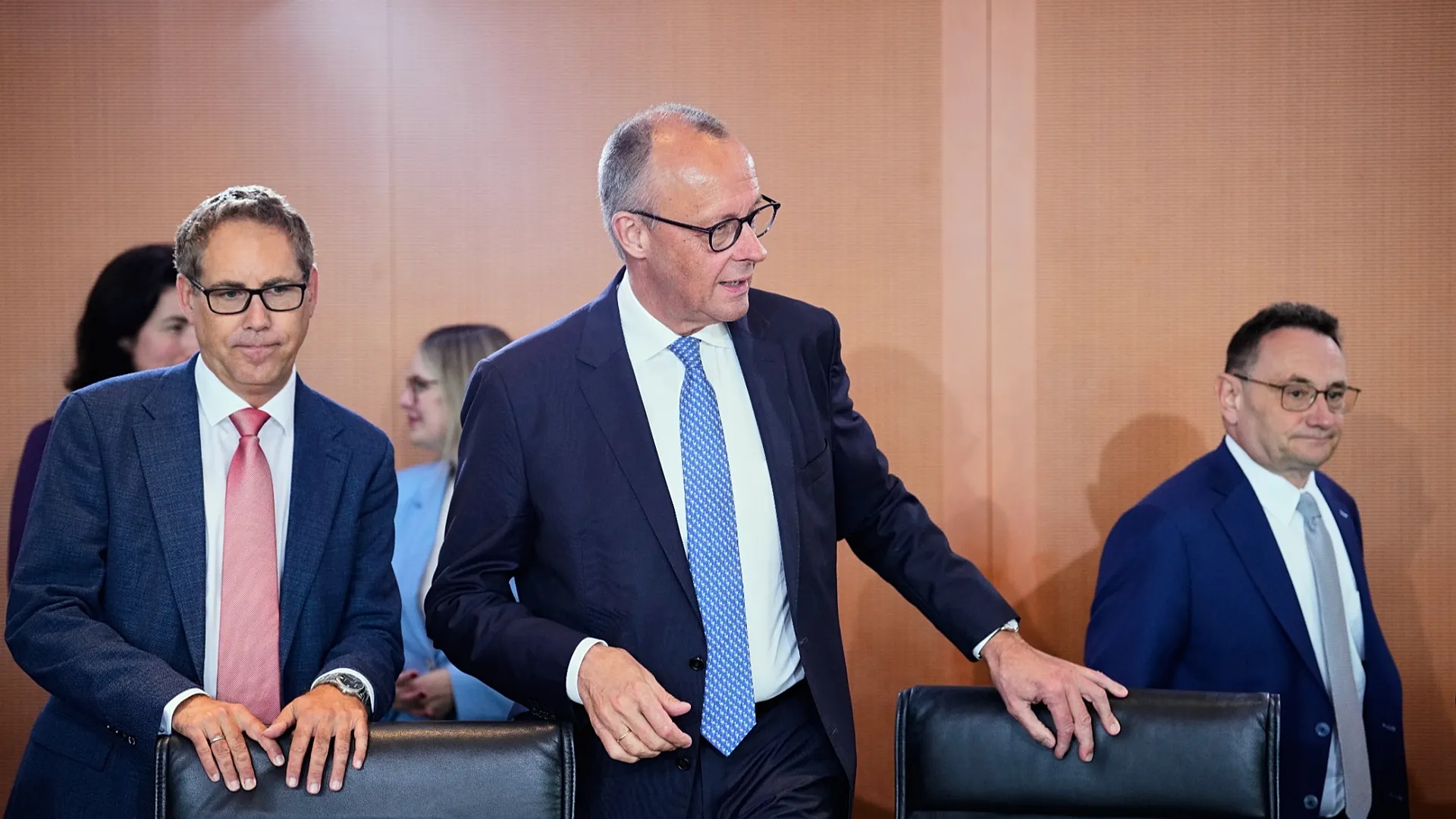
Hybrid threats are reshaping Germany’s security priorities.
Berlin
German Chancellor Friedrich Merz has placed counter-drone security at the center of his government’s agenda as Germany confronts growing concerns over hybrid attacks and vulnerabilities in critical infrastructure. Speaking ahead of a cabinet retreat in Brandenburg, Merz warned that the country is facing an increasingly serious threat environment. The issue has gained urgency following a drone attack in Leipzig, which intensified debate over Germany’s ability to detect, track and neutralize unmanned systems. For Berlin, drones are no longer viewed primarily as a battlefield technology but as a domestic security challenge with potentially strategic consequences.
The government meeting brings together security concerns with broader debates over economic growth, climate policy and structural reforms. Yet the drone threat has acquired particular significance because relatively inexpensive unmanned aircraft can challenge conventional defense systems, disrupt infrastructure and create uncertainty without crossing the threshold of traditional warfare. Germany must therefore strengthen coordination between military, police, intelligence and civilian authorities while determining who has the legal authority to respond when suspicious drones enter sensitive airspace. The challenge is technological, but it is also institutional.
Merz has increasingly framed Germany’s security environment through the lens of hybrid warfare. Such threats can combine drones, cyberattacks, sabotage, disinformation and pressure against strategic infrastructure, allowing hostile actors to generate disruption while preserving ambiguity over responsibility. Germany’s geographic position, industrial capacity and role within NATO make the country particularly important to Europe’s wider defense architecture. Protecting transportation networks, energy facilities, military installations and communications systems has consequently become inseparable from national resilience.
The debate also reflects lessons emerging from the war in Ukraine, where drones have transformed surveillance, targeting and combat at extraordinary speed. European governments are now confronting the possibility that technologies developed for war could increasingly appear inside their own borders as instruments of espionage, disruption or coercion. Merz’s warning signals that Berlin intends to treat counter-drone capability as part of a broader modernization of German security. Europe’s next defensive frontier may not begin with tanks crossing a border, but with small aircraft entering the sky unnoticed.
Information that anticipates futures. / Información que anticipa futuros.