

 Phoenix 24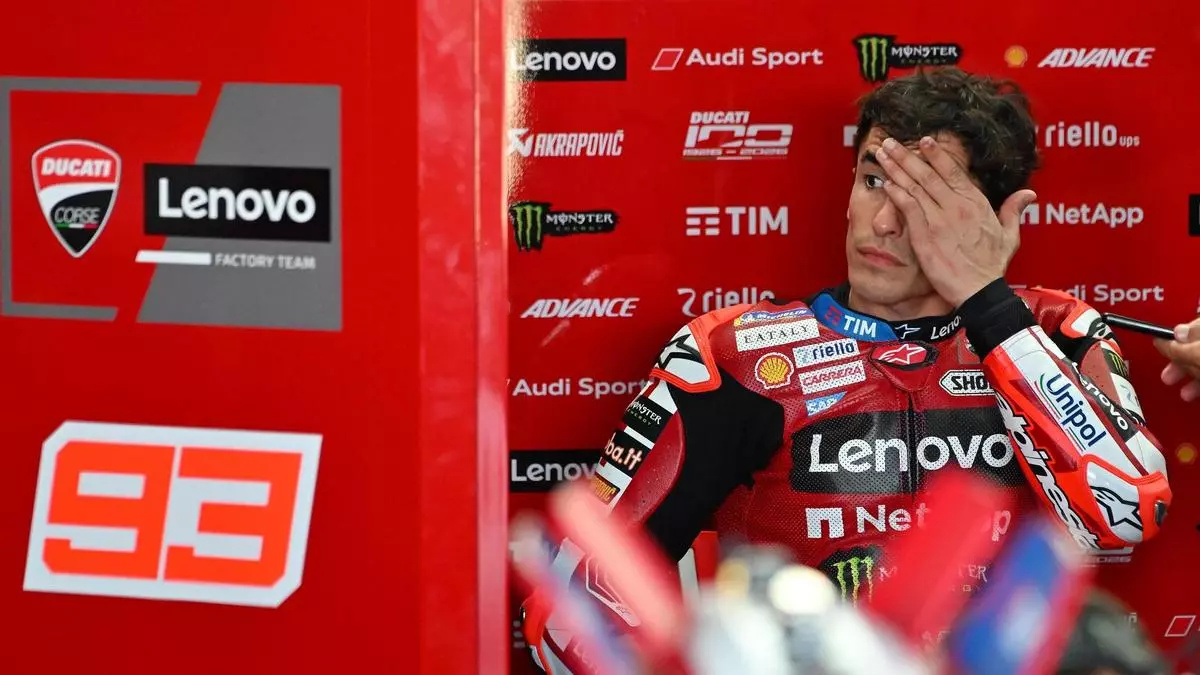
Respect is rising before the real battle begins.
Goiânia, March 2026. Marc Márquez has already identified one of the clearest pressure points of the new MotoGP season: Marco Bezzecchi is operating at a level that demands immediate respect. Ahead of the next phase of competition, Márquez has made it clear that the Italian is not just another contender in the mix, but one of the riders setting the competitive reference. In doing so, he has shifted the conversation away from reputation alone and toward current form, where speed, rhythm, and composure matter more than past hierarchies.
The warning is significant because it comes from a rider who understands exactly how a championship begins to take shape. Márquez knows that early season momentum can distort or clarify the real order of the grid, and his assessment of Bezzecchi suggests that Aprilia’s challenge is being taken very seriously inside the paddock. This is not rhetorical praise or routine politeness between rivals. It is the kind of recognition that usually appears when one rider can already see another shaping the weekend before the decisive sessions even begin.
What stands out in Márquez’s reading is the sense that Bezzecchi is not simply fast, but naturally aligned with the current rhythm of the championship. Riders can post isolated laps or deliver one strong weekend, but a different level of threat emerges when pace, confidence, and technical harmony begin to converge. That appears to be what Márquez is pointing toward. Bezzecchi is no longer being framed as a sporadic disruptor. He is being treated as a structural danger.
That matters because MotoGP rarely rewards raw speed alone. A rider can look spectacular in testing or in fragments of a race weekend, yet still fail when tire management, consistency, or strategic judgment come under pressure. The attention now surrounding Bezzecchi suggests something more complete. He is being read not only as a rider capable of attacking, but as one capable of sustaining pressure across the full competitive cycle. When a rival like Márquez publicly signals that level of concern, it usually reflects a paddock reality already understood by engineers, teams, and insiders.
There is also a psychological dimension in this kind of statement. Márquez has always been one of the sharpest readers of competitive balance, and his comments can work in more than one direction at once. On one level, he acknowledges what is visible. On another, he helps define the narrative terrain before the racing intensifies. By recognizing Bezzecchi’s level, he adds weight to the Italian’s status while also framing the duel in terms of merit rather than surprise. That can elevate pressure just as much as it elevates prestige.
For Aprilia, that shift is valuable. The team has spent years trying to convert flashes of promise into something more stable and threatening in the title conversation. If Bezzecchi is now being openly discussed as a benchmark by one of the sport’s central figures, then the project is no longer being viewed as peripheral. It is being watched as a genuine force. That perception changes expectations around every session, every qualifying lap, and every tactical decision on Sunday.
At the same time, Márquez’s remarks also reveal something about his own mindset. He is not approaching the season through nostalgia or entitlement. He is reading the field with urgency. That suggests a championship climate in which established names cannot assume control and emerging contenders are no longer content to play supporting roles. The grid is tightening, and recognition from a rider like Márquez often signals that the margin between favorite and pursuer is thinner than the standings may initially suggest.
The wider implication is that MotoGP may be entering a more unstable and compelling phase of internal competition. When a rider of Márquez’s stature publicly underlines the level of a rival like Bezzecchi, he is doing more than offering analysis. He is confirming that the hierarchy is in motion. And once hierarchy starts to move in MotoGP, the season tends to become less about predictions and more about who can keep control when the pace, pressure, and politics of the championship begin to collide.
Bezzecchi may not yet own the season, but he clearly owns a growing share of the concern inside it. And in elite racing, that is often the first sign that a rider has stopped being an outsider and started becoming a problem.
Detrás de cada dato, hay una intención. Detrás de cada silencio, una estructura. / Behind every datum, there is an intention. Behind every silence, a structure.