

 Phoenix 24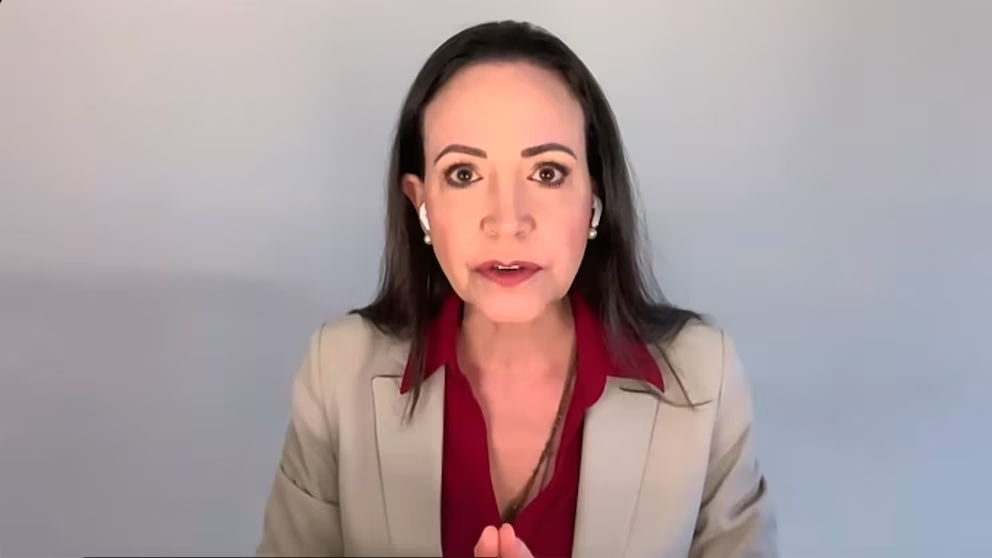
A message shaped by urgency, power signaling and a shifting balance between domestic mobilization and external pressure.
Caracas, November 2025
María Corina Machado declared that Venezuela is living through a critical turning point, framing the heightened presence of United States naval assets near the country’s maritime borders as a sign that the crisis has entered a new phase. Her remarks, delivered after a series of internal coordination meetings with opposition groups, portrayed the moment as one in which civic action, international alignment and political clarity must converge if Venezuela hopes to avoid a prolonged deterioration of its institutional framework. People close to her team noted that the tone reflects both escalating regional dynamics and a belief that the current moment carries consequences that extend beyond electoral cycles.
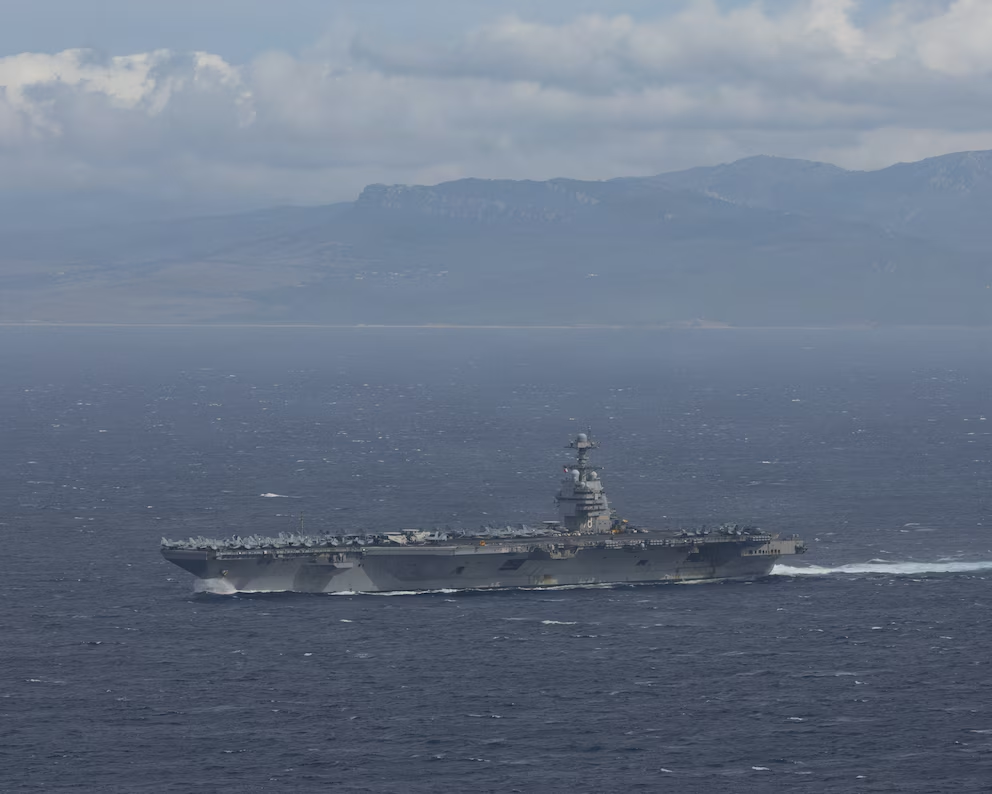
In North America, policy analysts interpret the U.S. naval posture as part of a broader strategy designed to pressure authoritarian regimes in the hemisphere through visible but calibrated deployments. While Washington has not detailed operational intent, previous patterns suggest a combination of deterrence, surveillance and signaling aimed at limiting the maneuvering room of the Maduro government. Across Europe, specialists in transitional governance observe that Machado’s call for international support mirrors the logic seen in other states where domestic opposition movements seek external leverage to rebalance political negotiations. In Asia, geopolitical research institutions highlight that the situation in Venezuela increasingly fits into a global pattern in which major powers project influence into regions marked by democratic erosion and economic crisis.
Machado emphasized that Venezuela’s population must remain central to any transition scenario. She insisted that civic unity is the only sustainable path to a peaceful transformation, yet acknowledged that international dynamics have grown inseparable from the internal struggle. Members of the opposition coalition privately affirm that the current phase demands both assertive diplomatic outreach and mechanisms to protect civil society, given that heightened military visibility in the Caribbean may provoke unpredictable reactions from the regime. Observers familiar with the internal workings of Caracas institutions suggest that the government’s security apparatus is already recalibrating contingency plans in anticipation of potential shifts in regional pressure.
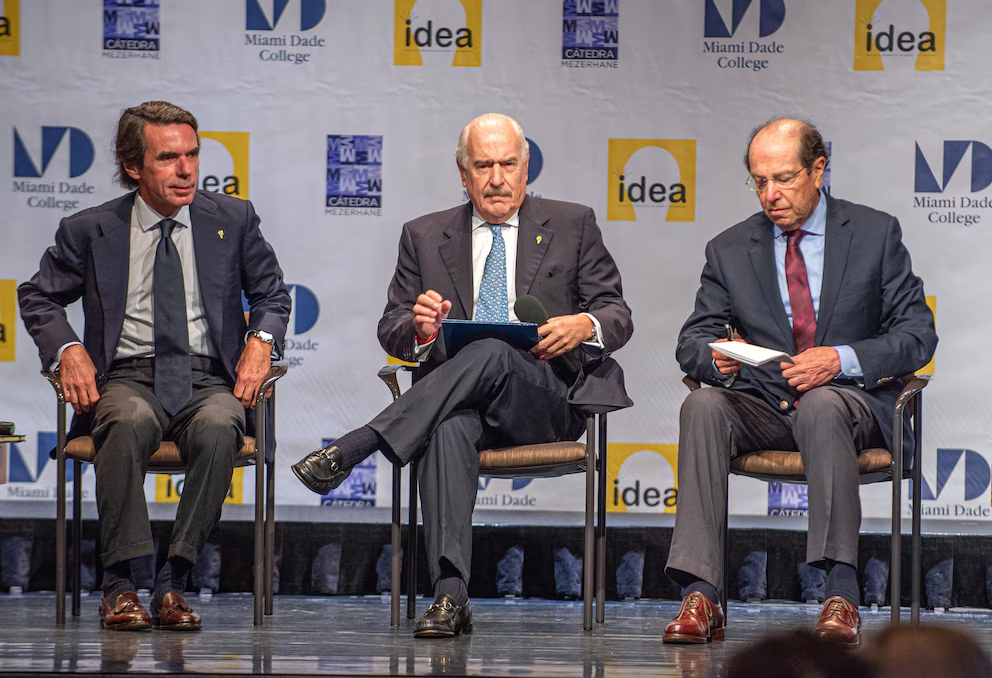
The interplay between domestic expectations and foreign presence introduces multiple layers of complexity. Critics warn that invoking external military forces, even indirectly, risks fueling government narratives of interventionism, which could be used to justify increased repression. Supporters counter that the regime’s consolidation of power has reached a level where international pressure becomes indispensable. Regional experts argue that the challenge lies in aligning international actors without triggering escalation, particularly in a hemisphere where economic fragility and political volatility create fertile ground for misinterpretation.
Machado’s reference to “decisive hours” also reflects the opposition’s attempt to reshape collective psychology. After years of political fatigue, disrupted negotiations and institutional setbacks, the message seeks to reintroduce a sense of possibility without overlooking the profound risks involved. Analysts across Latin America note that such rhetoric often aims to synchronize public sentiment with strategic developments occurring beyond the country’s borders. Whether this marks the beginning of a genuine opening or a moment of heightened tension without immediate resolution remains uncertain.
What is clear is that Venezuela’s crisis now operates on two fronts: one internal, driven by civic pressure and political fragmentation, and another external, shaped by power projection, geopolitical rivalry and a renewed focus on regional security. Machado’s framing underscores that these dimensions have merged into a single landscape where domestic agency and international dynamics are inseparable.
Resistencia narrativa global. / Global narrative resilience.