

 Phoenix 24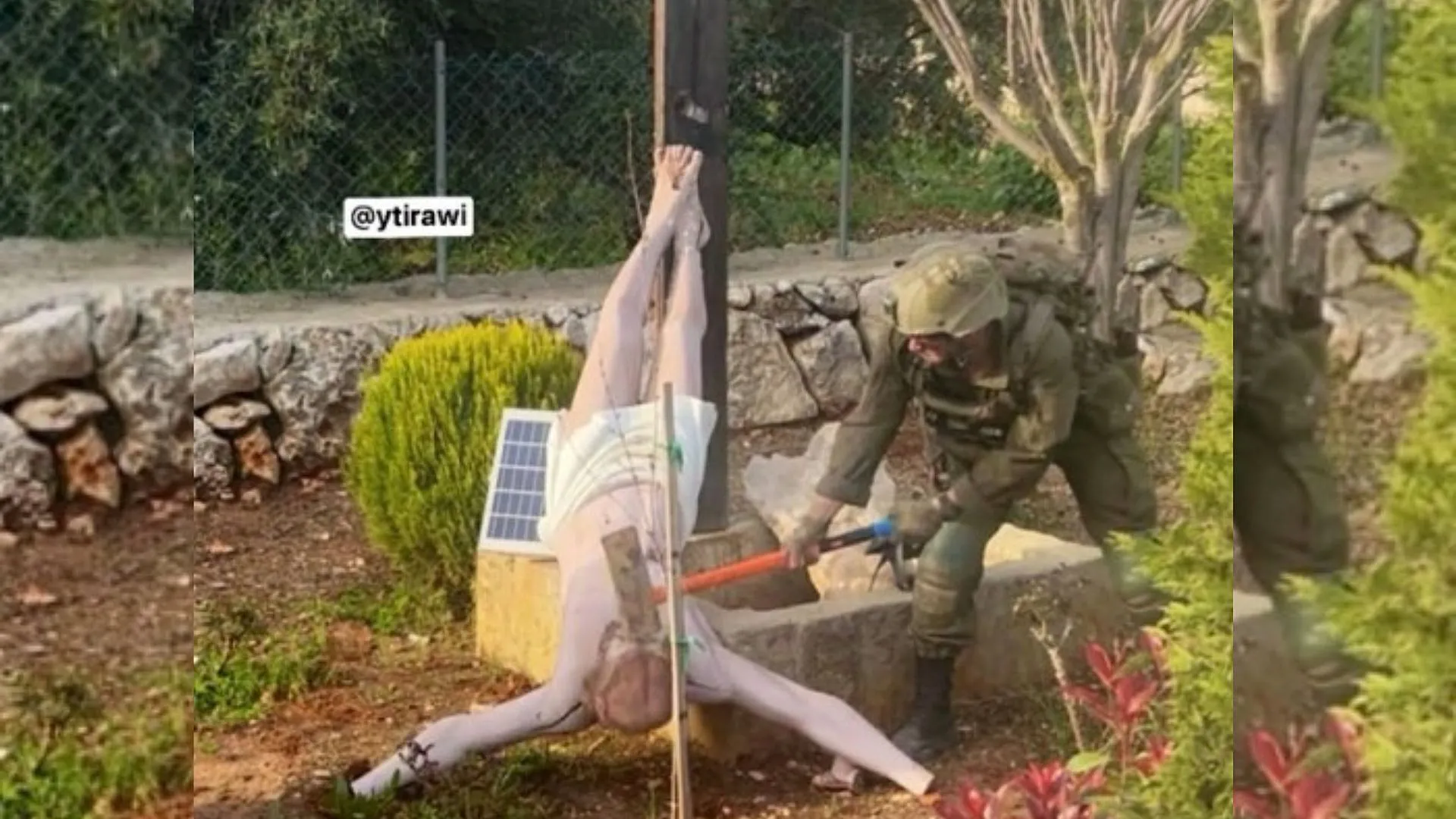
One image can redraw a conflict.
Debel, April 2026. The destruction of a statue of Jesus Christ in southern Lebanon by an Israeli soldier did not remain a minor battlefield incident. It became an international symbol almost immediately, not because of its military importance, but because of its emotional, religious, and political charge. In a war already saturated with trauma and visual escalation, the act struck a nerve far beyond the village where it happened. What was broken was not only a religious image, but a fragile boundary between armed conflict and civilizational symbolism.
The force of the episode lies in its visibility. Modern wars no longer depend only on troop movements, strikes, or territorial maps. They also unfold through images that condense outrage into a single frame. A soldier attacking a Christian symbol in a conflict zone is the kind of visual event that escapes local containment and enters global interpretation almost instantly. Once circulated, it stops being merely an act of indiscipline and becomes part of a larger struggle over legitimacy, morality, and narrative control.
That is why the reaction was so swift. Israeli authorities moved to condemn the act and open an investigation, understanding that the damage extended beyond the immediate incident. In a conflict environment, states are judged not only by formal doctrine but by the conduct of individuals whose actions can suddenly represent the whole institution in the eyes of the world. This is the strategic vulnerability of the digital age: one soldier can produce a diplomatic aftershock that no official statement can fully neutralize.
The symbolic weight of the target matters enormously. A statue of Jesus is not a minor object in the global religious imagination. It speaks to Christian communities far beyond Lebanon, especially across Europe, Latin America, and other regions where such imagery carries deep civilizational meaning. That is what transformed the event from local vandalism into a transnational moral flashpoint. The battlefield expanded in an instant from a southern Lebanese village to a broader emotional geography shaped by faith, identity, and historical memory.
This is where modern conflict reveals its informational architecture. Wars are no longer interpreted solely through official communiqués or battlefield outcomes. They are processed through fragments, images, and symbolic gestures that often carry more emotional force than strategic briefings. A single image can reinforce preexisting beliefs, accelerate diplomatic criticism, and deepen perceptions of impunity. Even when leaders disavow an act, the image itself continues to circulate with a life of its own, detached from institutional damage control.
The episode also exposes a broader regional fragility. The Lebanon front is not just a military space. It is layered with sectarian memory, religious symbolism, and unresolved political tensions that magnify every act of desecration. In that setting, an attack on a Christian symbol is never only about property damage. It enters a much older repertoire of wounds, fears, and narratives that populations across the region and beyond already recognize. That is what makes symbolic violence so potent: it activates histories that no official investigation can quickly contain.
For Israel, the problem is not limited to discipline or optics. It is a question of strategic credibility. If a state seeks to maintain international legitimacy during war, it must prove that exceptional acts remain exceptional. But the more often such images emerge, the harder it becomes to preserve that distinction. The digital environment compresses nuance and rewards symbolic clarity. Audiences do not always separate the act of one soldier from the meaning of the institution behind him. In that gap, reputational erosion begins.
For the wider international audience, the image becomes a test of interpretive instinct. Some will view it as isolated misconduct. Others will see it as evidence of a deeper moral breakdown inside the war itself. Both readings now coexist, and neither can be fully erased. What matters is that the symbolic battlefield has expanded once again. The conflict is no longer being read only through military developments, but through acts that reshape its moral atmosphere in real time.
That is the deeper significance of Debel. The destruction of a statue did not change the strategic map of the region. It changed something less visible but increasingly more powerful: the emotional grammar through which the conflict is understood. In contemporary war, symbols do not sit on the margins of power. They are part of power. And once shattered, they rarely remain local.
Behind every datum, there is an intention. Behind every silence, a structure.
Detrás de cada dato, hay una intención. Detrás de cada silencio, una estructura.