

 Phoenix 24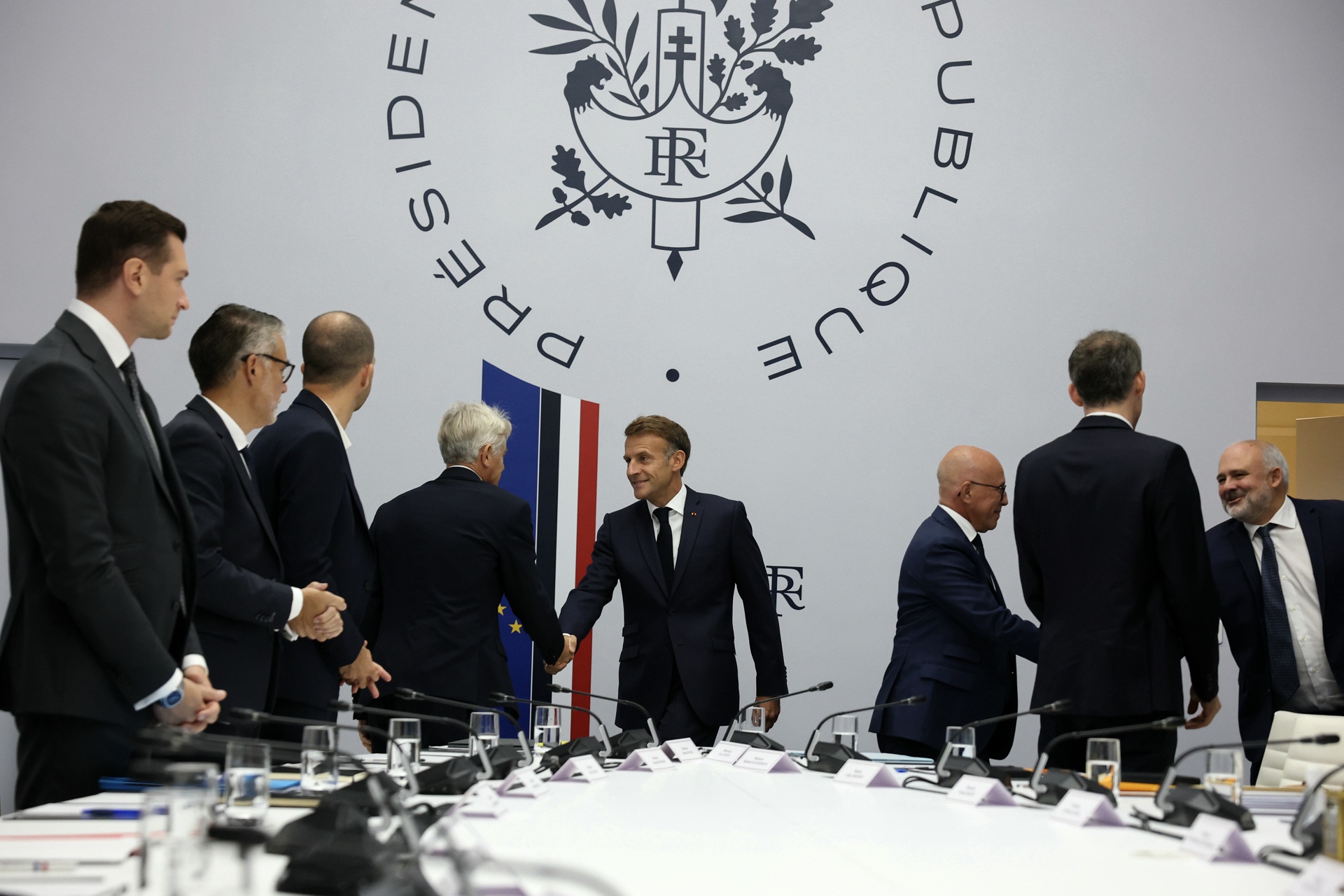
Europe confronts two crises with interconnected strategic consequences.
Paris, France.
French President Emmanuel Macron has announced plans to convene an extraordinary G7 meeting focused on the global energy crisis while warning that Russia’s increasingly aggressive activities require stronger protection of European infrastructure. Speaking after a closed-door meeting with leading French political figures at the Élysée Palace on September 18, Macron identified rising fuel prices and evolving security threats as two urgent challenges. His initiative seeks greater coordination among major industrialized economies as disruptions in the Middle East place additional pressure on international energy markets. The proposed gathering is expected to take place within the coming weeks.
Energy security occupies a central position in the French initiative. Disruptions affecting the Strait of Hormuz and the Bab el-Mandeb Strait have complicated maritime transportation and contributed to rising petroleum prices. Macron attributed much of the current pressure on French consumers to these international developments rather than domestic government decisions. The planned G7 discussions will focus particularly on coordinating strategic energy reserves, although no agreement on additional releases has been announced.
The economic challenge extends beyond gasoline prices. Higher energy costs can affect transportation, industrial production and household purchasing power, potentially creating additional inflationary pressures across Europe. Macron cautioned against relying exclusively on expensive domestic subsidies, arguing that extensive government spending could increase public deficits or eventually require higher taxation. His position places international supply coordination alongside domestic fiscal constraints in the response to the crisis.
Security concerns formed the second major component of the president’s intervention. Macron warned that Russia’s threats against Europe are changing in nature, citing the discovery of an explosives-laden drone at Germany’s Leipzig airport as an example. He accused Moscow of attempting to intimidate European governments and weaken their commitment to supporting Ukraine. These allegations reflect the French government’s assessment of the threat, while the attribution of individual incidents requires investigation.
Macron has instructed his government to develop a protection plan for critical infrastructure against hybrid attacks. Such threats can involve cyber operations, sabotage and drone activity targeting facilities essential to national security and economic continuity. The president emphasized that France would maintain its support for Ukraine while seeking to avoid a direct military escalation with Russia. The proposed response therefore combines defensive preparations with continued diplomatic communication.
The announcement also carries a domestic political dimension. Macron addressed representatives of France’s principal political forces ahead of the 2027 presidential election, seeking to establish a common understanding of the country’s international security and energy challenges. Differences over economic relief and foreign policy remain, and the meeting did not eliminate those disagreements.
The two initiatives reveal how energy security and territorial defense increasingly intersect in European strategic planning. Disrupted maritime routes threaten economic stability, while attacks on infrastructure can compromise essential services and industrial activity. The proposed G7 meeting and France’s infrastructure protection plan remain separate initiatives, but both respond to vulnerabilities that national governments cannot address through domestic measures alone.
Their practical consequences will depend on subsequent diplomatic agreements, the implementation of protective measures and developments in the Middle East and Ukraine.
Geopolítica, sin maquillaje. / Geopolitics, unmasked.