

 Phoenix 24
An eighteen-year-old has transformed Spanish swimming expectations.
Paris, August 2026
Luca Hoek narrowly missed the podium in the men’s 100-metre freestyle at the European Aquatics Championships in Paris, finishing fourth in 47.39 seconds. Although the 18-year-old left the final without a medal, his performance represented Spain’s strongest result in the history of one of swimming’s most prestigious and demanding events.
Romania’s David Popovici won the European title with a championship record of 46.45, missing Pan Zhanle’s world record by only five hundredths of a second. Neutral athlete Egor Kornev took silver in 46.74, while Hungary’s Kristóf Milák secured bronze in 46.87. Hoek remained fourth throughout the race, competing against three swimmers who completed the final in under 47 seconds.
The result confirmed that Hoek’s extraordinary semifinal performance was not an isolated breakthrough. One day earlier, he had demolished his own Spanish record by swimming 47.26, the second-fastest qualifying time behind Popovici. That performance lowered the national mark by 46 hundredths of a second and placed him among the fastest swimmers ever recorded in the discipline.
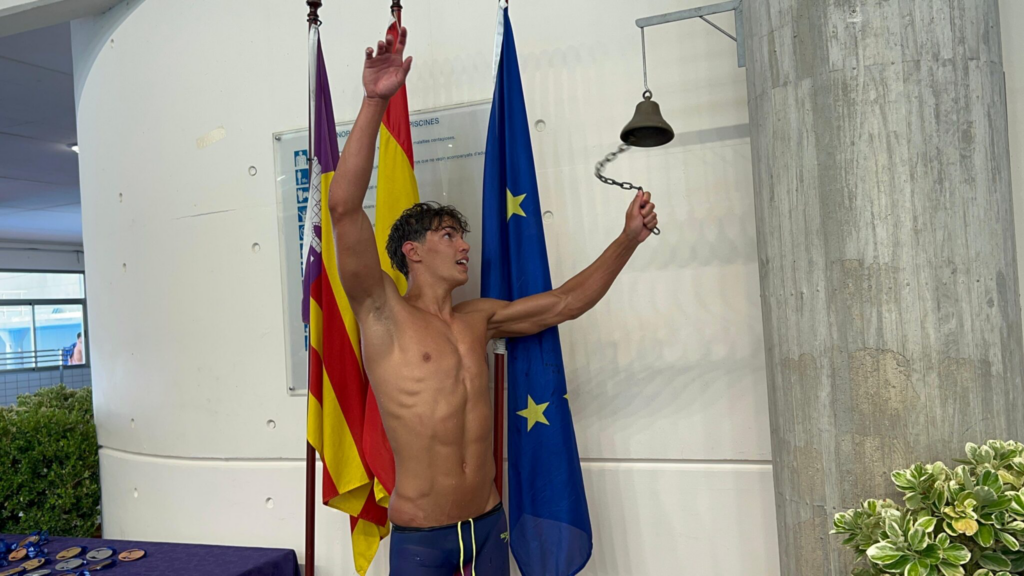
Hoek entered the final from lane five, directly beside Popovici, after qualifying ahead of experienced competitors including Kornev, Milák and Hungary’s Nándor Németh. He produced another fast start and maintained his position under intense pressure. His final time was only 13 hundredths slower than the national record he had established in the semifinals.
In a 100-metre freestyle race, such differences are significant but also extraordinarily compressed. The entire event is decided through the interaction of reaction time, underwater movement, stroke efficiency, breathing patterns and the capacity to preserve speed during the final 25 metres. A small technical variation can separate a medal from fourth place.
For Spain, Hoek’s position carries historical importance. José Antonio Chicoy reached the European final in 1970 and finished seventh, while Eduard Lorente placed sixth in 2004. Hoek has now surpassed both results at only 18, establishing the highest European finish achieved by a Spanish man in the 100-metre freestyle.
The importance of the achievement extends beyond the absence of a medal. Spain has produced Olympic and world-class swimmers in several disciplines, but men’s sprint freestyle has rarely been an area of sustained international influence. Hoek’s emergence suggests that the country may finally possess an athlete capable of competing consistently within the fastest field in European swimming.
His development has accelerated dramatically. At the European Junior Championships in July, Hoek retained his 100-metre freestyle title with a time of 48.18 and also won silver in the 50-metre freestyle. Those results confirmed his supremacy at junior level, but the transition into senior competition placed him against athletes with Olympic medals, world titles and years of elite experience.
Paris demonstrated that the transition is already occurring. Hoek was not merely present in the final or benefiting from the absence of established contenders. He earned his place through a national record and then remained competitive in a race that produced some of the fastest performances in European history.
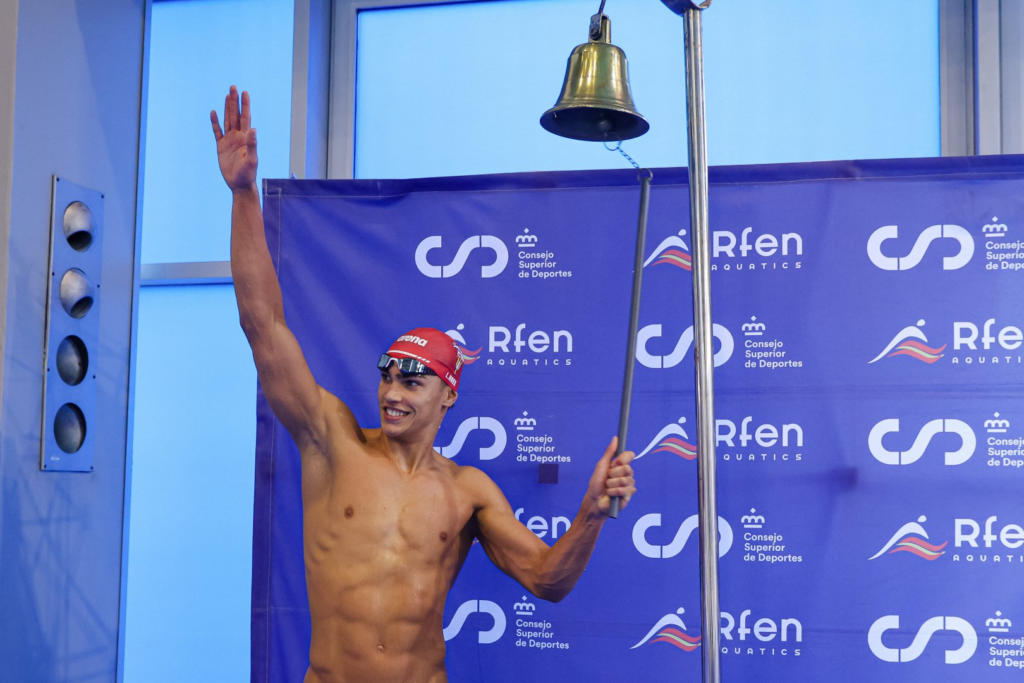
The swimmer from Catalonia has Spanish, Dutch and French family roots but chose to represent Spain, influenced in part by the training environment at the High Performance Centre in Sant Cugat. His progression has been supported by a programme designed to improve strength, technique and endurance without sacrificing the natural speed that first distinguished him in shorter events.
Hoek now holds Spanish records in the 50, 100 and 200-metre freestyle events, an unusual combination that reflects both explosive power and developing endurance. His 50-metre record of 21.93 confirmed his ability as a pure sprinter, while his progress over 200 metres has helped strengthen the second half of his 100-metre races.
That balance will become increasingly important as he approaches the Los Angeles 2028 Olympic cycle. The leading international sprinters are operating close to the limits of human performance, leaving little space for improvement through physical strength alone. Starts, turns, underwater phases and race execution can determine whether an athlete moves from fourth place to the podium.
Popovici’s victory provided a demonstration of that highest level. The Romanian controlled the race in 46.45, producing one of the fastest 100-metre freestyle performances in history and approaching the world record established at the Paris Olympics. Kornev and Milák also entered territory that Hoek must eventually reach if he is to contend for major senior titles.
The distance between Hoek and bronze was 52 hundredths of a second. In elite sprint swimming, that represents both a substantial competitive gap and a realistic development target for an athlete of his age. His improvement over the previous year indicates that the margin is not beyond reach, although future progress will become increasingly difficult as his times approach the sport’s physiological limits.
Spain’s broader opportunity also includes the relay programme. A swimmer capable of producing times near 47 seconds can transform the competitiveness of a 4×100-metre freestyle team, particularly when surrounded by other athletes consistently operating below 49 seconds. Hoek’s individual rise may therefore strengthen collective ambitions as well as his personal career.
There is also a psychological dimension to his performance. Young swimmers often arrive at senior championships focused on gaining experience, but Hoek entered Paris expecting to challenge established names. He competed beside Popovici, one of his principal references in the sport, without appearing overwhelmed by the occasion or the speed of the field.
Fourth place can be one of the most difficult results in elite competition because it offers confirmation without the visible reward of a medal. For Hoek, however, Paris was not simply a missed podium. It was evidence that Spanish men’s freestyle has entered a competitive territory that once appeared inaccessible.
At 18, Hoek has already moved from junior champion to European finalist and national record holder. The next challenge is no longer to convince international swimming that he belongs among its fastest athletes. Paris has already answered that question. The challenge now is to convert proximity into medals.
Facts that do not bend. / Hechos que no se doblan.