

 Phoenix 24
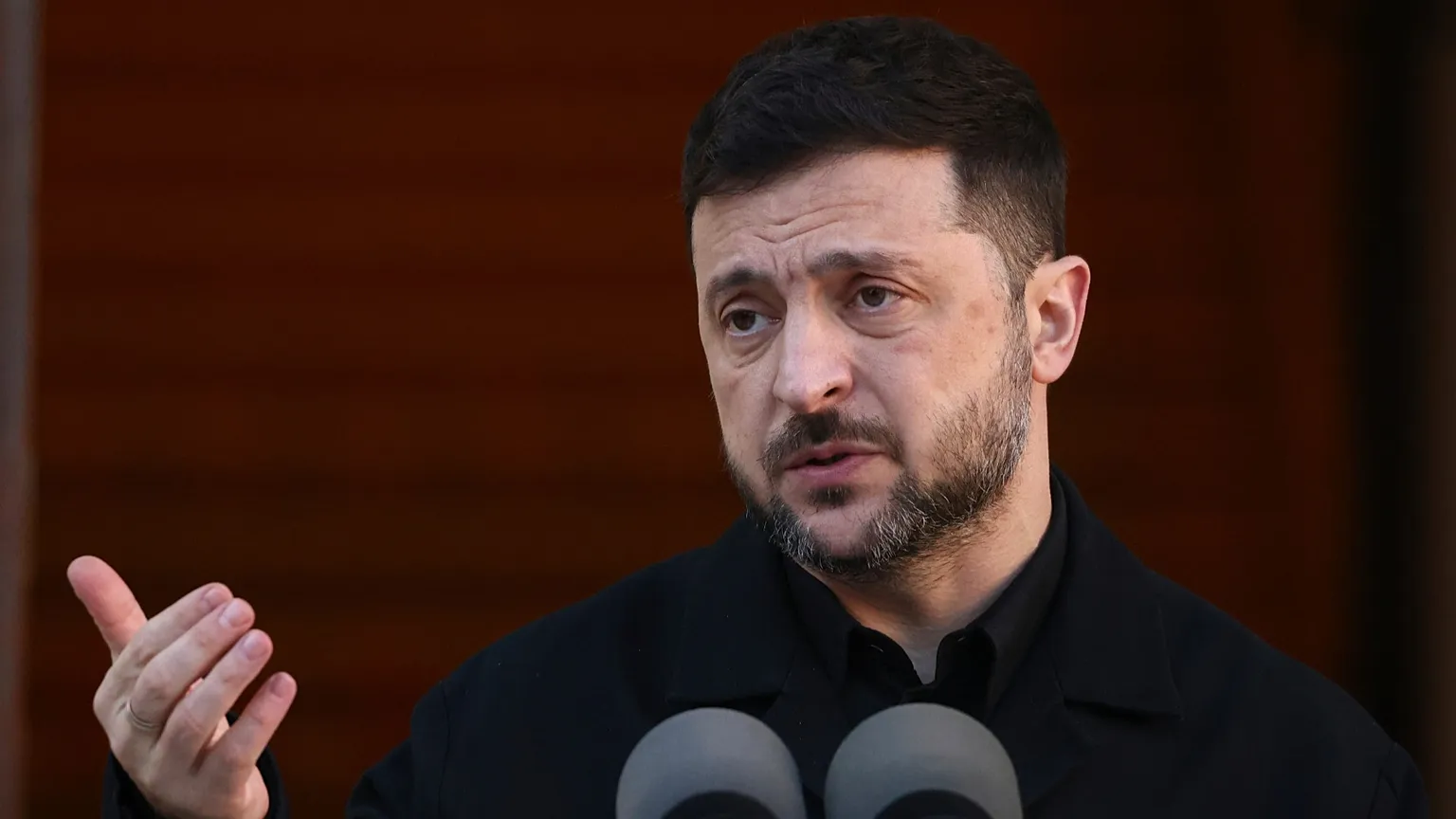
A conversation described as meaningful by the Ukrainian president signals a possible shift in a war where progress has often depended less on battlefield dynamics than on political endurance.
Kyiv, December 2025
President Volodymyr Zelensky’s announcement of a substantial conversation with senior American envoys has injected a new variable into a conflict that seemed locked in a pattern of attrition. Although Kyiv avoided releasing operational details, the tone of Zelensky’s remarks indicates that the exchange touched on issues long considered foundational for any roadmap to peace, including verifiable security guarantees and a mechanism capable of preventing renewed aggression from Russia. This recalibration of dialogue arrives as winter strains Ukraine’s defense apparatus and imposes additional humanitarian pressure across the country.
According to analysts within the Center for Strategic and International Studies, the United States appears to be seeking a tighter diplomatic framework that balances pressure on Moscow with support for Kyiv’s red lines. That interpretation aligns with comments from European diplomats cited by major outlets such as Le Monde, who perceive in Washington’s latest outreach an attempt to stabilize the political bandwidth needed for long term assistance. Kyiv’s insistence on enforceable guarantees remains unchanged and continues to serve as a key filter for evaluating any peace related proposal. For Ukraine’s leadership, the absence of credible monitoring mechanisms has historically opened the door to renewed offensives, making this point a nonnegotiable requirement.
Within Europe, the landscape is complex. Several governments face political fatigue over sustained military aid and economic commitments linked to the war. At the same time, Brussels recognizes that a prolonged stalemate may generate strategic vulnerabilities extending far beyond Ukrainian territory. Analysts at the Stockholm International Peace Research Institute warn that a persistent impasse could reshape regional defense postures and undercut the continent’s deterrence architecture. Thus, the mere existence of a constructive conversation between Kyiv and Washington is received with cautious optimism, even if the pathway to peace remains opaque.
The Kremlin’s posture remains deliberately ambiguous. Researchers from the Lowy Institute note that Russia’s communication strategy alternates between rigid demands and selective openness, a pattern seen in various conflicts where belligerents aim to manage public expectations while preserving military flexibility. This dual track messaging allows Moscow to signal toughness domestically while testing diplomatic boundaries abroad. Zelensky’s characterization of the latest dialogue as substantial suggests that Kyiv is detecting a shift, however modest, in the tone or depth of American engagement.
For Washington, the priority remains preventing uncontrolled escalation and maintaining coherence among allies. Officials familiar with U.S. strategic discussions emphasize that no proposal will be imposed on Ukraine and that Kyiv retains full authority to determine the conditions for any negotiated arrangement. This view is reinforced by cautionary assessments from the International Monetary Fund, which highlights the global economic vulnerabilities linked to a long war in a region vital for energy routes, agricultural production and logistical corridors. A managed diplomatic opening could therefore alleviate pressures on global supply chains and reduce uncertainty across financial markets.
Meanwhile, perspectives from Asia underscore the wider implications of renewed dialogue. Commentators in the South China Morning Post observe that the conflict’s trajectory affects strategic calculations across the Indo Pacific, where governments closely monitor any sign of shifting power balances between Western coalitions and authoritarian blocs. Although there is no direct evidence that the U.S. Ukraine exchange is tied to broader geopolitical bargaining, regional analysts consider it inevitable that diplomatic movements in Eastern Europe influence risk perception in other contested theaters.
The humanitarian dimension adds urgency. The United Nations High Commissioner for Refugees has repeatedly warned that internal displacement within Ukraine is becoming a long term condition rather than a temporary emergency. Communities near the front line endure sustained psychological pressure, limited access to services and recurrent disruption due to seasonal changes. In that environment, even a small diplomatic gesture carries emotional weight, offering civilians a symbolic counterpoint to the relentless tempo of war. Local authorities, struggling to plan recovery efforts amid uncertainty, perceive any political progress as a necessary ingredient for rebuilding essential infrastructure.
Zelensky’s decision to publicly highlight the substance of his conversation with U.S. envoys marks a noteworthy divergence from previous cycles of dialogue. During earlier phases of the war, similar engagements often fell into ambiguity, either due to diverging strategic expectations or the fluidity of frontline conditions. This time, the president’s tone suggests that the exchange reached a level of specificity that Kyiv considers worth signaling to both domestic audiences and international partners. It is an indication that the diplomatic track, while fragile, is not stagnant.
None of this implies an imminent agreement. The conflict has accumulated too many layers of mistrust, geopolitical tension and territorial dispute to be resolved quickly. Yet the structural importance of communication should not be underestimated. Wars shaped by attrition can become vulnerable to sudden shifts when political channels gain traction. In that sense, the latest contact between Kyiv and Washington may represent not a breakthrough, but a recalibration of expectations: a reminder that the struggle for Ukraine’s sovereignty still unfolds simultaneously on the battlefield and at the negotiating table.
Phoenix24: journalism without borders.
Phoenix24: periodismo sin fronteras.