

 Samira El-Khalil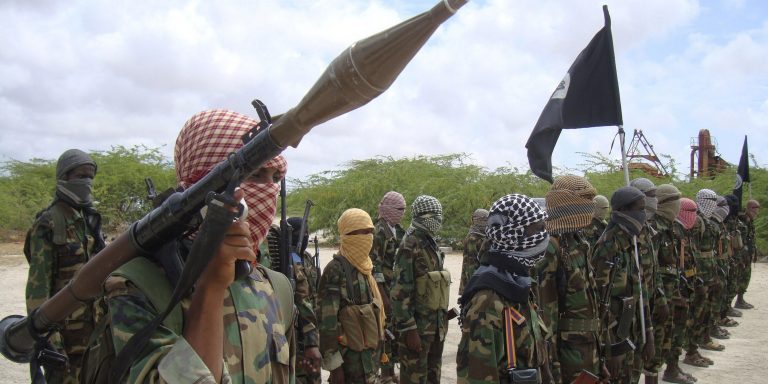
n the symbolic ruins of post-colonialism, a new war unfolds without trenches or uniforms. Its primary weapon is not the rifle—but manipulated memory.
Tunis, August 2025 —
The Maghreb is no longer just a region—it is an open wound where history is recycled as an instrument of control, and conflict is no longer measured in fallen bodies, but in hijacked narratives. Postwar in North Africa did not end with the fall of regimes or with signed accords: it mutated. Today, in its most insidious form, that war continues through three converging forces—local jihadist networks, foreign mercenary operations, and the silent rule of algorithms that curate—and distort—collective memory.
From Mali to Libya, and from Tunisia to Algeria, state fragmentation has not only been political or territorial—it has been emotional and cognitive. Institutional weakness has left a vacuum quickly filled by armed militias wielding religious rhetoric, privatized paramilitary groups acting as state proxies, and digital platforms that simulate community while engineering surveillance. According to the latest International Crisis Group report, over 70% of Tunisian youth aged 18 to 30 express distrust in both government and political parties, relying instead on digital networks vulnerable to cross-border disinformation campaigns.
Libya is emblematic. There, the Wagner Group—far from dissolved—has merely morphed into a network of front companies operating through the UAE and Niger, overlapping with Salafi recruiting networks that, although officially defeated, reorganize in the Fezzan borderlands through narratives of historic victimhood and divine justice. UN and SIPRI data confirm that more than 1,300 foreign mercenaries remain active in Libyan territory, many rebranded as “security consultants” under local authorities or economic actors vying for access to mineral fields.
More disturbing still is the role of technology as an instrument of domination. What Bellingcat and Citizen Lab have documented elsewhere now unfolds in the Maghreb with uniquely regional patterns. The Pegasus spyware—blacklisted across much of Europe—remains in active use by regional intelligence agencies to monitor journalists, dissidents, and civil society leaders. Added to this is a surge in Israeli, Turkish, and Emirati tech startups selling protest prediction software powered by artificial intelligence—tools often purchased by transitioning or overtly authoritarian regimes.
This war without a name is not fought on battlefields—it is fought in the minds of those who survived the last one. And amnesia is not forgetfulness—it is design. In Mali, the partial return of figures from the old regime, dressed in promises of “restored order,” has scrubbed public discourse of past abuses and covert pacts with Islamist factions. In Tunisia, a once-celebrated democratic transition has dissolved into a hypercentralized presidency that criminalizes dissent and shutters critical media under counterterrorism laws inherited from the Ben Ali era.
This is not merely a forgotten region. It is a region methodically silenced. The digital architecture that regulates what gets remembered or erased no longer resides in a Ministry of Propaganda—it operates through content moderation contracts outsourced from Dublin or Bangalore. According to the Digital Rights Atlas, 68% of accounts removed for “policy violations” in the Maghreb between March and June 2025 belonged to civil society organizations or grassroots memory collectives. In postwar zones, there are no neutral algorithms—only algorithms aligned with the interests of power that endures.
Trauma has become a battlefield. And in the Maghreb, that trauma is being outsourced. Not only by former colonial powers now negotiating gas, lithium, or migration corridors with actors they once labeled terrorists—but also by emerging powers that frame control in purely strategic terms. China, for instance, has expanded discreetly across Morocco and Algeria through mineral and tech deals that include clauses for “sovereign digital infrastructure”—the source code of which remains inaccessible. The Lowy Institute identifies this as part of a broader pattern of “algorithmic colonialism”: a blend of investment, surveillance, and disinformation.
If there ever was a Maghrebi democratic dream—a spring, a transition, a plural republic—it now survives on the margins of exile, in women-led university networks, and in the fragile archives of oral memory. But no dream can endure without verified memory.
Because in this region, wars no longer end with treaties. They end when the evidence disappears.
And if postwar becomes invisible, it is because somewhere—in a server, in a command room, or in an embassy—someone has already decided which Maghreb will be told… and which one will be condemned to silence.
Samira El-Khalil, North Africa correspondent at Phoenix24. Expert in political violence, disinformation, and post-colonial governance in the Sahel and Maghreb.