

 Phoenix 24
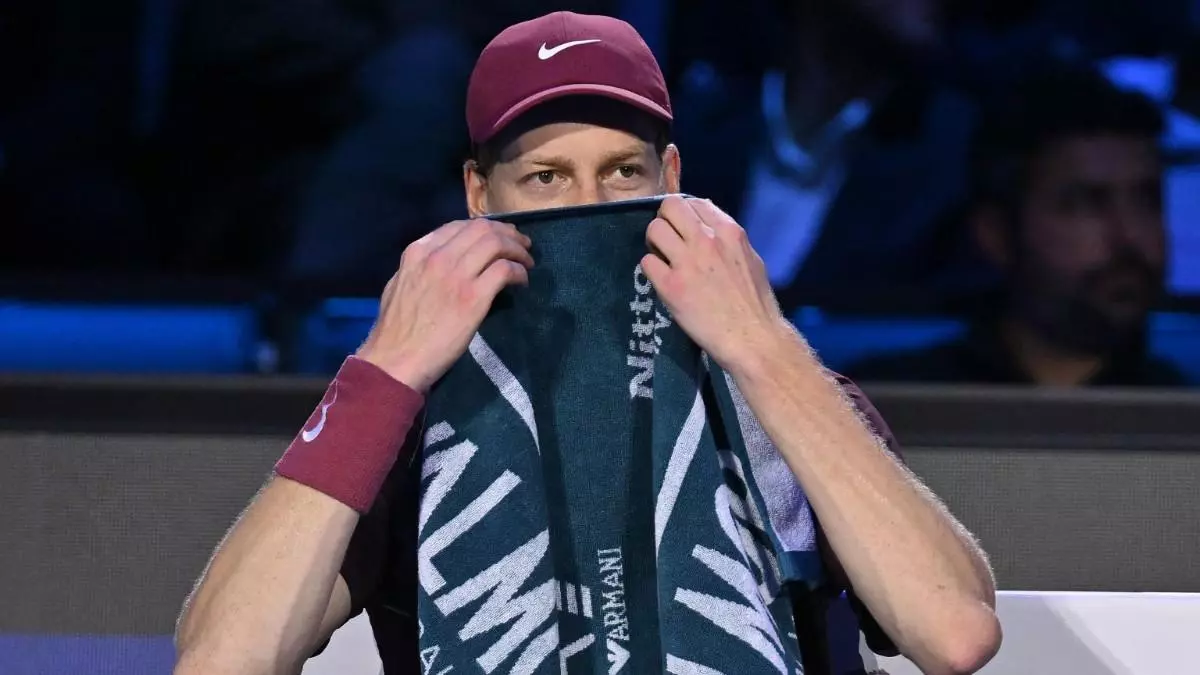
A specialist long acquainted with the flaws of toxicological oversight reignites a debate that the sport has tried to postpone for years.
Paris, November 2025
Jean-Claude Alvarez, one of France’s most experienced toxicologists in sports medicine, entered the public conversation once again by questioning the procedures surrounding a recent doping case that has stirred unease across the tennis world. His remarks pointed to what he considers a structural weakness in the system, arguing that the framework used to evaluate certain substances remains too narrow to guarantee fairness. According to him, the reliance on single-sample analysis reduces the capacity to distinguish between intentional use, accidental exposure and environmental contamination, a distinction he believes is essential for any sanction to be legitimate. Alvarez insisted that without a comprehensive biological profile, conclusions drawn from isolated tests risk being incomplete and could lead to disciplinary decisions misaligned with scientific evidence.
His intervention has resonated beyond France because it speaks to a recurring problem in international sport. Analysts across Europe note that anti-doping mechanisms, while expansive on paper, operate under constraints tied to time, logistics and the pressure to act quickly when a high-profile athlete is involved. That urgency, according to experts in North America who monitor sports integrity, often creates a tension between the demand for swift punishment and the obligation to ensure that findings withstand technical scrutiny. In this case, Alvarez argued that additional methods such as longitudinal biological sampling or alternative matrices should have been applied, since they can reveal patterns of exposure that a single test cannot capture. Specialists in Asia aligned with this perspective, emphasising that toxicology in elite sport has reached a level of complexity that requires multi-layered analysis rather than a reliance on minimal thresholds.
Beyond procedural critique, the toxicologist underscored a broader cultural issue within tennis. He noted that the sport tends to treat any deviation from analytical norms as evidence of intent, without considering the nuances that modern toxicology has introduced. This, he warned, can lead to reputational damage that persists even when subsequent investigations find inconsistencies or detect trace levels incompatible with deliberate enhancement. Some commentators in Latin America point out that the stigma attached to doping cases often outlives scientific clarification, placing athletes in a limbo between public suspicion and institutional ambiguity. Alvarez’s remarks highlight that the decision to impose sanctions should take into account both the science and the human cost of potential errors.
Inside tennis federations, his comments have triggered mixed reactions. Certain officials privately welcome a debate that may prompt long-overdue reforms, while others view the timing as disruptive to a system already under pressure from recurring controversies. The possibility that governing bodies may need to adopt stricter verification standards has unsettled several national programs that lack the infrastructure for expanded testing. Meanwhile policy observers in the Middle East caution that uneven implementation could create disparities between countries with advanced laboratories and those that rely on outsourced analysis, raising questions about competitive equity across tours.
The case has also revived memories of previous controversies in which Alvarez played a role, moments in which he argued that scientific interpretation had been overshadowed by the desire to present decisive action. His history as an independent voice has strengthened his credibility among toxicologists but has also made him a polarising figure within sports administration. Yet his central argument remains consistent: a control system that aspires to legitimacy must prioritise rigorous methodology over appearances of firmness. In that sense, the current dispute reflects a wider reckoning as sports governing bodies confront technological and ethical challenges that outpace traditional regulatory models.
What happens next will depend on whether institutional leaders choose to incorporate the concerns raised by specialists or defend the status quo in order to avoid reopening sensitive cases. For now the issue underscores the fragility of anti-doping frameworks and the importance of reconciling scientific accuracy with the expectations of a global audience. Alvarez’s intervention suggests that beneath the surface of every disciplinary announcement lies a deeper question about the balance between justice, evidence and the evolving understanding of human physiology.
Truth is structure, not noise. / La verdad es estructura, no ruido.