

 Phoenix 24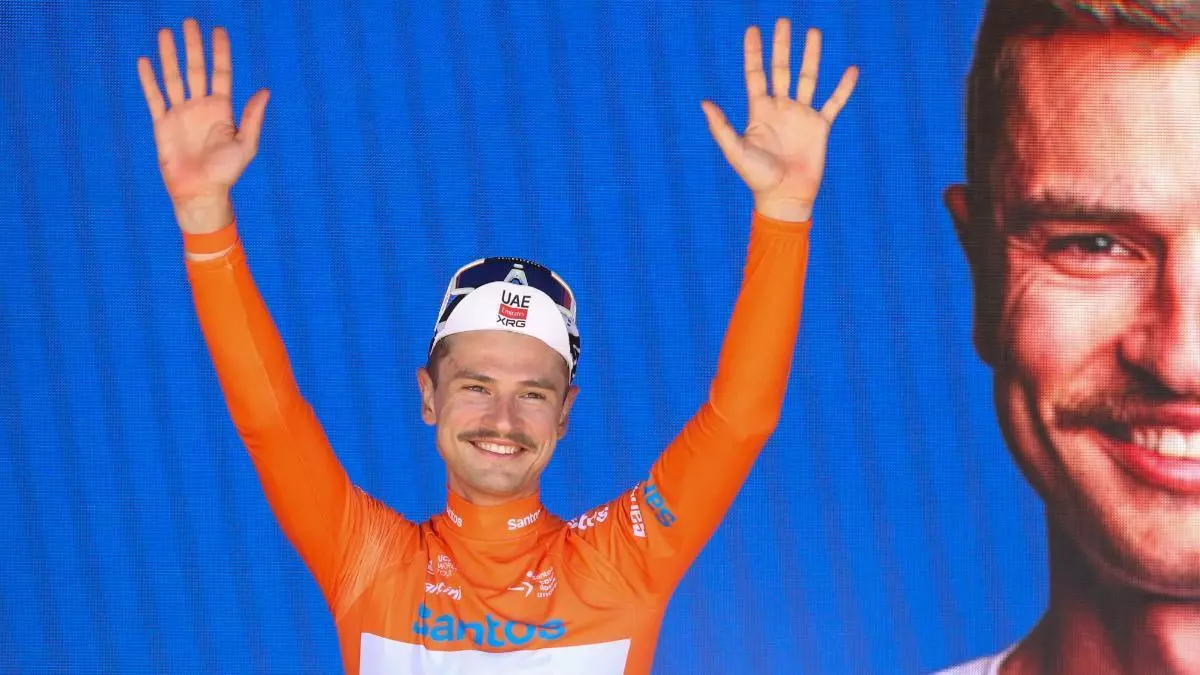
In a competition shaped by crashes, unpredictable weather and tactical resilience, one cyclist emerged victorious through steady nerves and opportunistic racing.
Adelaide, Australia, January 26, 2026. Australian rider Jay Vine claimed overall victory at the Santos Tour Down Under, a key early-season stage race in the international cycling calendar, completing a week marked by crashes, split pelotons and challenging conditions that tested both rider endurance and team strategy. The race, long anticipated as a barometer for early form among general classification contenders, unfolded unevenly, with several stages disrupted by wet roads and sharp accelerations that triggered multiple incidents. Vine’s final triumph was the product not only of his own climbing strength and tactical acumen, but also of a series of adaptations to constantly shifting race dynamics.
Vine’s path to victory was neither linear nor comfortable. Early stages of the tour featured aggressive riding as competitors sought to establish position and momentum, but repeated crashes thinned the ranks and reshaped group formations. Chase groups and breakaways repeatedly gained and lost time on technically demanding segments, particularly as rolling terrain and variable winds forced riders to ride on the ragged edge of control. Organisers and team directors alike noted that the conditions forced strategic recalibration on a daily basis, with wind direction, narrow roads and surface irregularities complicating conventional tactical plans.
Despite these challenges, Vine demonstrated consistency and resilience. He navigated slippery descents without incident, preserved energy in key moments, and responded decisively when opportunities arose on uphill finishes. His performance on the queen stage, where the race summit finish demanded both climbing prowess and disciplined pacing, was especially telling: he managed to stay with the strongest group on the steepest gradients, counting on his team to help position him and neutralise early attacks. In the closing kilometres of that decisive stage he moved into contention and applied sustained pressure that set the stage for his overall success.
Key rivalries played out amid the chaos of the week. Riders who are climbing specialists contested the queen stage with fervour, trading sharp accelerations and testing each other’s thresholds on gradients over ten percent. Others looked to time trial strength to minimise time losses on flatter days, while sprinters and classics specialists targeted intermediate sprints and stage wins. The diversity of terrain and conditions exposed both the depth and vulnerability across the field, with well-established contenders and emerging talents alike facing setbacks from crashes, mechanical issues or tactical miscalculations.
Vine’s margin of victory at the end of the tour reflected a hard-earned consolidation of consistent performance rather than a single dominant moment. In the final general classification standings, he finished ahead of close rivals who had challenged him throughout the week, with mere seconds separating key positions. It was a demonstration that consistency across varied stage profiles can outweigh isolated brilliance, especially in events where unpredictable factors—weather, positioning, terrain—play an oversized role in outcomes.
The role of his team was also crucial. Teammates worked to control breakaways, protect Vine from wind exposure, and assist in feeding and water supply, allowing him to conserve energy for crucial climbs and strategic attacks. Communication between rider and sport director proved central to navigating stage profiles that demanded rapid adjustments, with race radios and in-race decisions shaping real-time responses to moves by rivals. These elements underscored the collective nature of success in stage racing, where individual talent must be supplemented by coordinated support to negotiate the weeklong endurance test.
Race organisers commented on the overall turbulence of the event, noting that conditions this year were among the most variable in recent memory. Weather forecasts shifted day by day, with sudden rain showers turning descents slick and gusty winds fracturing the peloton. Marshals and safety teams were frequently called upon to assist riders after minor crashes, and several competitors withdrew due to injuries sustained amid the frenetic pace. This elevated the premium on bike handling skills and risk management, aspects that separated the finishing contenders from others whose ambitions were curtailed by misfortune.
For the local crowd and international spectators, Vine’s victory was a moment of celebration and recognition of homegrown talent. Australian cycling has a long tradition of producing strong riders who compete effectively on the global stage, and victories in prominent events like the Tour Down Under serve as both affirmation of individual capability and inspiration for the broader cycling community. Vine’s performance in front of passionate fans lining city streets and rural hills reinforced the narrative of perseverance and tactical intelligence overcoming adversity.
As the cycling season progresses, riders and teams will carry lessons from the Tour Down Under into future competitions, refining approaches to pacing, risk, and strategic alliances within the peloton. Vine’s victory in this context may be interpreted not merely as a win in a single event, but as evidence of his readiness for more grueling stage races later in the year. Critics and analysts alike have highlighted his composure under pressure and capacity to adapt to adverse conditions as hallmarks of riders who contend for grand tours and high-profile general classification battles.
Detrás de cada dato, hay una intención. Detrás de cada silencio, una estructura.