

 Sanjaya Ramanathan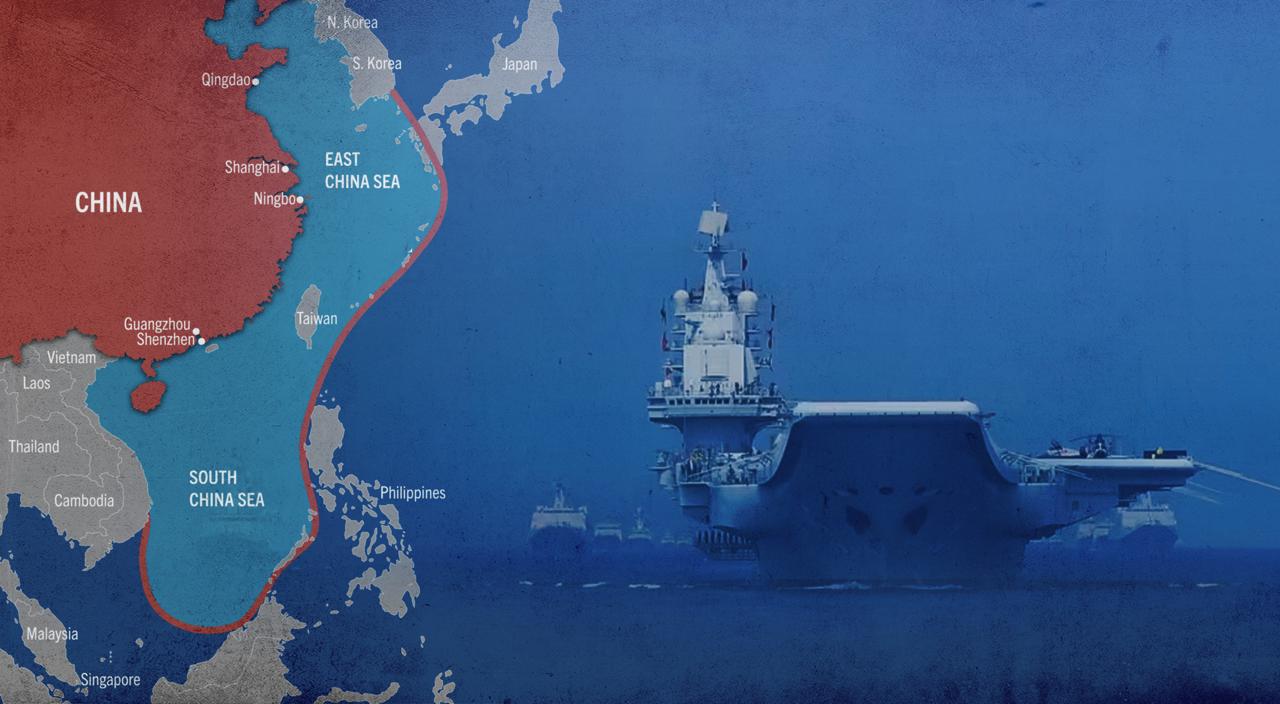
Security no longer begins at the shoreline.
Singapore, May 2026. Southeast Asia has always lived with fragmented geography, but fragmentation now carries a different strategic meaning. The region’s islands, ports, cables, cities and military corridors are being reorganized into a security architecture that no single government fully controls. The South China Sea remains a dispute over reefs, coast guards and historical maps, but it has also become something more difficult to name. It is a test of how power behaves when territory, technology and deterrence begin to merge.
China understood early that maritime influence would not depend only on fleets. Artificial islands, ports, radar systems and logistics corridors have turned geography into persistence, allowing Beijing to project power without needing permanent crisis. The Belt and Road framework helped normalize that presence through infrastructure, financing and developmental language. Connectivity, in this context, is rarely innocent.
The United States has responded through alliances, rotational deployments and expanded access agreements, especially with the Philippines. This is not a simple return to Cold War basing logic. It is a more flexible model of military calibration, where presence can expand, contract and signal without formally becoming occupation. In archipelagic Asia, proximity has become a form of pressure.
Japan moves with less spectacle but growing consequence. Its support for coast guard capacity, maritime surveillance, infrastructure resilience and digital systems rarely dominates the regional narrative, yet it accumulates quietly. Tokyo’s influence rests on reliability rather than drama. In a region tired of coercion but still dependent on external capital, that restraint has political value.
ASEAN is trapped between these architectures, although “trapped” may be too simple a word for a region that has survived by improvising between stronger powers. Its governments speak of neutrality, balance and centrality, but the material environment around them is becoming harder to balance. Ports are linked to financing. Bases are linked to deterrence. Digital systems are linked to surveillance, intelligence and administrative control.
The real danger is not only military. Across Southeast Asia, smart cities promise efficiency, safety and growth, while biometric systems, facial recognition, integrated databases and predictive tools expand the reach of the state. These technologies usually enter through the language of management rather than repression. That is why they travel so easily.
A port can move containers, soldiers and data in the same strategic grammar. An island can hold fishermen, missiles and sensors without changing its name on a map. A city can reduce traffic while increasing state visibility over its citizens. Development and control are not opposites here; they often share the same cables.
This does not mean Southeast Asian states are passive victims. Many governments actively want these systems because they strengthen administrative capacity and political control. Digital authoritarianism rarely arrives as a foreign imposition alone. It is often domesticated by local elites who discover that efficiency can become a softer name for obedience.
That is ASEAN’s new security trap, though it is less a cage than a narrowing corridor. To resist China too openly may invite economic punishment or maritime pressure. To lean too heavily on the United States may deepen dependency on military escalation. To embrace Japanese and Western technology may diversify risk, but diversification does not automatically protect societies from surveillance, militarization or elite capture.
The region is therefore not choosing between sovereignty and dependence. It is choosing among different forms of dependence, each dressed in its own vocabulary. China offers infrastructure and strategic patience. The United States offers deterrence and alliance credibility. Japan offers resilience and institutional trust, but even trust can become infrastructure.
The South China Sea is the visible theater, but the deeper contest is over systems. Whoever shapes the routes, standards, platforms and security habits of Southeast Asia will shape the region’s political future without necessarily redrawing its borders. That is the quiet transformation taking place beneath diplomatic statements and naval incidents. Sovereignty is being redefined by what states connect to, what they install and what they allow to observe their populations.
ASEAN still has room to maneuver, but maneuvering is not the same as strategy. Regional autonomy will require more than summit language and careful communiqués. It will require technology standards, data governance, maritime coordination and public scrutiny strong enough to resist both coercion and convenience. Without that, neutrality becomes a ritual performed while infrastructure makes the real decisions.
The danger is not only war. It is the normalization of a security order in which every island becomes a sensor, every port becomes a strategic hinge and every city becomes an operating system of control. Southeast Asia does not need to reject connectivity, modernization or defense cooperation. It needs to ask who benefits when these systems are connected, and who becomes more visible, more governable and easier to discipline.
The trap is already forming, but it does not yet have a final shape. It does not look like invasion. It looks like investment, interoperability, security assistance and urban efficiency. By the time it appears irreversible, it may no longer need to announce itself as power.