

 Mario López Ayala, PhD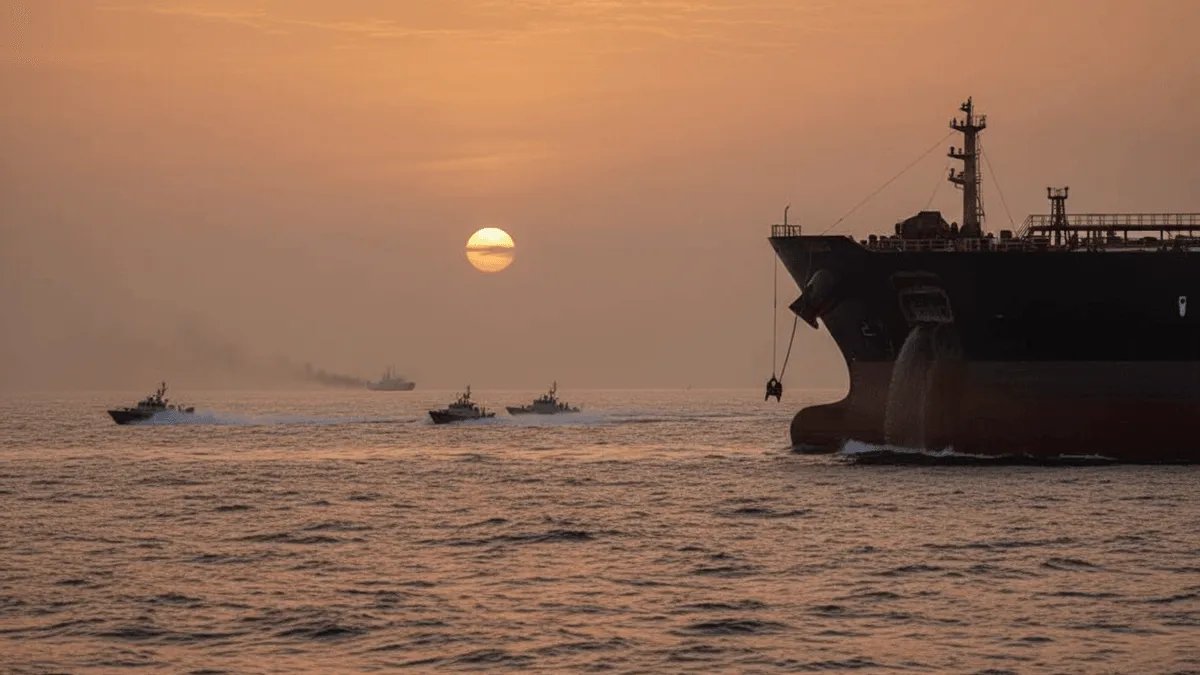
Markets can smell gunpowder.
Mexico City, May 2026. Hormuz is not a strait. It is a warning compressed into water. What moves through it is not only oil, but fear, inflation, military power, financial anxiety, diplomatic calculation and imperial memory. When that narrow passage trembles, the world is reminded that globalization still has a vulnerable body.
The mistake is to read the latest tension as just another naval incident. In Hormuz, a drone, a fast boat, a military escort or a maritime alert are not isolated events. They are signals within a grammar of pressure. No one needs to fully close the strait to disrupt the system. It is enough to make the possibility credible.
Iran understands this distinction better than many Western analysts. Its power does not lie in defeating the United States militarily, but in turning geography into a permanent psychological threat. Tehran does not need to win a conventional war to raise global risk. It only needs to remind markets that energy stability depends on a narrow corridor that can ignite in minutes.
Washington faces the classic dilemma of an imperial guarantor. If it does not respond, it loses authority. If it responds too forcefully, it risks triggering the escalation it seeks to avoid. If it responds halfway, it traps the system in a prolonged uncertainty that benefits its adversaries and burdens its allies. Freedom of navigation becomes not only a military doctrine, but a test of strategic restraint.
Oil does not rise only because of scarcity. It rises because of imagination. Markets do not wait for a tanker to sink. They price scenarios, anticipate disruptions and convert suspicion into cost. Fear becomes risk premium, risk premium becomes inflation, inflation becomes social pressure and social pressure becomes domestic politics. A tactical move in the Gulf can end up as an electoral cost on another continent.
This is where the less visible dimension of the crisis emerges. War is no longer driven solely by ships, missiles or sanctions. It is also driven by financial algorithms that process signals, amplify volatility and execute decisions before governments finish drafting their statements. Hormuz carries oil, but it also triggers data. Contemporary conflict does not only fire; it calculates.
That calculation exposes a brutal contradiction. The world speaks of energy transition, artificial intelligence, reshoring and resilient supply chains, yet reacts like a fossil civilization. A potential disruption in Hormuz can alter inflation expectations, trade routes, logistics costs and central bank decisions within hours. The digital economy still breathes through oil.
China observes this with strategic discipline. It does not need to ignite the crisis to benefit from the erosion of American bandwidth. Every tension that forces Washington to spend attention, resources and credibility in the Gulf opens space elsewhere, from the Indo-Pacific to Africa. Beijing understands that hegemony does not always decline through defeat. Sometimes it erodes through the management of too many fires.
Russia reads Hormuz as opportunity. As the West tries to contain Ukraine, the Gulf, the Indo-Pacific and energy volatility at once, Moscow gains narrative room. Each crisis that fragments Western focus weakens the promise of global control that the United States and Europe still attempt to project. In that sense, Hormuz is not only a Middle Eastern problem. It is a fault line in the Western system.
Europe appears, once again, as concerned but dependent. It speaks of strategic autonomy while its energy security, maritime protection and economic stability remain tied to decisions taken beyond Brussels. Hormuz reminds Europe that sovereignty is not measured in speeches, but in the capacity to absorb shocks. And Europe still absorbs too much from anxiety.
The Gulf monarchies face their own contradiction. They have built smart cities, sovereign funds, global airlines, automated ports and high-performance national brands. Yet beneath that modern architecture lies an older vulnerability. Their prosperity depends on open water. No skyscraper can neutralize geography.
For Iran, Hormuz is a survival valve. Under sanctions, military pressure and partial isolation, the regime turns conventional weakness into disruptive capacity. It cannot control the system, but it can contaminate it. It cannot dictate oil prices, but it can alter the psychological conditions under which those prices are formed.
The psychological dimension of power matters. Systems under pressure do not always seek stability. They seek perceived control. Limited escalation allows regimes to consolidate internal support, discipline dissent, force external recognition and demonstrate that their adversaries can be made to pay, even if only financially. Calibrated aggression becomes a language of survival.
But crises do not always obey their architects. What begins as a signal can end as an accident. What is designed as pressure can become public humiliation. What is intended as a show of strength can trigger a chain reaction that no actor can fully contain. In Hormuz, the distance between calculation and catastrophe is dangerously short.
Mexico should not read this as a distant storm. In a deeply interconnected economy, oil prices interact with inflation, exchange rates, transport costs, food prices, interest rates and logistics. A sustained shock in the Gulf does not remain offshore. It translates into domestic pressure long before it becomes public debate. Geopolitics tends to enter through the economy before it becomes political awareness.
That is the uncomfortable point. Hormuz shows that war no longer needs to be declared to produce wartime effects. It is enough for markets to behave as if conflict were possible, for governments to accumulate precaution, for shipping routes to adjust, for insurers to raise premiums and for central banks to incorporate fear into their models. Anticipation becomes a battlefield.
Globalization promised fluidity, but it depends on chokepoints. Hormuz, Bab el-Mandeb, Suez, Malacca and Panama are physical reminders that the world system does not float on abstraction. It runs through passages, canals, ports, cables and vulnerable nodes. The cloud still needs routes. Algorithms still need energy. Artificial intelligence still requires material stability.
That is why Hormuz matters beyond oil. It is where technological illusion meets hard geography. It is where macroeconomics becomes military strategy, where fear is monetized, where sovereignty is negotiated in barrels and where each actor tests how far it can push without igniting the fire it claims to avoid.
The question is not whether Iran will close the strait. That is the superficial reading. The real question is how long the international system can operate under the constant expectation that it might. Because when a threat becomes structural, it no longer needs to be executed to produce compliance.
This is the essence of contemporary power. It is not about controlling everything, but about conditioning the behavior of everyone. Hormuz is not just an energy route. It is a machine of psychological, financial and geopolitical pressure. And when oil stops being merely a commodity and becomes a message, war has already begun to speak before the first shot is fired.
Mario López Ayala, PhD
Researcher and Director of Phoenix24