

 Phoenix 24
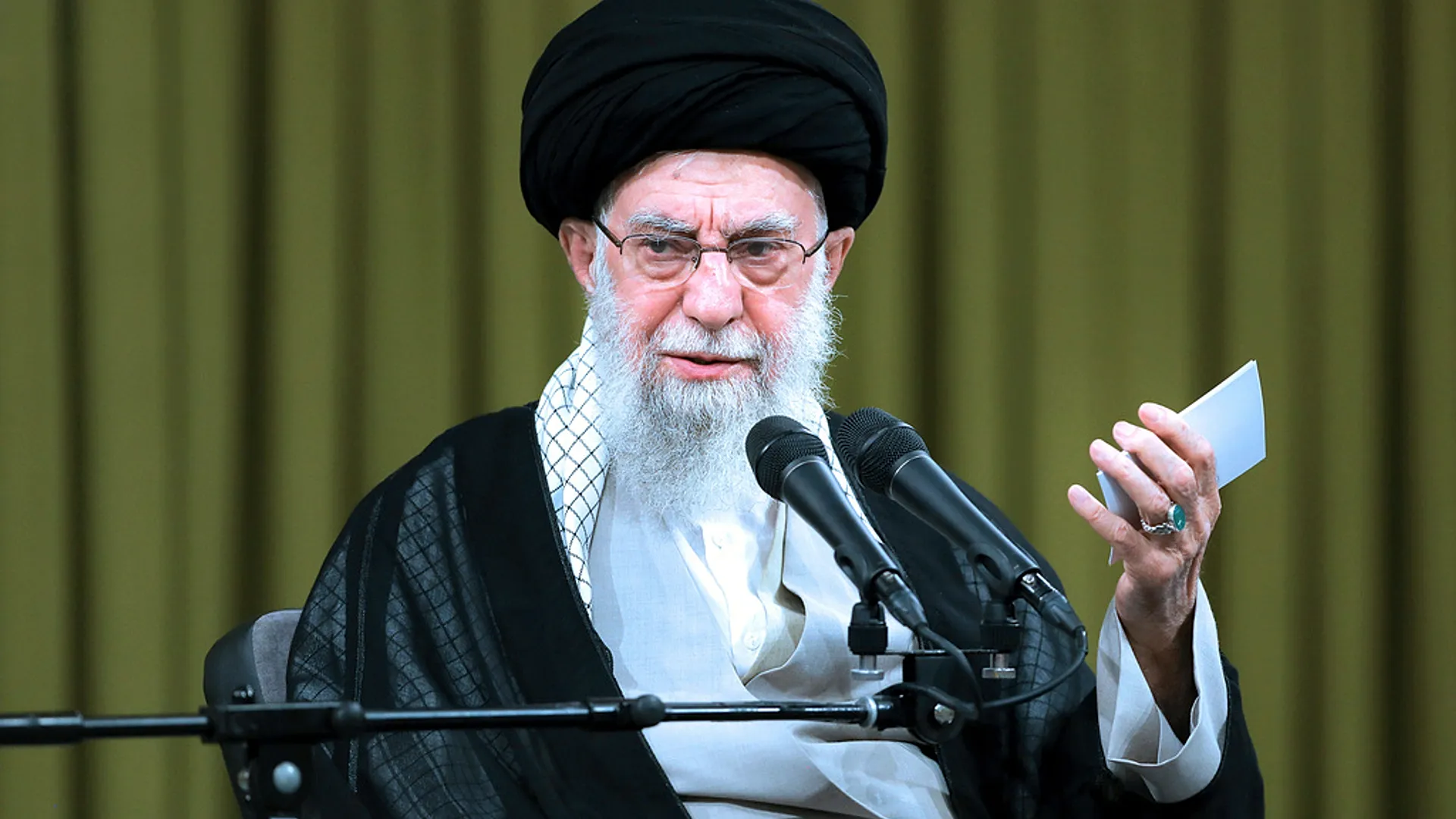
Ayatollah Ali Khamenei’s remarks reflect the Iranian leadership’s hardening stance toward ongoing protests and underline the government’s framing of civil unrest as a threat to national stability.
Tehran, Iran.
Iran’s Supreme Leader, Ayatollah Ali Khamenei, addressed the nation following a week of sustained protests across several cities, stating that demonstrators must be “put in their place” as authorities seek to quell public unrest. The comments were delivered during a televised address in which Khamenei emphasized the need for order and loyalty to the Islamic Republic, framing the protests as influenced by internal disruptions and external interference rather than as legitimate expressions of civic concern.
The demonstrations, which began in response to issues ranging from economic hardship to political grievances, drew tens of thousands of citizens onto the streets of Tehran, Isfahan, Shiraz and other urban centers. Protesters called for social and economic reforms, government accountability and the protection of civil liberties. In some locations, clashes between demonstrators and security forces resulted in arrests and reports of injuries, although independent verification of these incidents remains limited due to restrictions on media access.
In his remarks, Khamenei criticized the protests as attempts to undermine Iran’s institutions and harm national cohesion. He urged security forces and judicial authorities to maintain strict measures against what he described as “rioters” and elements that seek to destabilize society. The Supreme Leader reiterated the government’s position that the Islamic Republic’s framework must be defended against those portrayed as seeking to exploit public discontent for political ends.
The hardline tone of Khamenei’s comments aligns with previous statements from senior Iranian officials, who have attributed periods of unrest to foreign adversaries and economic pressures linked to international sanctions. Analysts suggest that framing domestic protests within a narrative of external manipulation serves to justify a heavy security response and to discourage broader participation by ordinary citizens fearful of reprisals.
The international community has monitored the situation with concern, with several governments and human rights organizations calling for restraint and respect for peaceful assembly. Statements from these entities emphasized the importance of protecting civilians and upholding international standards for the treatment of protesters. Some foreign governments urged dialogue between Iranian authorities and civil society representatives to address underlying grievances and reduce the likelihood of further escalation.
Within Iran, reactions to Khamenei’s address were mixed. Supporters of the government’s response praised the emphasis on stability and national unity, arguing that the protests threaten economic recovery and social order. Others criticized the language used by the Supreme Leader, viewing it as dismissive of legitimate concerns and indicative of a broader unwillingness to engage with voices calling for reform.
The protests come amid ongoing economic difficulties, including inflation, unemployment and shortages of key goods, which have fueled frustration among various segments of the population. While official data on the economic situation is often limited, independent observers have linked public dissatisfaction to a combination of structural challenges, international isolation and perceived mismanagement.
Analysts note that the government’s framing of protests and the invocation of national security rhetoric are consistent with responses to prior cycles of dissent. By positioning civil unrest as a threat to the nation’s ideological and political foundations, authorities aim to consolidate support among conservative constituencies and to reduce the potential for sustained mass mobilization.
As the situation evolves, the balance between public demands for change and the state’s insistence on order will continue to shape the dynamics of political engagement in Iran. Whether the current wave of protests dissipates, transforms or expands depends in part on how both citizens and authorities navigate the interplay between dissent, governance and the broader context of regional geopolitics.
Detrás de cada dato, hay una intención. Detrás de cada silencio, una estructura.
Behind every data point, there is an intention. Behind every silence, a structure.