

 Phoenix 24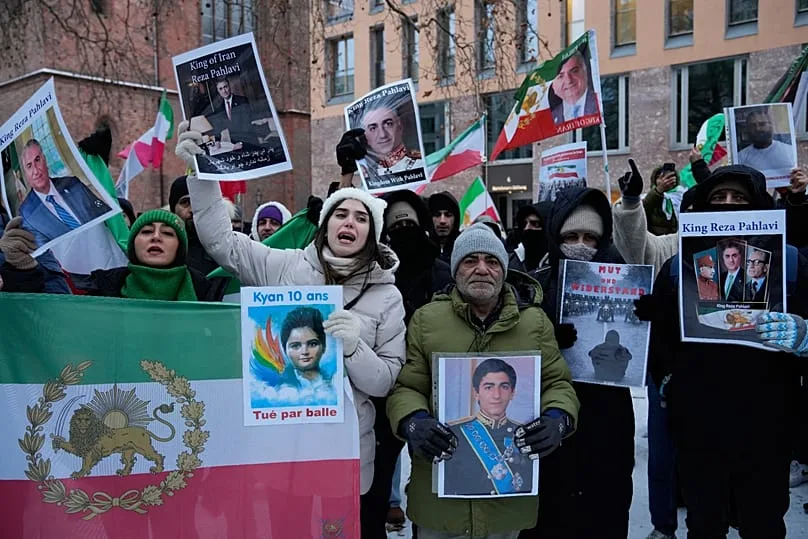
Iran’s protests now stand at a crossroads.
Tehran, January 2026.
Street unrest in Iran’s capital has moved into its thirteenth consecutive day, with near total internet disruptions sharply limiting communication and independent verification from inside the country. The sparse videos circulating through messaging apps suggest demonstrations are spreading beyond Tehran to multiple cities, but the scale and coordination of the movement remain difficult to measure under restricted connectivity. Even so, the persistence of protests, combined with the state’s escalating security posture, signals a crisis that is no longer confined to economic grievances and is increasingly framed as a question of legitimacy and national security.
The information blackout has become a central instrument of state response. By compressing the public information space, authorities reduce the protest movement’s ability to coordinate, while also narrowing what outside observers can reliably confirm. That opacity matters because it changes incentives for all actors. Protesters operate with less visibility and fewer tools for organization, while the state gains room to act with fewer immediate reputational costs. Yet the same blackout can deepen public anger, especially in a society where economic stress and political distrust already run high.
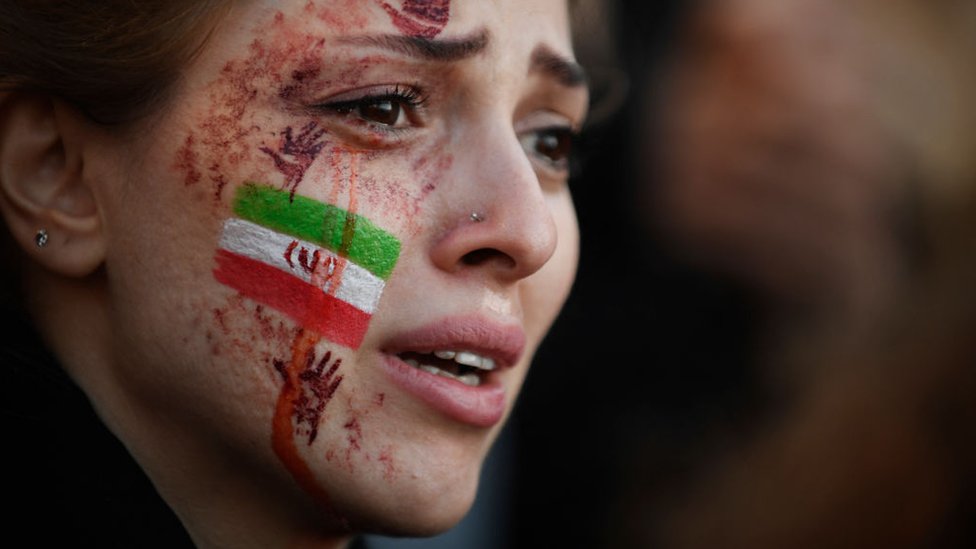
In recent hours, official messaging has moved toward securitization. Iran’s Supreme National Security Council issued a resolution announcing what it described as a very decisive response to the protests, arguing that demonstrations had shifted away from legitimate public demands and were being driven toward instability through external direction. That framing, which explicitly points outward, is not a rhetorical detail. When a protest movement is treated as a security threat rather than a civil dispute, the operational logic changes quickly. The threshold for mass arrests lowers, the use of force becomes easier to justify internally, and compromise is treated as weakness rather than de escalation.
This is the first path now visible inside Tehran: intensified coercion designed to break momentum. A crackdown can suppress visible unrest in the short term, particularly when communications are constrained and fear spreads unevenly. The risk, as even some regime aligned observers quietly acknowledge, is that heavy repression compounds a legitimacy problem rather than resolving it. If the street interprets decisive response as collective punishment, the protest energy can re emerge in waves, often more radicalized and less negotiable than before.
A second path is more unstable and therefore more consequential: fractures inside the state’s own coercive apparatus. Euronews reporting highlights a scenario centered on erosion in the security and military ranks, whether through defections, refusal to engage, or internal disagreements over how far violence should go. Economic hardship, perceptions of corruption, and the widening gap between elite lifestyles and public conditions are repeatedly cited by analysts as pressures that can weaken discipline. The most sensitive variable is the Islamic Revolutionary Guard Corps. If the IRGC concludes it must intervene fully to restore control, the short term effect may be intimidation, but the longer term effect could be heightened internal strain and a higher probability of fractures within the loyalist camp.
A third path is political ambiguity amplified by external signaling. United States President Donald Trump described the events as the biggest protests he has ever seen, a statement that has echoed through international media and is closely watched inside Iran. External endorsements, even rhetorical ones, can energize some protesters, but they also strengthen the state narrative that unrest is orchestrated from abroad. That dynamic is particularly combustible in Iran, where the memory of foreign interference is routinely invoked to justify domestic repression. In practice, the more prominent external voices become, the easier it is for Tehran to argue that the issue is sovereignty rather than governance.
A fourth path, less dramatic but often more realistic, is a prolonged cycle of unrest and containment. In this outcome, demonstrations continue intermittently across cities, security forces respond with periodic pressure, and the economy continues to deteriorate, feeding the next round of mobilization. Such a cycle does not require a single decisive rupture. It only requires that neither side can achieve a final outcome. Under sustained uncertainty, ordinary citizens become the primary casualties, as commerce slows, fear deepens, and social trust breaks down. Reports of closed shops in Tehran’s main bazaar, captured in recent imagery, hint at the economic drag already building under the surface.
Technology sits at the center of these trajectories. Alongside physical repression, a digital battle is underway. Some experts cited in the reporting speculate that authorities may be using more advanced measures than simple shutdowns, including selective interference targeting satellite communications and Starlink related infrastructure. Whether or not every claimed tactic is confirmed, the direction is clear: Iran is experimenting with deeper informational isolation. If that effort succeeds, it reduces the protest movement’s operational capacity. If it fails, it signals state weakness and may embolden further mobilization.
The opposition landscape adds another layer. References to Crown Prince Reza Pahlavi, and the political symbolism attached to the pre 1979 monarchy, are circulating again, while reports indicate no direct meeting is planned in the near term between Pahlavi and Trump despite earlier suggestions. The significance here is not a single figure, but the question of representation. Protest movements without a unified leadership can be harder to decapitate, yet also harder to translate into political change. Tehran understands this and will likely attempt to keep the opposition fragmented by amplifying competing claimants and narratives.
Beyond the immediate street politics, global actors are watching with calculation. Euronews notes that China, and to a lesser degree Russia, are unlikely to remain passive if Iran enters a historic recalibration. Their interests are not sentimental; they are strategic, tied to regional stability, energy corridors, and geopolitical alignment. If the crisis deepens, external involvement may take the form of diplomatic shielding, economic positioning, or strategic messaging rather than overt intervention, but the effect would still be to shape Tehran’s options.
What makes this moment particularly dangerous is the convergence of three conditions: sustained protest energy, a state preparing for sharper coercion, and an information environment that has been deliberately darkened. With internet access largely cut, even credible signals capture only part of the reality inside Iran, and miscalculation becomes more likely on all sides. The next phase will be shaped less by a single headline event than by cumulative decisions: whether repression escalates beyond a point of return, whether internal cohesion holds, and whether the protest movement can sustain itself under isolation.
Más allá de la noticia, el patrón.
Beyond the news, the pattern.