

 Phoenix 24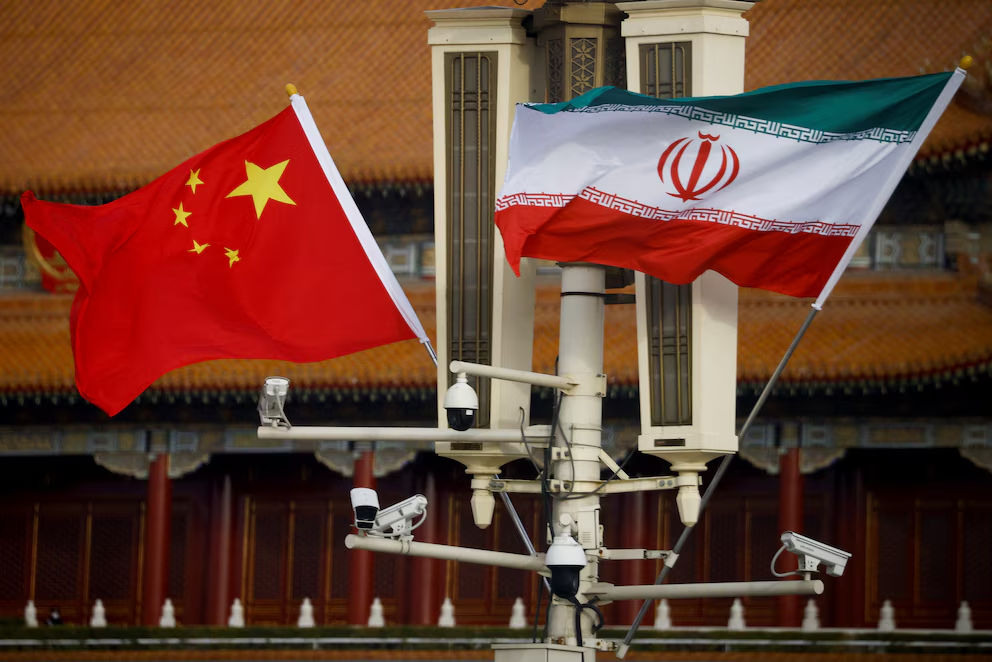
Silencing journalists is now a state strategy.
New York, May 2026. A new global alert over the most urgent cases of press repression has placed Iran and China at the center of the international denunciation. The list, released around World Press Freedom Day, identifies journalists facing prison, judicial persecution, deteriorating health conditions and the systematic erosion of basic legal guarantees.
Among the most serious cases is Reza Valizadeh, an Iranian American journalist sentenced to ten years in prison in Iran after returning to the country in 2024. His case reflects a broader pattern in which authoritarian states treat independent reporting, foreign media experience and contact with international institutions as evidence of political threat. Journalism is no longer prosecuted only for what it publishes, but for the networks it touches.
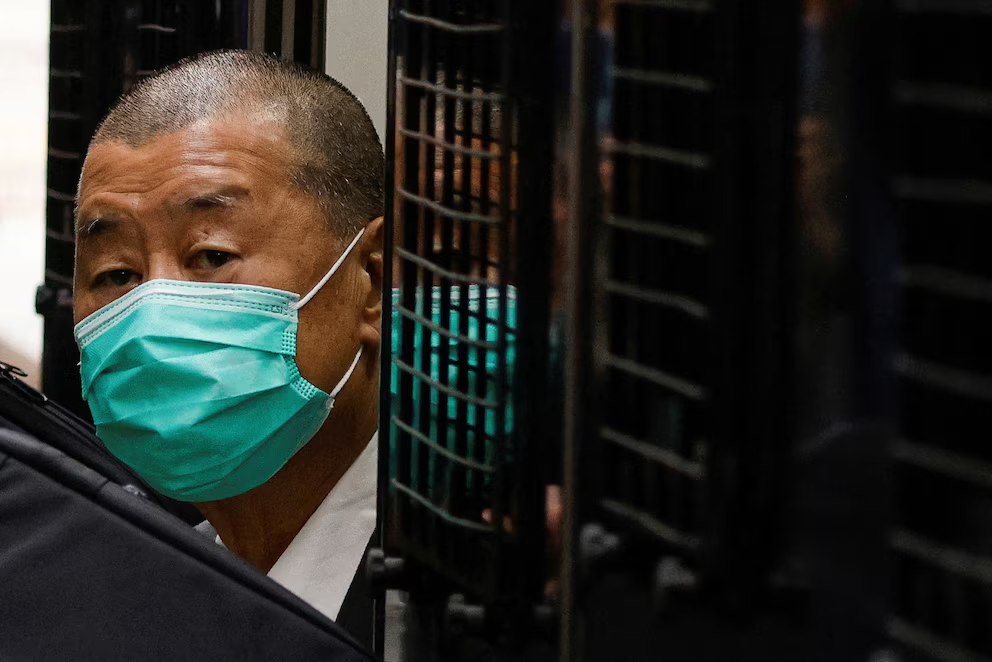
China also remains central to the global warning through cases such as Jimmy Lai in Hong Kong and Zhang Zhan on the mainland. Both names have become symbols of a wider architecture of repression that combines national security laws, closed trials, surveillance, pressure on families and prolonged detention. The objective is not only to punish individual journalists, but to produce a chilling effect across entire information ecosystems.
The alarm goes beyond Iran and China. International press freedom groups warn that journalism is facing one of its most severe moments in decades, with more countries using legal intimidation, political hostility and criminal charges to restrict public information. The authoritarian model has become more sophisticated: repression now travels through courts, bureaucracies, digital monitoring and controlled narratives.

For democratic societies, the warning is uncomfortable because press freedom is not deteriorating only under openly authoritarian regimes. Legal harassment, political attacks on media ownership and violence against reporters are also expanding in systems that still claim institutional legitimacy. That makes the crisis global rather than regional.
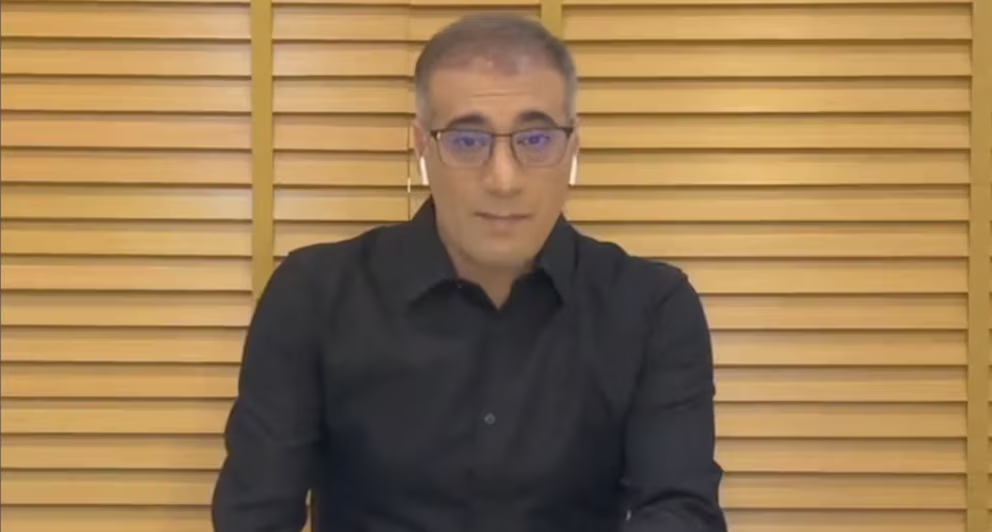
The message is stark. When states imprison journalists, they are not only attacking individuals; they are disabling society’s ability to know itself. Iran and China may sit at the center of this denunciation, but the deeper pattern is wider: power increasingly understands information as a battlefield, and journalists as targets inside it.
Contra la propaganda, memoria. / Against propaganda, memory.