

 Phoenix 24
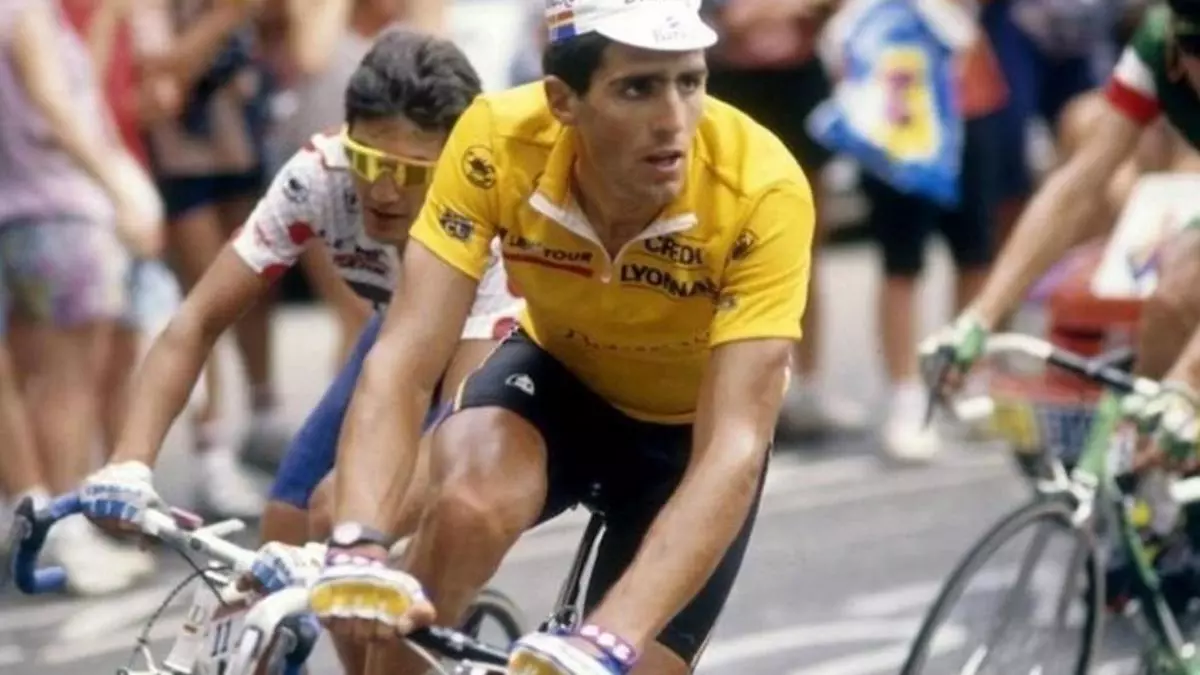
Greatness is also measured by what escapes you.
Pamplona, February 2026.
Miguel Indurain’s recent admission about the classic he most wanted to win does more than revive nostalgia. It reveals the competitive geometry of his career and the difference between dominance in grand tours and unfinished business in one day racing. The race he pointed to was Liege Bastogne Liege, a monument that matched his engine, his resistance, and his sense of effort, yet never fully yielded. He acknowledged that it was a race he liked, one in which he posted strong results including a fourth place, but could not finish the job.
That confession matters because Indurain is not a rider usually defined by absence. His record remains one of the central architectures of modern Spanish cycling, with five consecutive Tour de France titles, two Giro d Italia victories, Olympic and world time trial gold, and a style of control that reshaped how stage race authority could look. When an athlete of that scale speaks about a missed target, the comment does not sound like complaint. It sounds like a technical diagnosis from someone who understood exactly where his strengths ended and where racing craft in another format demanded a different language.
The quote also clarifies something many fans flatten over time. Being a monumental grand tour rider does not automatically convert into mastery of the major classics. Indurain himself framed the issue in terms of race execution and lack of experience in one day racing, noting that he had many thorns left and that he struggled to rematar, to finish off those opportunities, especially in classics. That distinction is crucial. The physiology that wins three weeks of cycling is not always the same toolkit required to read the chaos, timing, and improvisation of a monument in a single afternoon.
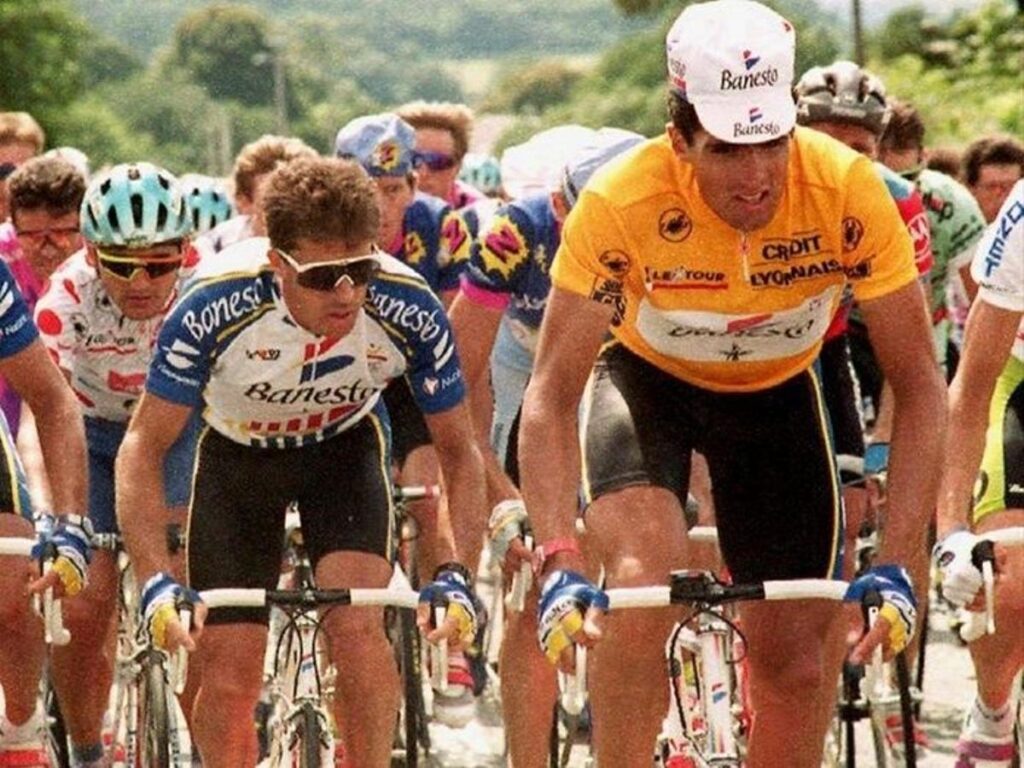
Liege Bastogne Liege was, in that sense, a logical obsession. It is a monument built on repeated attrition rather than pure sprinting speed, and historically it has rewarded riders capable of sustaining power under cumulative climbs and tactical instability. Indurain’s profile made the fit plausible enough to become tantalizing. His fourth place in the 1991 edition, in a front group won by Moreno Argentin, stands as evidence that the ambition was not romantic fantasy but competitive reality. He was close enough to imagine it, which is often what makes a career omission linger longest.
There is another layer to the confession, and it concerns how champions narrate their own legacy once the noise of the era fades. Indurain also referenced the world championship, where he finished twice second and once third without taking the rainbow jersey, placing that near Liege in the category of what remained unresolved. This is not self diminishing. It is the opposite. It reflects a form of elite memory that does not confuse fame with completion. The greatest careers often preserve a private inventory of races that mattered for reasons the trophy case cannot fully explain.
What makes this especially interesting now is the current cycling culture of total comparison, where riders are constantly measured across monuments, grand tours, weeklong races, and even media charisma. Indurain’s reflection cuts against that flattening. It reminds us that specialization, calendar design, and team priorities shaped careers more rigidly in his era, and that even an all time great could leave entire domains only partially explored. The point is not that he lacked the level. The point is that cycling history is also made by strategic choices, preparation models, and the races a champion cannot or does not center often enough.
His comment about Liege therefore functions as more than anecdote. It reopens the question of what kind of rider he might have become had his program been built more aggressively around the classics. Observers have long treated him as a clasicomano in potential because of his power and endurance, and occasional performances strengthened that idea. Yet potential in cycling is always conditional. It depends on timing, team goals, course evolution, and the willingness to spend prestige in uncertain terrain rather than protect it in established objectives.
There is also a psychological honesty in the way he frames it. He does not mythologize the missed monument as bad luck or betrayal by circumstance. He speaks instead about what he could not quite solve. That matters because it preserves the athletic truth of the classics: they are not only races of strength, but of reading the race before the race reveals itself. Liege Bastogne Liege in particular has broken stronger riders than it crowned, precisely because it punishes hesitation and rewards timing under fatigue.
The deeper pattern is that Indurain’s confession enriches his legacy rather than complicates it. It places a human contour inside a monumental career and reminds us that sporting greatness is not the elimination of limits, but the disciplined coexistence with them. Champions are remembered for what they won. They are understood, more fully, when they also tell us what they chased and could never quite catch.
Facts that do not bend. / Hechos que no se doblan.