

 Phoenix 24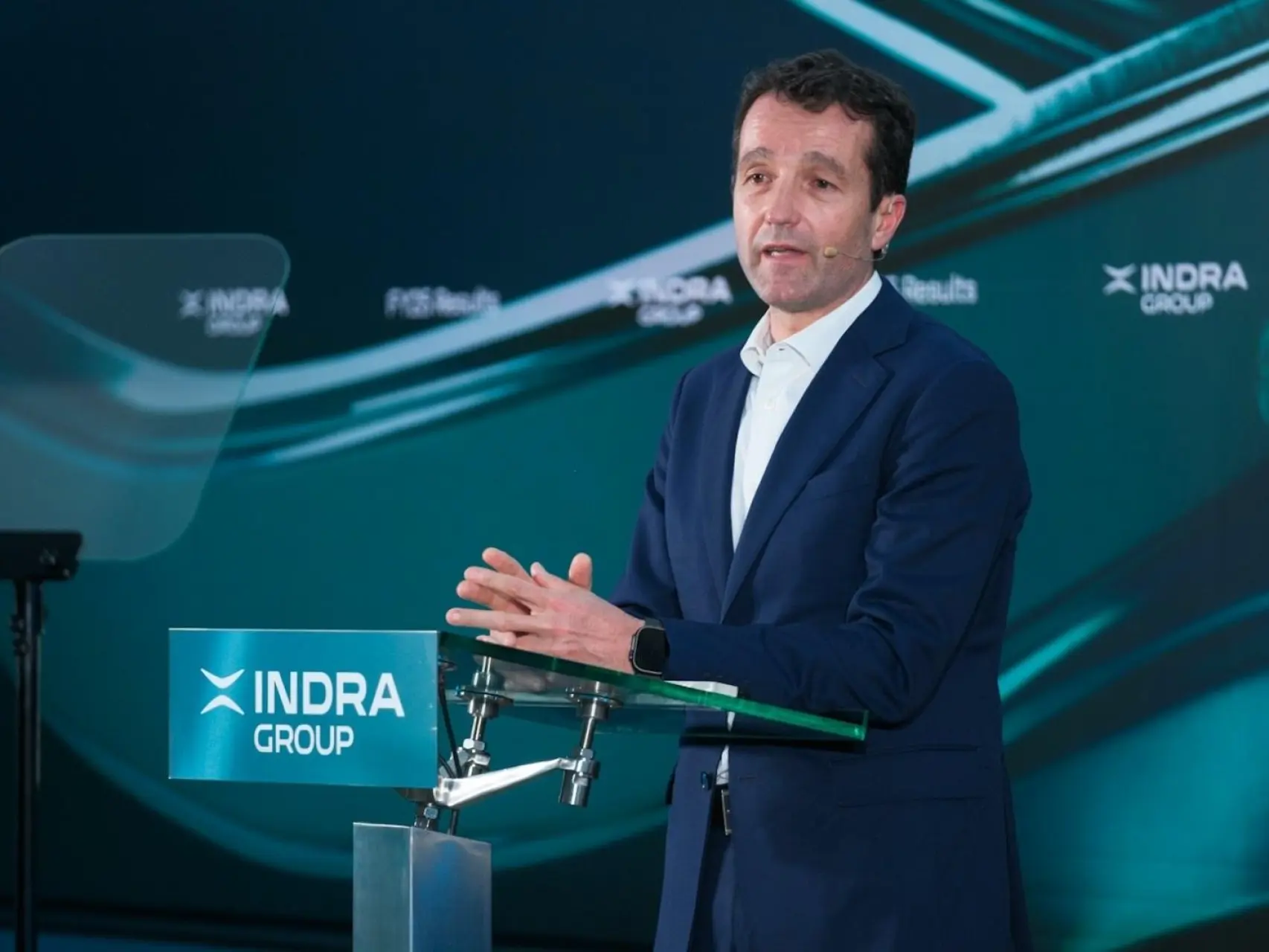
Corporate governance is never neutral in strategic industries.
Madrid, April 2026
Ángel Escribano’s resignation as chairman of Indra is not simply a boardroom event inside one major Spanish company. It is a reminder that in sectors tied to defense, technology, and national capability, corporate governance quickly becomes a matter of state power. The conflict around his leadership was shaped by concerns over the failed attempt to bring his family-linked company, EM&E, into Indra’s orbit, a move that intensified accusations of conflict of interest and pushed the Spanish government into a more direct role. What emerged was not just a managerial dispute, but a struggle over who gets to define the strategic boundaries of a national defense champion.
That matters because Indra is not an ordinary listed firm. It sits at the intersection of defense production, technological sovereignty, state procurement, and the broader European push to strengthen security autonomy under growing geopolitical pressure. In that environment, leadership is never judged only by commercial logic. It is judged by whether the company’s direction aligns with what the state considers strategically acceptable. Once the proposed operation involving EM&E began to look politically toxic, Escribano’s position became harder to sustain regardless of his industrial ambitions or shareholder status.
The Spanish government’s role in this episode is especially revealing. Through SEPI, the state remains the largest shareholder in Indra, which means public power was always structurally present even before the current crisis sharpened. But the resignation suggests something more forceful than passive ownership. It shows that in Spain, as in much of Europe, strategic industry is increasingly being governed through a hybrid logic where market form survives, yet political tolerance ultimately defines the perimeter of acceptable control. In theory, a listed company answers to governance rules and investors. In practice, a defense company also answers to the state’s instinct for containment.
This is why the case should not be reduced to personal controversy. The deeper issue is institutional. Europe is trying to rearm, consolidate industrial capacity, and build more credible defense ecosystems while still pretending that these processes can unfold under the tidy language of normal corporate governance. They cannot. As soon as scale, weapons, public contracts, and strategic dependency enter the picture, the old distinction between state interest and boardroom autonomy begins to thin. Indra’s turmoil exposes that thinning in unusually visible form.
There is also a reputational dimension that neither the company nor the government can fully avoid. A strategic champion cannot easily project seriousness abroad while appearing internally vulnerable to governance crisis at home. Investors read volatility. Competitors read hesitation. Governments read control. The removal of Escribano may stabilize part of that image in the short term, but it also leaves behind a harder truth. Spain had to intervene politically to restore the appearance of orderly governance in one of its most important industrial assets. That may be understandable. It is not cost free.
For Indra, the next phase will depend on whether the company can reassert strategic coherence without looking captured by state choreography. That is a difficult balance. Too much political intervention can weaken market confidence and reinforce the impression that strategy is being written externally. Too little intervention, by contrast, leaves open the fear that strategic assets may drift into conflicts of interest or into private influence structures the state no longer finds acceptable. In this sense, the company now faces the same dilemma confronting much of Europe’s defense sector. It must appear governable, but not merely governed.
The wider pattern is already clear. As defense spending grows and industrial sovereignty becomes a larger European priority, more companies will be treated not just as businesses, but as instruments of national and continental capability. That means leadership disputes inside them will increasingly be interpreted through political and security lenses rather than through corporate procedure alone. Indra is not an anomaly. It is an early example of what happens when the market facade remains in place while the strategic state steps forward more openly.
The resignation therefore tells us something larger than who won a struggle inside one company. It tells us that Europe’s defense renaissance is being built under conditions where ownership, governance, and industrial strategy are no longer separable in the old way. Spain did not simply lose a chairman and appoint another. It reaffirmed that in strategic sectors, the state still reserves the right to decide when managerial ambition becomes politically intolerable. And once that threshold is crossed, the boardroom ceases to be only corporate space. It becomes a theater of national power.
Más allá de la noticia, el patrón. / Beyond the news, the pattern.