

 Phoenix 24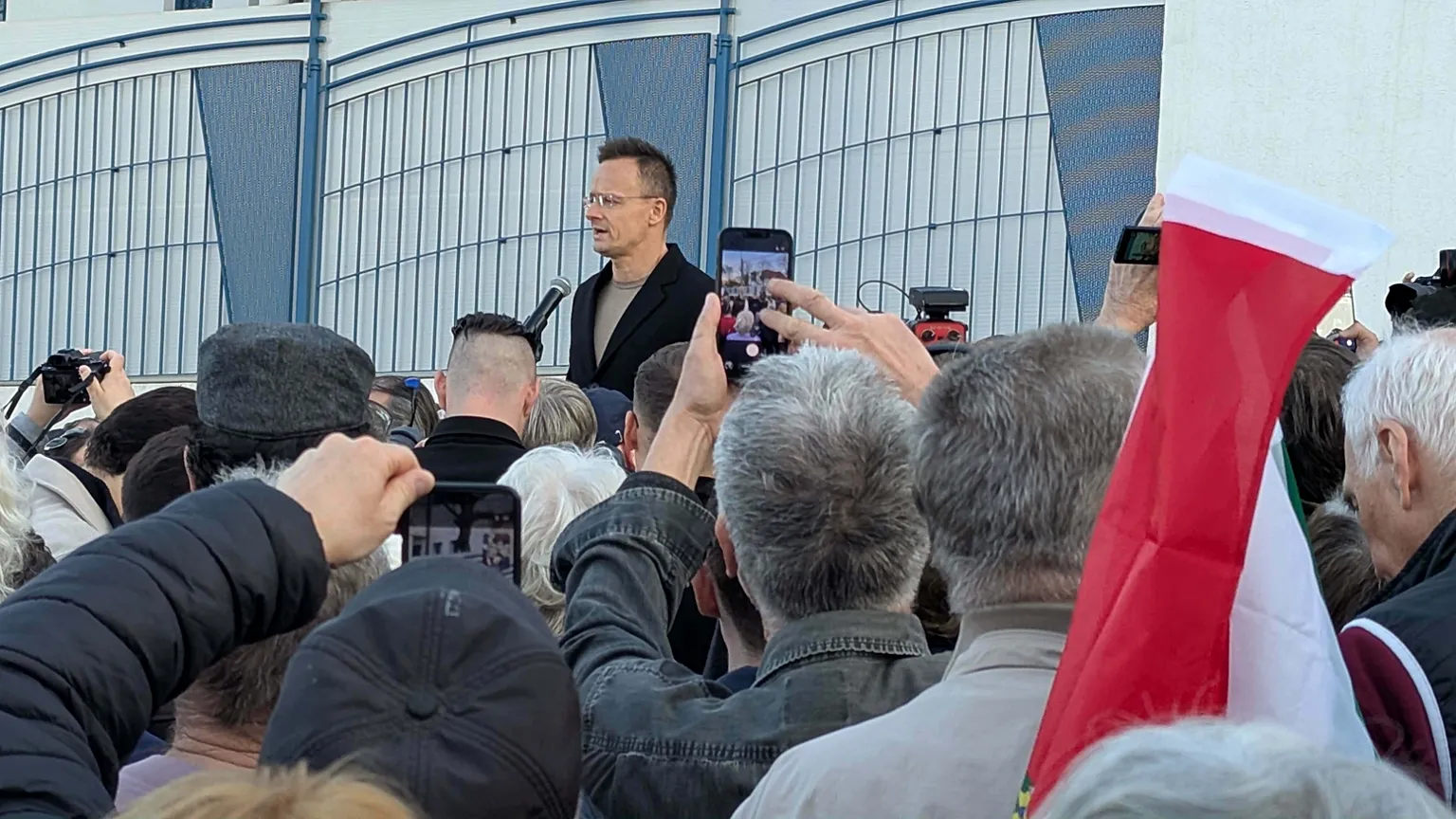
April is shaping policy more than Brussels is.
Budapest, March 2026
Hungary’s confrontation over a massive EU loan for Ukraine is no longer just a dispute about money. It has become a campaign instrument in Viktor Orbán’s fight to survive an increasingly competitive April 12 election. The Hungarian government has tied its blockade of a proposed €90 billion EU loan for Kyiv to the suspension of Russian oil flows through the Druzhba pipeline, arguing that Ukraine is violating its commitments while Budapest pays the price in energy insecurity. Orbán has made the issue central to his domestic message, presenting the election as a choice between “war or peace” and portraying both Ukraine and his Hungarian opposition as forces that would drag the country deeper into the conflict.
What makes the moment more volatile is that the dispute is no longer confined to speeches and vetoes. Hungarian anti-terror police recently raided a convoy linked to Ukraine’s state savings bank and detained seven Ukrainian nationals carrying a large quantity of cash and gold from Austria to Ukraine, according to Hungarian authorities. Kyiv responded by accusing Budapest of taking its citizens hostage and denouncing the move in extreme terms. This pushed an already serious bilateral rupture into something closer to live political theater, where law enforcement, energy policy and electoral messaging now feed each other.
The oil issue is the spine of Orbán’s campaign narrative. Hungary and Slovakia say Kyiv is deliberately delaying the reopening of the Druzhba pipeline after January damage, while Ukraine says the interruption stems from war-related infrastructure problems, not political sabotage. Orbán has promised to use political and financial tools to force the pipeline back into operation and has explicitly linked that dispute to Hungary’s veto of both new EU sanctions on Russia and the Ukraine loan. In other words, the energy corridor has become leverage in two directions at once: against Kyiv at the bilateral level and against Brussels at the European level.
The April election is what turns all of this from friction into strategy. Orbán’s Fidesz government is facing a serious challenge from Péter Magyar’s Tisza party, with polling indicating a tighter race than Orbán has faced in years. In that environment, Ukraine is being used less as a foreign-policy file and more as a domestic wedge. Orbán’s messaging casts his opponents as reckless, pro-war, and aligned with outside pressure from Brussels and Kyiv. Senior Hungarian officials have gone further, accusing Ukraine of trying to interfere in Hungary’s election. That accusation has been amplified by anti-Ukraine demonstrations and by state-aligned messaging that treats foreign policy as a referendum on national survival.
This is why the Ukraine loan matters beyond budget mechanics. A €90 billion package would be one of the largest demonstrations of EU financial solidarity with Kyiv, and Hungary’s ability to hold it up underlines a broader structural problem inside the Union: one member state can still convert strategic aid into bargaining power when unanimity rules and political timing align. Brussels has already shown awareness of that sensitivity. The European Commission reportedly scheduled a separate legal proposal on Russian oil for just after Hungary’s election, suggesting the EU understands that Hungarian domestic politics are now shaping the tempo of European decision-making.
The deeper pattern is not only Orbán’s obstruction. It is the way national elections can hijack collective European strategy when geopolitical crises collide with economic dependence and domestic fear. Hungary’s government is treating Ukraine aid, Russian oil and anti-EU messaging as parts of one integrated campaign architecture. Brussels, meanwhile, is trying to preserve unity without fully neutralizing that architecture. That imbalance is what makes April dangerous. If Orbán wins after turning Ukraine into a successful electoral threat narrative, the incentive to use future EU crises the same way will grow. If he loses, the shock will not end the conflict over Ukraine, but it could change the internal arithmetic of European obstruction.
What is happening in Hungary is therefore larger than a loan dispute. It is a test of whether the EU can maintain strategic coherence when one of its members decides that external war is best consumed as domestic campaign fuel. In that sense, the real deadline in April is not only electoral. It is institutional.
Against propaganda, memory. / Contra la propaganda, memoria.