

 Phoenix 24
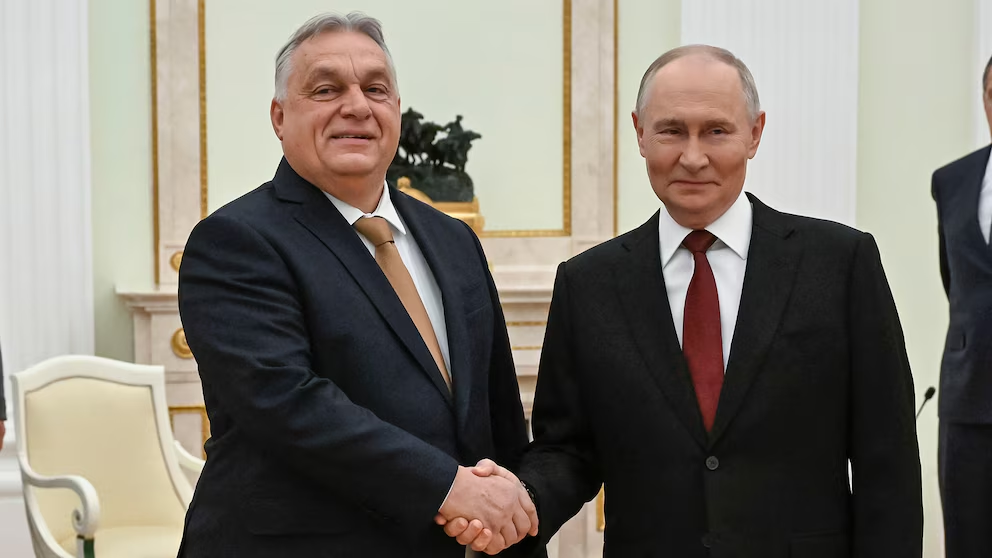
Sometimes diplomacy does not shift through victories on the ground, but through unexpected corridors opened by unlikely intermediaries.
Moscow, November 2025. The Kremlin confirmed that Russia has accepted Hungary’s proposal to host a new round of negotiations on the war in Ukraine, turning Budapest into the next potential epicenter of European diplomacy after months de-escalation attempts stalled across traditional arenas. The announcement followed a meeting between Vladimir Putin and Hungarian Prime Minister Viktor Orbán, who has positioned himself as a bridge figure capable of speaking to both the West and Moscow at a moment when few European leaders maintain direct communication channels with the Kremlin.
Although details remain scarce, analysts in Europe noted that the acceptance of Budapest as a venue signals a deliberate recalibration. The choice is symbolic in a region where Hungary’s foreign policy has often diverged from its European partners, especially on issues related to sanctions, energy dependence and military support to Ukraine. Observers in the Americas argue that the move reflects Moscow’s strategy of leveraging divisions within the European Union by elevating those governments that advocate dialogue over pressure. From Asia, geopolitical institutes highlight that Russia’s approval of negotiations under Hungarian sponsorship may also serve to test the limits of Western unity and reveal which states are willing to deviate from the dominant line of confrontation.
Orbán presented the offer as a constructive platform capable of hosting a conversation that has become increasingly fragmented. In contrast to other European capitals, Budapest has maintained a consistent policy of engagement with Moscow, rooted in long term energy agreements and political pragmatism. While critics describe Hungary as a weak link in the broader European structure, supporters argue that its position grants it access to actors who otherwise resist direct diplomatic contact. This duality has placed the country at the center of a rare opportunity where neutrality, real or perceived, becomes a diplomatic asset.
Inside Moscow, officials emphasized that the initiative is aligned with Russia’s interest in reframing the conflict narrative. Russian strategists contacted by European think tanks insist that discussions in Budapest could provide an alternative stage to voices that feel overshadowed by the diplomatic dominance of Brussels, Washington and Kyiv. In the Americas, security experts interpret the decision as an attempt by Russia to signal openness in order to strengthen its international posture without making concessions on the battlefield. Analysts in Asia warn, however, that peace talks serve both as negotiation and as psychological maneuvering, and that the ultimate outcome will depend on whether Kyiv sees the venue as truly viable.
The Ukrainian government has not yet signaled whether it will participate. Officials in Kyiv remain cautious, noting that negotiations require neutral ground, binding guarantees and transparency regarding Russia’s intentions. European diplomats close to the matter explain that Hungary’s position within NATO complicates the picture: while Budapest hosts the alliance’s structures, its bilateral stance with Moscow has repeatedly raised questions about its reliability. This paradox amplifies the uncertainty surrounding the process, as a mediating state must be trusted by all sides for talks to have weight.
Beyond the immediate diplomatic choreography, the humanitarian and strategic dimensions continue to dominate the conflict. Organizations monitoring civilian impact warn that any negotiation path must incorporate commitments related to displaced populations, damaged infrastructure and the treatment of territories under military control. Analysts in America highlight that previous attempts at negotiation collapsed because they failed to integrate mechanisms for accountability and long term security guarantees. Asian institutions studying conflict transitions add that without a coherent roadmap for reintegration and stabilization, negotiations risk becoming symbolic gestures rather than substantive breakthroughs.
Still, the prospect of talks in Budapest introduces movement into a diplomatic landscape defined by stalemate. For some European states, the initiative is a reminder that alternative pathways can emerge unexpectedly when geopolitical systems reach saturation. For others, it raises fears that Russia may be exploiting internal European divisions to shift the negotiations onto more favorable terrain. The tension between opportunity and risk defines much of the reaction within the international community.
What remains clear is that Hungary has inserted itself into one of the most consequential diplomatic processes of the decade. Whether it becomes a facilitator of progress or a stage for further disagreement will depend on the willingness of all parties to engage with seriousness and clarity. The months ahead will reveal if this initiative marks the beginning of a new phase or if it simply extends a cycle of negotiations that repeatedly fall short of altering the trajectory of the war.
Truth is structure, not noise.
La verdad es estructura, no ruido.