

 Phoenix 24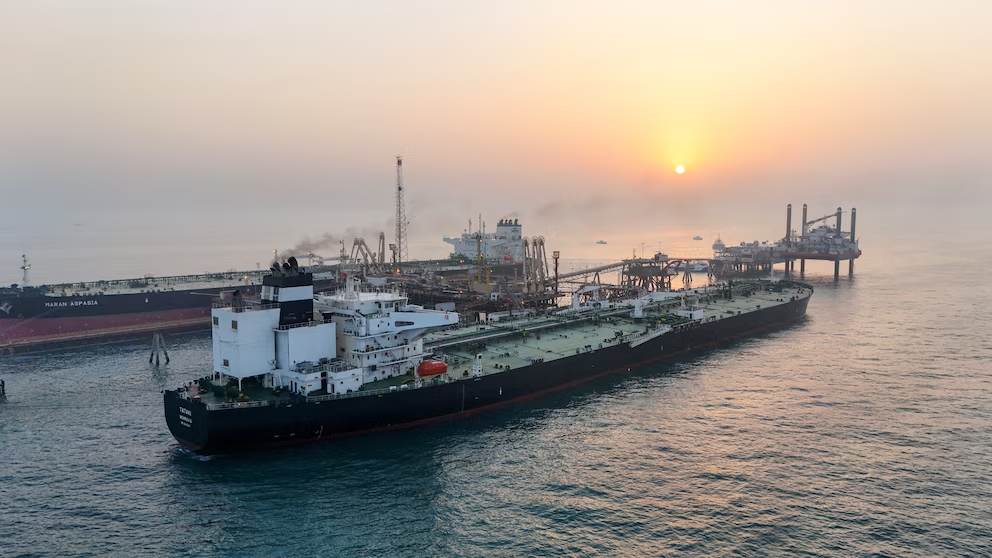
Energy shocks rewrite risk in hours.
New York, March 2026
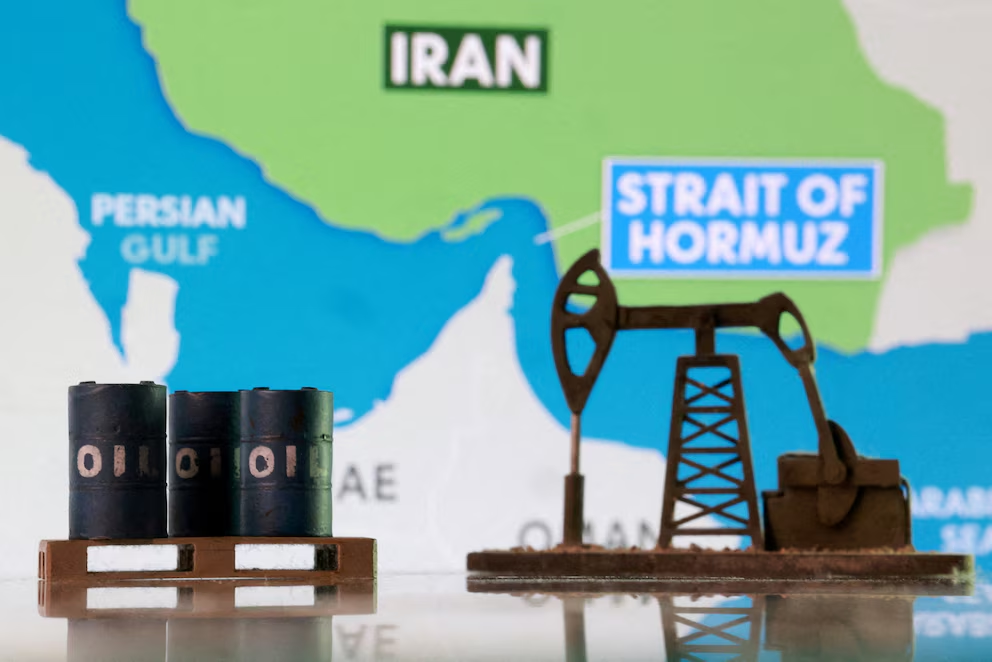
Oil pricing has stopped behaving like a commodity chart and started behaving like a war indicator. With commercial traffic through the Strait of Hormuz effectively paralyzed, crude surged sharply and market volatility widened across equities, rates, and currencies. Infobae reported the barrel moving above 92 dollars as the closure tightened physical supply expectations and forced traders to price not just scarcity, but duration. The essential point is not a single print on a screen. It is the structural fact that Hormuz is a choke point where logistics, insurance, and geopolitics compress into one number, and that number is now rising because the corridor’s normal function has been interrupted in plain sight.
Hormuz matters because it is not optional. A large share of the world’s seaborne oil and a major portion of liquefied natural gas exports transit the strait, especially for Gulf producers whose export geography is hard to reroute quickly. When that corridor constricts, markets immediately confront two overlapping realities: how much supply is delayed today, and how many producers may have to shut in output if the backlog persists. The first is a near-term logistics problem. The second is a medium-term production problem with a different inflation signature. Even if crude inventories exist elsewhere, inventories do not eliminate the shock. They only slow it, and slowing a shock is not the same as neutralizing it.
This is why the price response has been so fast and so psychologically loud. A disrupted chokepoint triggers a risk premium that is bigger than the immediate shortage because it prices the possibility of escalation: more shipping paralysis, more insurance withdrawals, more refinery interruptions, and more uncertainty around export schedules. Once that premium enters the system, it begins to leak into everything that is sensitive to energy costs. Airlines price risk. Shipping companies price risk. Food chains price risk. Governments begin to worry about fuel pass-through into household anger. Central banks begin to worry about headline inflation reigniting exactly when they hoped to pivot toward easier financial conditions.
Markets have already shown the familiar pattern: risk assets wobble, energy-linked assets spike, and the bond market rethinks the path of rates. Even when equities stabilize after a heavy move, the stabilization is rarely calm. It becomes a tense equilibrium where investors are waiting for two inputs they cannot control: whether the corridor reopens meaningfully, and whether the conflict expands into additional energy infrastructure. In that environment, “good news” often means only the absence of worse news. Traders become less interested in optimism and more interested in the probability distribution of outcomes, which is why price ranges widen and intraday swings become normal.
The closure also forces a geographic rebalancing that is easy to miss if you focus only on crude. Asia is structurally more exposed than Europe to the Gulf-to-Hormuz pipeline because a higher proportion of Gulf exports flows eastward, and many Asian economies are both energy-import dependent and heavily integrated into maritime supply chains. When Hormuz constricts, Asia faces a double squeeze: higher energy costs and higher freight friction. Europe is not immune, but its exposure is typically more indirect, transmitted through global pricing and market sentiment rather than through direct physical dependence. The United States sits in a different position again: as a major producer, it can benefit from elevated prices in some segments even as consumers face higher gasoline costs. This uneven exposure is why the same event produces different political pressures across regions.
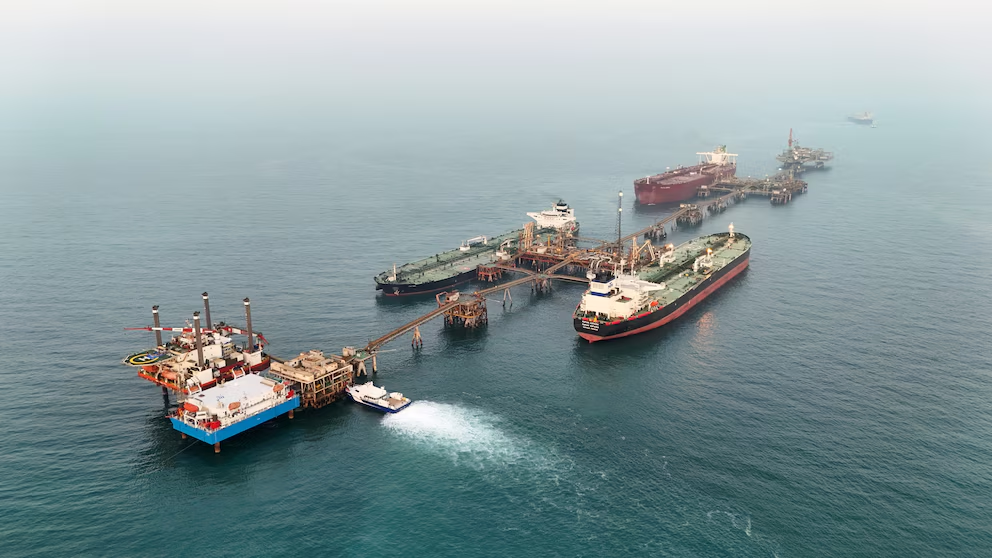
A second layer is shipping risk, which can become the hidden multiplier. War-risk premiums, higher charter rates, and disrupted scheduling can tighten availability of vessels and raise the delivered cost of crude and refined products. This matters because global markets price delivery, not just production. A barrel that exists but cannot move is not economically equivalent to a barrel that can reach a refinery on time. Once vessel movements drop and more ships queue or avoid the corridor, the market begins to price a backlog, and backlogs tend to persist longer than headlines.
Then there is China’s role, which functions like a pressure valve. When a major importer seeks safe passage arrangements, it signals two things at once: that the importer’s exposure is high enough to justify direct diplomatic intervention, and that the closure is real enough to threaten national energy security. Any partial corridor reopening that privileges certain flags or owners would not “solve” the closure. It would restructure it into a gated channel. For markets, that is still disruption, because disruption is not only about total volume. It is also about who gets access, how reliably, and at what cost.
The oil move also revives a broader macro fear that markets never truly shelved: inflation returning through the fuel door. In high-energy episodes, consumers feel the shock quickly at the pump and through transport costs. Businesses feel it through logistics and input pricing. Governments feel it through public anger and fiscal pressure to cushion the blow. Central banks feel it through the uncomfortable tradeoff between growth support and inflation control. That is why Hormuz is not only an energy story. It is a policy story. It changes the environment in which rate decisions are made, debt is financed, and elections are fought.
What makes this episode especially consequential is the compression of time. The market is not pricing a slow, gradual tightening of supply. It is pricing a sudden loss of confidence in a critical artery. Confidence, once broken, returns slowly because it depends on more than announcements. It depends on demonstrable flows, insurable routes, and predictable risk. Even if official statements promise protection or escorts, shipping and insurance decisions often lag because they are made under liability constraints. The result is a period where prices can remain elevated even as governments claim the situation is under control.
The deeper pattern is that chokepoints have become macro triggers. Hormuz is not merely a geographic fact; it is a switch that can turn geopolitical escalation into global inflation within days. When the switch flips, markets do what they always do: they price scarcity first, then they price duration, then they price politics. The barrel above 92 is a headline. The real story is that the world is being reminded, again, how much modern prosperity still depends on a narrow strip of water staying open.
Más allá de la noticia, el patrón. / Beyond the news, the pattern.