

 Mario López Ayala, PhD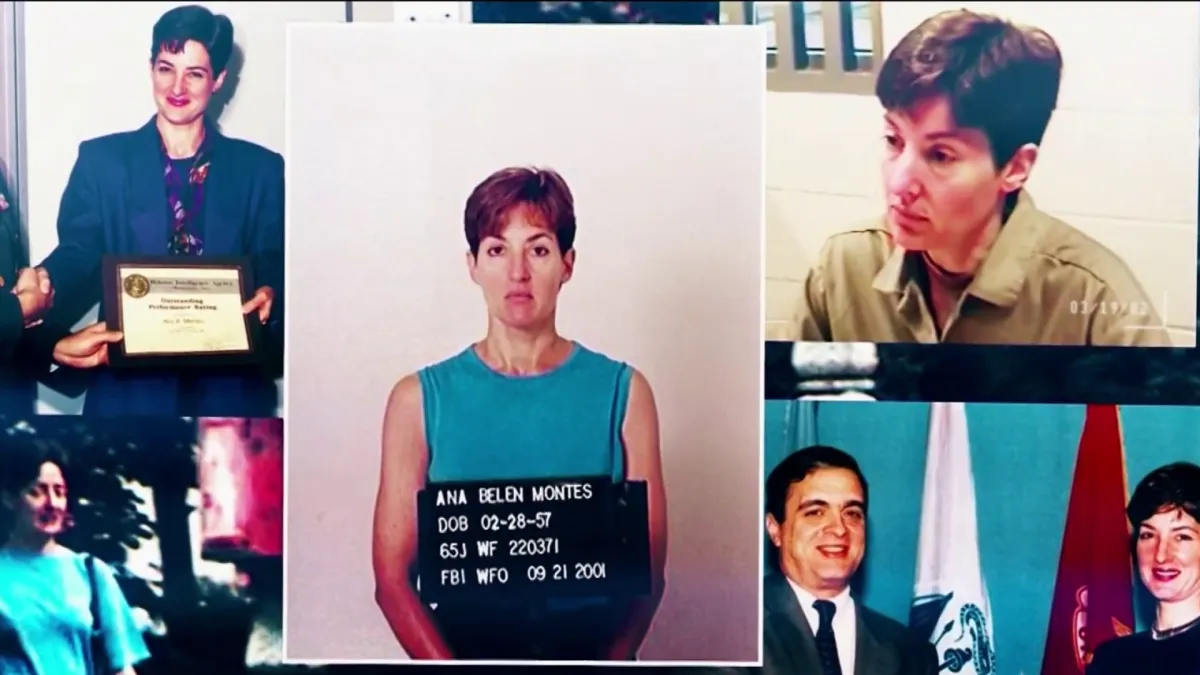
Control changes its mask, not its instinct.
Mexico City, March 2026. Cuba was never merely a besieged island. That image, convenient for some and profitable for others, served for too long as an intellectual shortcut. Havana was also something else: a machinery of survival. A political laboratory that, even under conditions of scarcity, understood how to turn state discipline, intelligence, and outward presence into a form of power that did not depend entirely on size, economics, or prestige. That is part of the Cuban enigma. Not the grandiloquence of its discourse, but the persistence of its methods.
G-2, as it has been fixed in the Latin American political imagination, is often invoked as though it were simply a classic espionage office. That reading is too narrow. More than a specific agency, it matters as the symbol of a broader architecture: observation, infiltration, control, conditioning. A system that learned to operate not from material abundance, but from penetration. Small states rarely impose; they insert themselves. Cuba understood that early, perhaps too early for its neighbors. The Ana Belén Montes episode remains the most uncomfortable reminder. Not because of its drama, but because of what it reveals about a technique. No spectacle was needed. Time was enough. Patience. The right position. The right place inside the adversary’s analytical machinery.
But reducing the Cuban experience to the secret file would be a mistake of scale. Havana did not project influence only through the classic agent or clandestine recruitment. Its intelligence culture was more elastic than that. More patient, too. It relied on civilian covers, ideological loyalties, permeable bureaucracies, university affinities, seemingly harmless solidarities. The best-kept secret of the Cuban system may not have been its ability to hide, but its ability to appear normal. Or useful. Or even morally unassailable.
That is how health diplomacy should be read. Not as simple medical cooperation, nor as conspiratorial caricature. Something more subtle happened there. For years, Cuban medical brigades functioned simultaneously as a source of hard currency, a vehicle of international legitimacy, and an organized extension of the Cuban state beyond the island. At that point, medicine and politics no longer move on separate tracks. They do not fully merge, but they come too close. Where other countries exported assistance, Cuba exported state presence. And presence, once stabilized, generates interlocution, access, institutional familiarity. Sometimes more than that. International reports on human rights and coercive labor practices suggest precisely that discomfort: a mechanism that cannot be read as neutral because it arrives administered, monitored, and politically sealed from the start.
Mexico accepted that presence through a recognizable mix of urgency, affinity, and a certain strategic inattentiveness. First came the pandemic. Then it stopped being only about the pandemic. During Andrés Manuel López Obrador’s administration, the arrival of Cuban medical personnel was presented as a practical response to the shortage of specialists in underserved regions. The explanation made administrative sense. But the administrative surface rarely exhausts the geopolitical meaning of a move. What Mexico normalized was not merely technical cooperation. It also opened an operational relationship with a state that has historically used civilian instruments as mechanisms of hemispheric insertion. Obradorismo preferred to call it sovereign solidarity. In Washington, predictably, the gesture was read differently. Not out of automatic paranoia, but because the strategic neighborhood does not tolerate too much innocence.

And then Cuba ceases to look like an insular anomaly. Or, more precisely, it ceases to be useful to read it that way. What appears instead is something broader, rougher. The socialism of control, in Cuba and in other ideologically related experiences, produced not only scarcity, rigidity, and economic suffocation. It also displaced the operational center of power toward military structures, security apparatuses, and opaque circuits of administration. On the island, that shift became visible years ago in the growing weight of military-linked conglomerates within decisive sectors of the economy. Tourism, foreign currency, ports, hotels, trade, banking. The significance of that fact is less accounting than doctrinal. When military power is no longer confined to defense, the boundary between security, wealth, and command begins to blur. Not always scandalously. Sometimes with an almost bureaucratic naturalness.
Elsewhere in the hemisphere, that logic found its own variations. Illicit economies. Intermediary operators. Gray zones of financing. Mechanisms of attrition against the opposition that do not always take the visible form of frontal repression. Sometimes a well-positioned intelligence structure is enough. A selective economic capture. Fear, sufficiently distributed. It is not the same script in every country, but the family resemblance exists. It is worth keeping in sight.
What makes the present moment especially delicate is that Cuba arrives at this stage not from strength, but from exhaustion. Blackouts, productive deterioration, energy crisis, shortages. The island is moving under pressure. In March 2026, Miguel Díaz-Canel’s government confirmed talks with the United States to find partial exits from the emergency. Almost simultaneously, it opened the door to something that would once have been unthinkable in those terms: allowing Cubans abroad, including those established in the United States, to invest in and own businesses on the island. Some will see in that a doctrinal surrender. That would be premature. What is visible instead is something more opaque and therefore more consequential: a flexibility of survival. The regime is not abandoning control. It is administering it differently. It lets in economic oxygen so as not to loosen the political monopoly. The aging revolution no longer exports a future. It exports need. It buys time. It buys room.
In isolation, that retreat would already deserve attention. But it is not happening in isolation. Russia and China reappear here not as scenery, but as multipliers of a strategic fragility that can still be useful. Moscow does not seem willing to give up a symbolic piece in the Caribbean, especially as pressure with Washington intensifies again. Beijing, less strident, moves at a different rhythm. More silent, more structural. China’s interest in sensitive infrastructure and in observation capabilities near the U.S. perimeter does not need to be displayed through military rhetoric to become unsettling. Cuba, in that triangle, contributes location, intelligence craft, and experience in opacity. Russia adds political backing and the value of pressure. China adds technology, continuity, and patience. It is not a perfect alliance. It does not need to be.
The most comfortable analytical error is to assume that a fatigued Cuba is therefore an irrelevant Cuba. Not necessarily. Sometimes exhaustion makes regimes more tactical, not less dangerous. When the economy loses its carrying power, intelligence gains centrality. When doctrine stops seducing, opacity acquires value. When internal legitimacy erodes, the export of cadres, services, and loyalties can operate as the system’s external insurance policy. That is where the Cuban file remains relevant. Not in the epic it once sold, but in the network it still knows how to weave.
Mexico, by virtue of geography and the political openings it tested in recent years, would do well not to minimize that fact. To treat as mere solidarity what also formed part of a harsher hemispheric reconfiguration was, at best, an incomplete reading. At worst, a strategic negligence draped in humanism. Havana’s invisible network did not disappear. It may not even have weakened in the conventional sense. It changed texture. It mutated alongside the exhaustion of Castroism and the return of a cruder competition among powers in the hemisphere. The problem is that such mutations rarely announce clearly what they bring with them. Sometimes they leave only traces. Presences. Small normalities that, when recognized too late, are already part of the structure.
Mario López Ayala is a Mexican senior journalist and geopolitical analyst specializing in political behavior, information security, and narrative power. At Phoenix24, he integrates strategic intelligence, cybersecurity, and algorithmic governance to study competition for influence in the global public sphere. He is a member of the International Federation of Journalists (IFJ) and the Organization of United Communicators of Sinaloa (OCUS).