

 Phoenix 24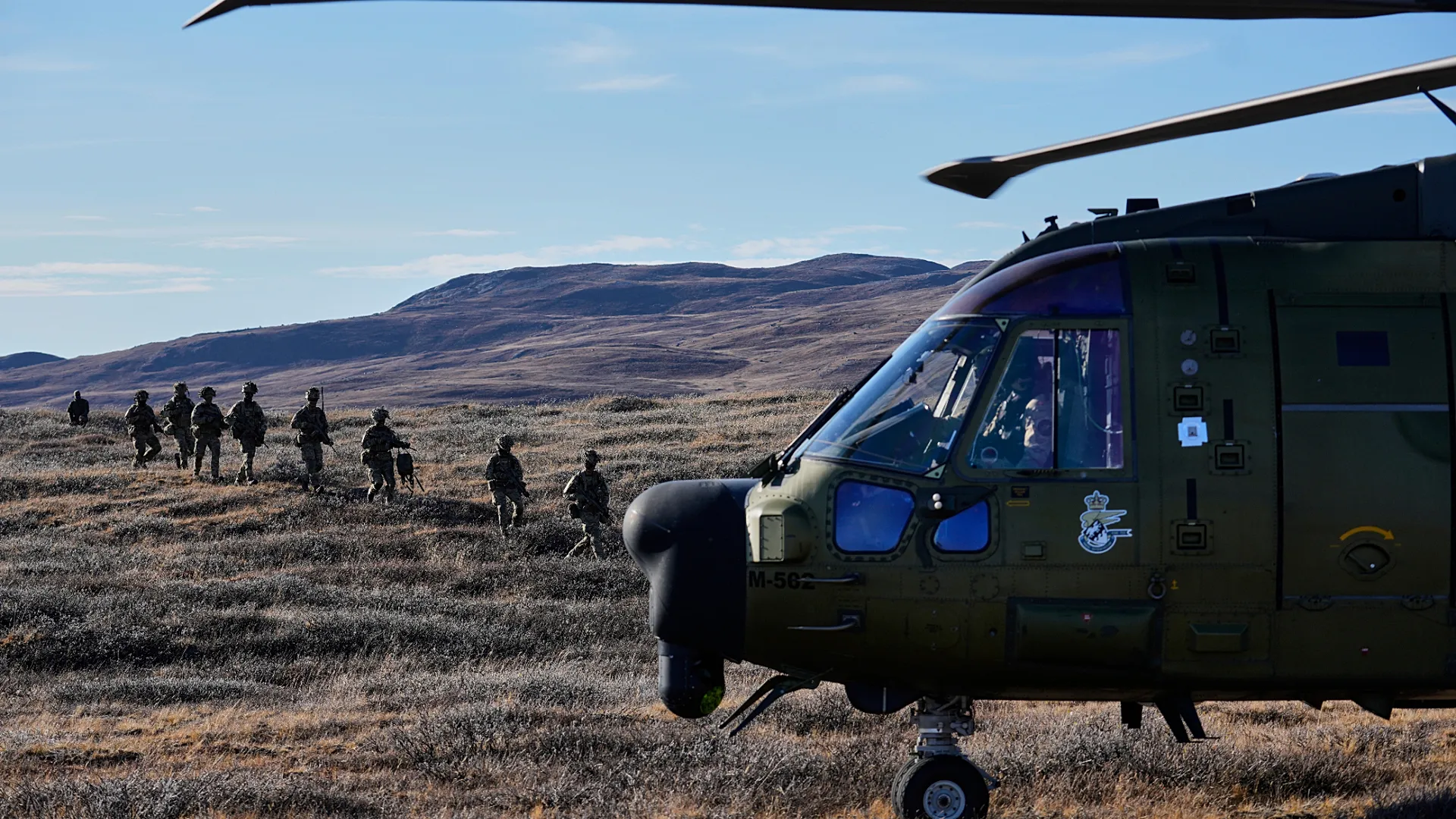
Ice does not cool politics.
Nuuk, January 2026.
The sudden withdrawal of a small German military contingent from Greenland was presented as a technical adjustment, not a strategic shift. Yet the timing and the political climate surrounding it turned the move into something far more significant. Berlin ordered the pullback only days after Washington raised the possibility of punitive tariffs against several European countries if they failed to align with its position on Greenland. At that intersection of security and trade, the Arctic stopped being a distant frontier and became a bargaining table where loyalties are negotiated.
German troops had been part of multinational exercises designed to strengthen allied presence in the far north, a region gaining importance because of new shipping routes, natural resources and growing rivalry among major powers. Their deployment carried more symbolic than military weight. It signaled cohesion inside the Atlantic alliance and support for Denmark, which holds sovereignty over Greenland. The withdrawal, though small in numbers, was read as a political gesture, a sign that economic pressure can alter security decisions.
From Washington, the tariff threat was framed as a legitimate tool to defend national interests. The White House argued that Greenland occupies a central place in its Arctic strategy and that European resistance to certain proposals should carry consequences. For many European capitals, that language sounds like coercion. The idea that defense policy could be conditioned by commercial punishment breaks with the traditional narrative of alliances, where security is treated as a shared good rather than a bargaining chip.
In Brussels, the German move triggered concern. European officials spoke of a “dangerous precedent.” If one country retreats under economic pressure, others might be tempted to do the same. That would weaken not only military exercises but also internal trust. An alliance survives not just through treaties but through the belief that no partner will step back because of outside threats.
Greenland itself watches as its territory once again becomes the object of disputes driven by distant powers. In Nuuk, political and social voices have insisted that the island is not a token to be traded among states. Debates over its future, its relationship with Denmark and its degree of autonomy are now being shaped by interests coming from outside, using economic and military tools to influence its destiny. For many Greenlanders, this renewed international attention revives old tensions about sovereignty and control.
The German withdrawal also has a domestic reading. In Berlin, the government faces economic pressure, industrial competitiveness concerns and a public sensitive to any trade threat. Yielding on a military front to avoid economic harm may appear pragmatic, but it also projects vulnerability. Other allies are watching closely, not to condemn, but to measure how far American pressure can go without breaking European cohesion.
Security analysts agree that the Arctic has become a zone of quiet competition. There are no major battles, but constant movement: exercises, patrols, logistical agreements, infrastructure investments. In that context, every decision is read as a signal. A deployment says “we are here.” A withdrawal says “something made us move.” And what appears to have pushed Germany this time was not a military threat, but an economic one.
This fusion of trade and defense is redefining the rules. For decades, Western alliances claimed that economic disputes would not contaminate military cooperation. Today that boundary is fading. The threat of tariffs becomes a foreign policy instrument as influential as a base or a treaty. That creates discomfort, because it turns relationships among partners into relationships of pressure.
For Denmark, which holds responsibility for Greenland, the episode is particularly delicate. Its government has insisted that any discussion about the island’s future must involve Copenhagen and Nuuk, not external pressure. The German withdrawal weakens that stance symbolically, suggesting that third parties can indirectly shape the regional balance through economic leverage.
The case also leaves a broader question about the future of the Atlantic alliance. If security decisions begin to be taken under commercial threat, collective defense becomes transactional. It is no longer only about shared values or historical commitments, but about short-term cost and benefit calculations. That risks making an architecture once seen as stable far more fragile.
Greenland, with its ice, minerals and strategic location, will remain desirable. But what is being tested now is not only its value, but the method by which it is contested. Germany’s withdrawal is not a military defeat, but it is a political signal. It shows that in this new phase of geopolitics, pressure does not always arrive through missiles or troops, but through tariff tables and trade threats.
The larger question is whether this episode will remain an exception or become a pattern. If more countries start adjusting their security policy to avoid economic punishment, the logic of alliances will change at its core. Then, instead of collective defense, the world will move toward permanent negotiation under pressure.
La verdad es estructura, no ruido. / Truth is structure, not noise.