

 Phoenix 24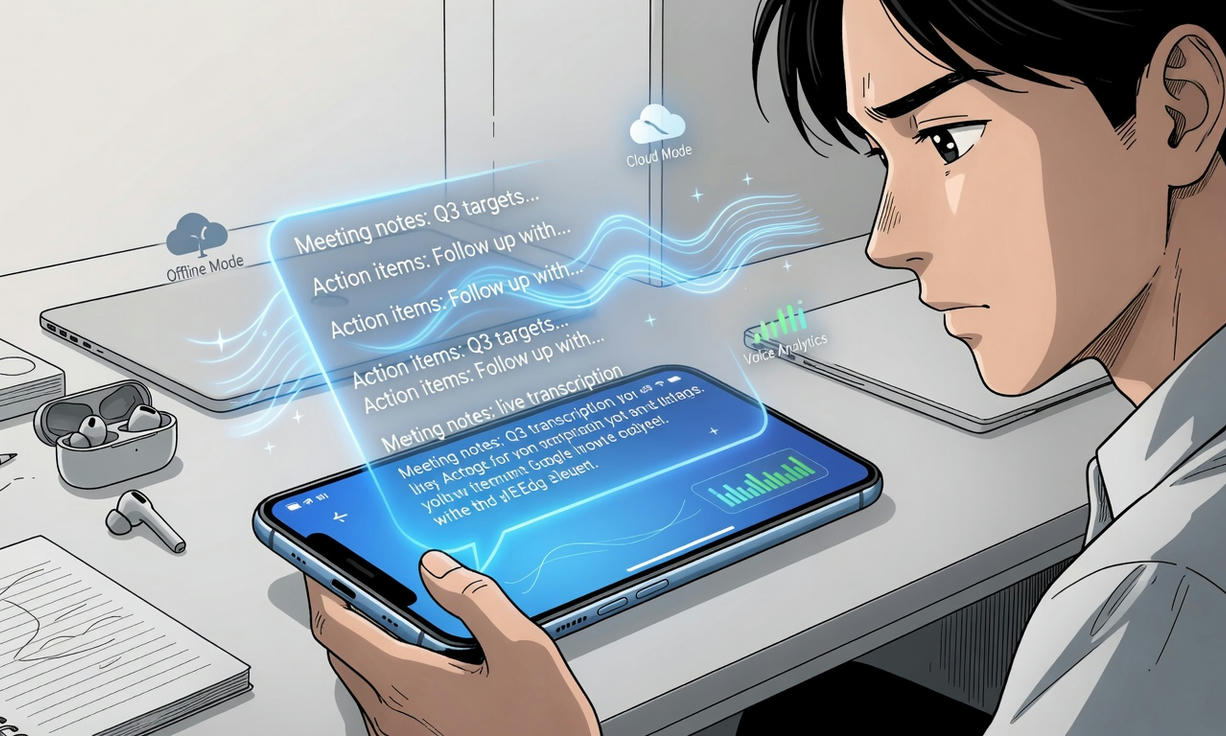
Speech-to-text is changing where trust lives.
San Francisco, April 2026. Google’s new iPhone dictation app matters for a reason larger than convenience. On the surface, it is a voice-to-text tool that can work without an internet connection, turning spoken language into written text directly on the device. But beneath that practical appeal lies a more consequential shift in consumer technology: artificial intelligence is moving closer to the edge, where speed, privacy and usability begin to converge in ways cloud-dependent software could not fully deliver.
The app enters a crowded but increasingly strategic space. Voice transcription is no longer a niche productivity trick reserved for journalists, executives or accessibility workflows. It is becoming part of the everyday architecture of mobile writing, note-taking and communication. What makes Google’s move notable is not simply that it offers dictation on iPhone, but that it does so with an offline-first logic, reducing dependence on servers and constant connectivity. That changes both the user experience and the politics of trust around personal speech data.
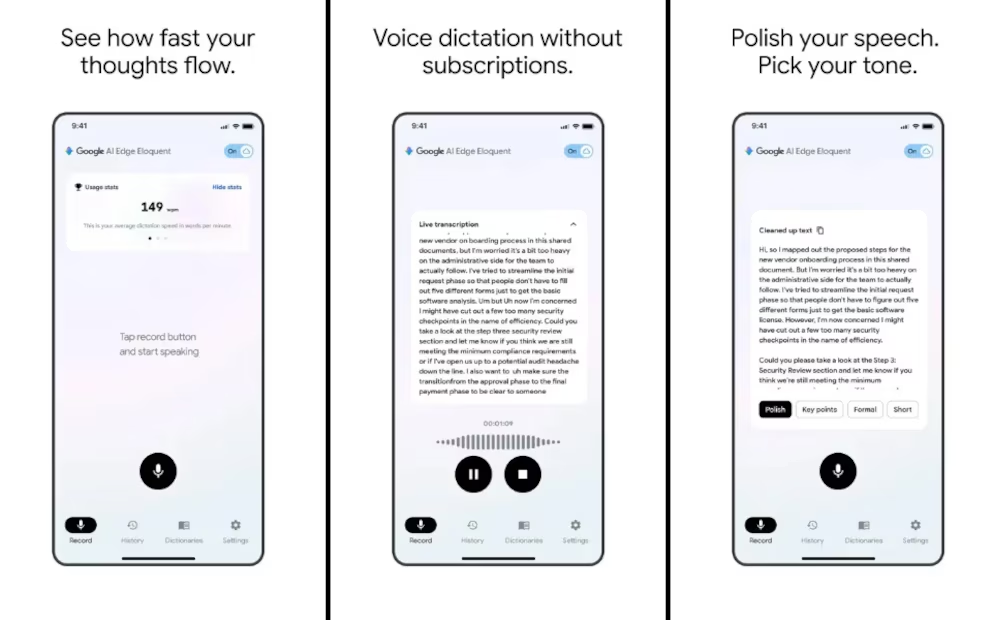
In practical terms, the appeal is obvious. An app that transcribes speech locally can remain useful in poor connectivity environments, respond more quickly and reduce the discomfort many users feel when sensitive voice input is routed through the cloud by default. That does not eliminate every privacy question, especially if optional cloud-based enhancement features remain available, but it does shift the baseline. The default experience becomes less about permission to upload and more about control over what never leaves the device in the first place.
That is where the competitive significance begins. The app reportedly cleans up dictation by removing filler words, smoothing self-corrections and turning raw speech into more polished text. This means the product is not merely transcribing language. It is interpreting intent. In other words, Google is no longer offering basic speech recognition alone. It is packaging a lightweight editorial layer into mobile dictation, allowing spoken thought to arrive on screen in a more publishable form. That pushes the tool from utility toward authorship assistance.
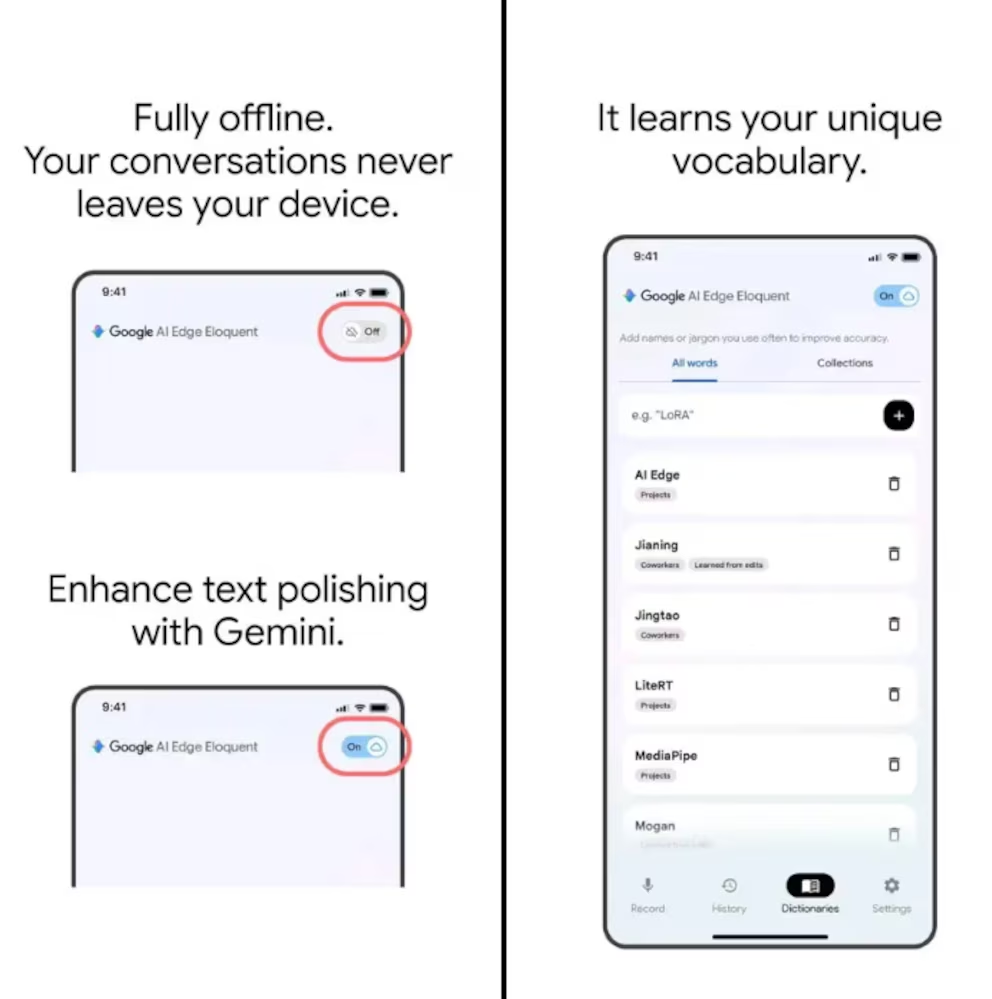
There is also an ecosystem message in the launch. For Google to release this first on iPhone is symbolically important because it demonstrates that the battle for AI workflows is no longer confined to native platform loyalty. The company is willing to enter Apple’s mobile environment with a tool designed around on-device intelligence, even as Apple continues to position privacy and local processing as central pillars of its own identity. In effect, Google is competing not only on capability, but on terrain that Apple helped legitimize.
The deeper shift, however, concerns expectations. Users are beginning to demand AI features that are not only smart, but discreet. Fast output is no longer enough if it comes at the cost of latency, subscription fatigue or the uneasy feeling that every spoken fragment is being uploaded for remote interpretation. Offline dictation responds to that fatigue by offering a more intimate computational model. The phone becomes less like a relay station and more like a self-contained linguistic machine.
This may also prove significant for accessibility, field work and multilingual communication. Speech tools that function without a live connection can be useful in travel, unstable networks, mobile reporting, classrooms and environments where typing is inefficient or physically difficult. In that sense, the app is not simply about convenience for power users. It gestures toward a broader normalization of speech as a primary interface, especially when the friction of connectivity is removed.
Still, the launch should be read with proportion. One app does not redefine the entire mobile AI market overnight, and offline functionality alone does not guarantee dominance. Accuracy, language support, battery efficiency, editing quality and long-term integration will determine whether this becomes a serious habit-forming tool or just another experimental release. But the direction is unmistakable. AI on phones is becoming less performative and more infrastructural.
What Google has really introduced, then, is not just another dictation app. It has introduced a small but meaningful argument about where intelligent computing should happen. The closer these systems move to the device, the more they promise speed, resilience and a different kind of trust. In that sense, the real headline is not that your iPhone can now transcribe voice offline. It is that the next phase of AI may depend less on the cloud than the market once assumed.
Detrás de cada dato, hay una intención. Detrás de cada silencio, una estructura.
Behind every datum, there is an intention. Behind every silence, a structure.