

 Phoenix 24

The next hit may be generated, not sung.
Mountain View, February 2026.
Google has expanded Gemini beyond text, images, and planning into a domain that usually resists automation: musical creation that sounds finished enough to share. The new capability lets users generate a short track directly inside the assistant by describing a vibe, a genre, or even a personal memory, and it can also respond to an uploaded photo or video by matching mood and tempo. The engine behind it is Lyria 3, a generative music model designed to translate prompts into audio, with a standard output that targets roughly 30 seconds. This matters because it shifts music generation from an experimental side tool into a mainstream workflow where the interface is not a studio, it is a chat box.
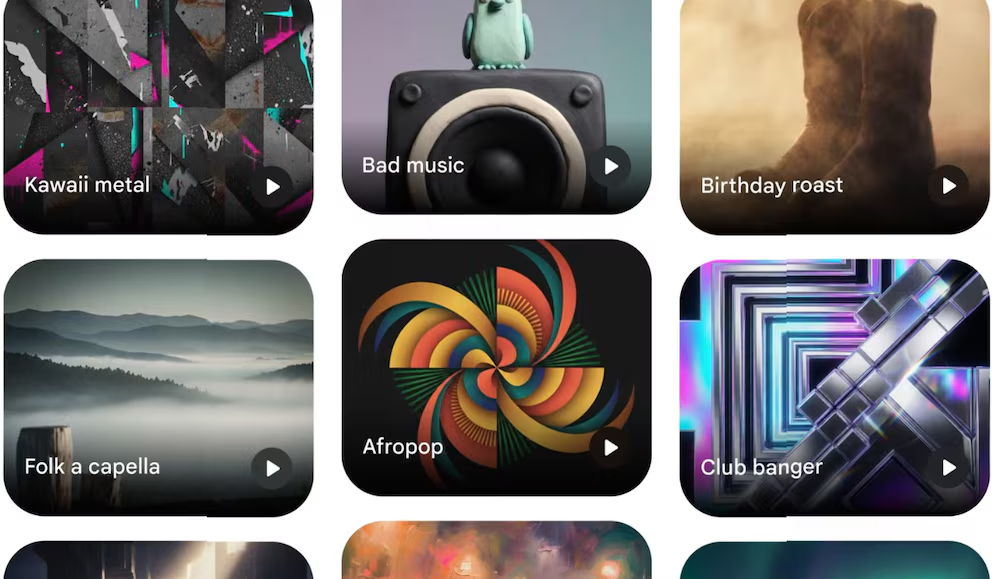
The headline feature sounds playful, but its strategic meaning is infrastructure. When a consumer assistant can generate audio on demand, the bottleneck moves from talent and equipment to compute, rights management, and distribution surfaces that can absorb infinite content. In that environment, the product is not only the song, it is the ability to iterate quickly, adjust style, and produce variants that fit different contexts without hiring anyone. For creators, it lowers the cost of “good enough” background music, jingles, or thematic sketches to near zero, and that changes the bargaining power of small producers. For platforms, it increases time spent, sharing, and user generated output that keeps feeds full, which is the real currency in an attention market.
The capability also reframes what “songwriting” means in mass culture. Gemini can generate instrumental tracks and, when prompted, produce lyrics to sit on top of the music, which blurs the boundary between composition and description. Users can request a comical slow jam, a cinematic intro, or a nostalgic theme, then tweak the prompt until the result feels right, which turns creative direction into a form of conversational iteration. The assistant becomes a collaborator that never gets tired and never asks for royalties, at least not in a way the user sees directly. That is why the feature will be adopted first for utility and speed, not for artistry, even if the marketing language leans heavily on creativity. The default use case will be content, not albums, because short form video needs endless soundbeds, not perfection.
Google is also making a deliberate bet on multimodality as a differentiator. Allowing photos and video as inputs is not a gimmick, it is a way to make music generation feel personal and contextual rather than generic. If a user uploads a clip from a trip, a party, or a quiet moment, the assistant can produce a matching soundtrack with lyrics that reflect the vibe, which makes the output feel like a memory artifact, not a random loop. This personalization is a distribution strategy disguised as a feature, because content that feels custom is more likely to be shared, and sharing is the growth engine for consumer AI. The move also places Gemini in closer proximity to creator workflows that already live inside short video ecosystems, where the soundtrack is often the differentiator between forgettable and sticky.

A tool like this also forces the industry into a new integrity debate, and Google appears to anticipate it. Generative music immediately raises questions about copyright, style mimicry, and the invisible influence of training data, because music is both culturally sensitive and legally complex. If users can ask for a track that sounds like a famous artist, the platform has to either refuse, redirect, or degrade the output enough to avoid direct imitation, and every choice invites backlash from someone. The point is not whether the safeguards are perfect, it is that the presence of safeguards becomes part of the product’s legitimacy in a market where litigation risk is real. As AI music becomes easier to produce, the distinction between homage, pastiche, and infringement will stop being an abstract debate and become an everyday moderation problem.
There is a second layer beneath rights, which is geopolitical and economic rather than legal. Music generation at scale consumes compute, and compute is now treated as a strategic asset across the tech industry, with supply constraints and prioritization shaping what features can reach global users. A “thirty second track” sounds trivial until millions of people generate several versions each, then the feature becomes a sustained load that needs dedicated capacity and optimized infrastructure. This helps explain why such tools arrive first as limited rollouts, often with age restrictions, language boundaries, and staged availability, because the platform is testing not only quality but also cost and abuse vectors. In other words, the feature is creative, but the rollout is operational, because the biggest risk is not that one song sounds odd, it is that the system becomes expensive or easy to weaponize.
What changes next is the cultural contract around music as identity. If anyone can generate a plausible track in seconds, scarcity shifts away from production and toward taste, curation, and narrative context, which are harder to automate convincingly. The winners will be those who can frame why a piece matters, not merely that it exists, because existence becomes cheap. For working musicians, this creates a dual reality: AI can be a sketchpad that accelerates ideation, but it can also flood the low end of the market with competent substitutes. Platforms will likely respond by privileging provenance, branded creator lanes, and tools that help audiences trust what they are hearing, because trust becomes an economic moat when content is infinite.
Phoenix24: periodismo sin fronteras. / Phoenix24: journalism without borders.