

 Phoenix 24
Digital overload appears to depend on interruption patterns, not simply hours online.
ESPOO, FINLAND
How frequently people reach for their smartphones may predict information overload more accurately than the total time they spend online. Research from Finland’s Aalto University suggests that numerous brief digital sessions fragment attention more severely than longer periods of deliberate, continuous use.
The seven-month study followed 277 participants across mobile phones and desktop computers, recording more than 13 million digital events. Researchers compared these behavioural traces with repeated surveys measuring perceived information overload. Total online time showed only a weak relationship with feeling overwhelmed, while frequent short sessions—described as “session sparseness”—produced a much stronger association.
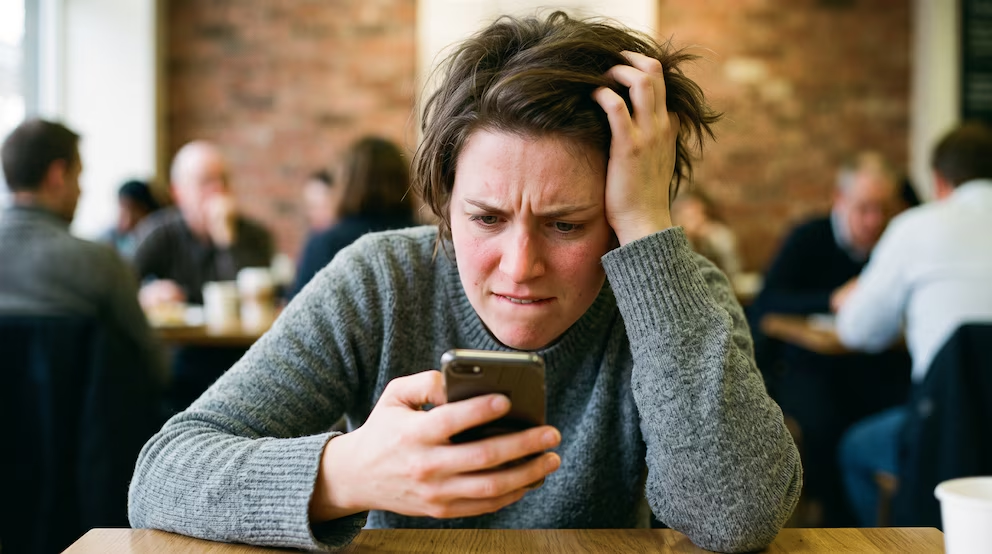
Morning phone use appeared particularly significant. Repeated mobile sessions before midday predicted higher overload, whereas afternoon, evening and desktop use showed weaker effects. Messaging applications also stood out, apparently because they encourage users to return repeatedly rather than because messaging itself is inherently harmful. This cycle can become self-reinforcing: incoming information produces stress, and stress encourages further checking.
Separate research involving 439 adults examined the effects of passively consuming repetitive, rapidly changing and algorithmically selected content—sometimes described as “brain rot.” The findings associated this behaviour with burnout, which was subsequently connected with higher stress, anxiety and depressive symptoms. Because the study was observational and relied on survey data, it cannot demonstrate that this content directly causes depression.

Together, the studies challenge screen-time totals as the principal measure of digital well-being. Two hours of focused reading, work or communication may not have the same psychological effect as two hours divided into hundreds of interruptions. Disabling unnecessary notifications, delaying morning phone use and grouping messages into intentional sessions may therefore be more useful than pursuing an arbitrary daily time limit.
Attention is not only consumed by duration, but fragmented by interruption.