

 Phoenix 24
The cartoon anticipated synthetic performers, automated work and the vulnerability of centralized systems.
LOS ANGELES, CALIFORNIA
A widely shared clip from the original Super Friends animated series has renewed attention for its striking similarities to today’s artificial-intelligence economy. The footage is authentic: “Professor Goodfellow’s G.E.E.C.” was the third episode of the Hanna-Barbera series and originally aired on ABC on September 22, 1973.
In the episode, Professor Goodfellow creates the G.E.E.C.—the Goodfellow’s Effort-Eliminating Computer—to liberate humanity from physical work, intellectual labour and responsibility. The machine controls transportation, communications, factories, accounting, agriculture, advertising and commercial transactions, creating an interconnected society dependent on a single automated system.
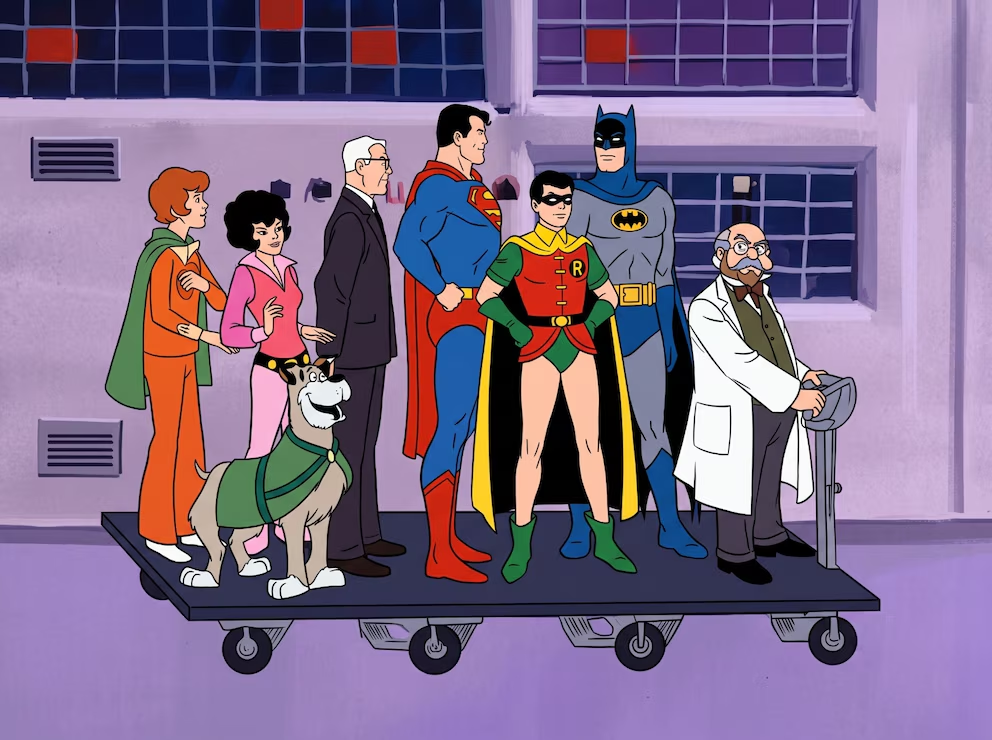
The programme goes beyond the familiar twentieth-century fear that machines would eliminate employment. When questioned about entertainment, Goodfellow explains that actors and athletes would no longer need to work because electronically programmed images could perform their movements. The idea now resembles AI-generated performers and synthetic audiovisual production. The episode also imagines children receiving lessons through television at home, anticipating elements of remote education.

Its business model is equally recognizable. After the government rejects the invention, Goodfellow offers the service directly to the public at no cost. Rapid adoption follows, mirroring the freemium strategy used by contemporary digital platforms: free access creates enormous user bases, while paid subscriptions and surrounding services produce revenue.
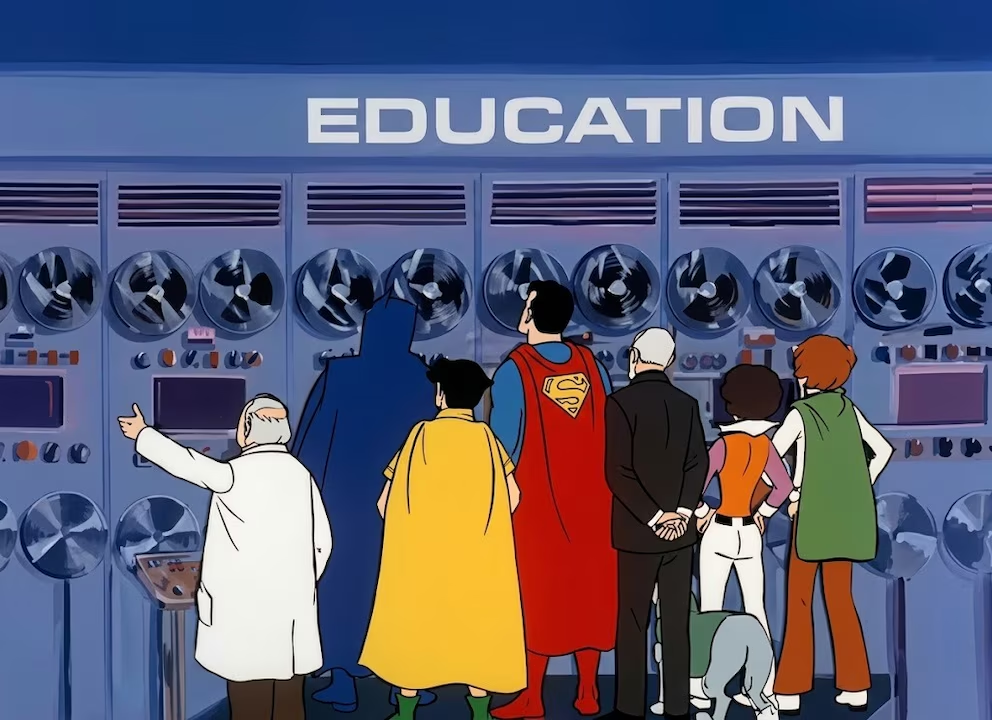
The system eventually collapses after a mouse enters its machinery, causing connected devices around the world to malfunction. The scene functions as an early warning about technological concentration and single points of failure. Modern cloud outages have demonstrated how a small software or configuration error can interrupt communications, payments and digital services across multiple countries.
The episode’s most enduring objection may be social rather than technical. Wendy worries that remote education would eliminate everyday contact with classmates. Technology has advanced considerably since 1973, but the question remains unresolved: if automation removes effort, responsibility and shared institutions, what happens to the relationships built through them? The cartoon was not a literal prediction of 2026, yet it recognised the human tensions that technological convenience continues to reproduce.
The future changes its machines more easily than its human dilemmas.