

 Phoenix 24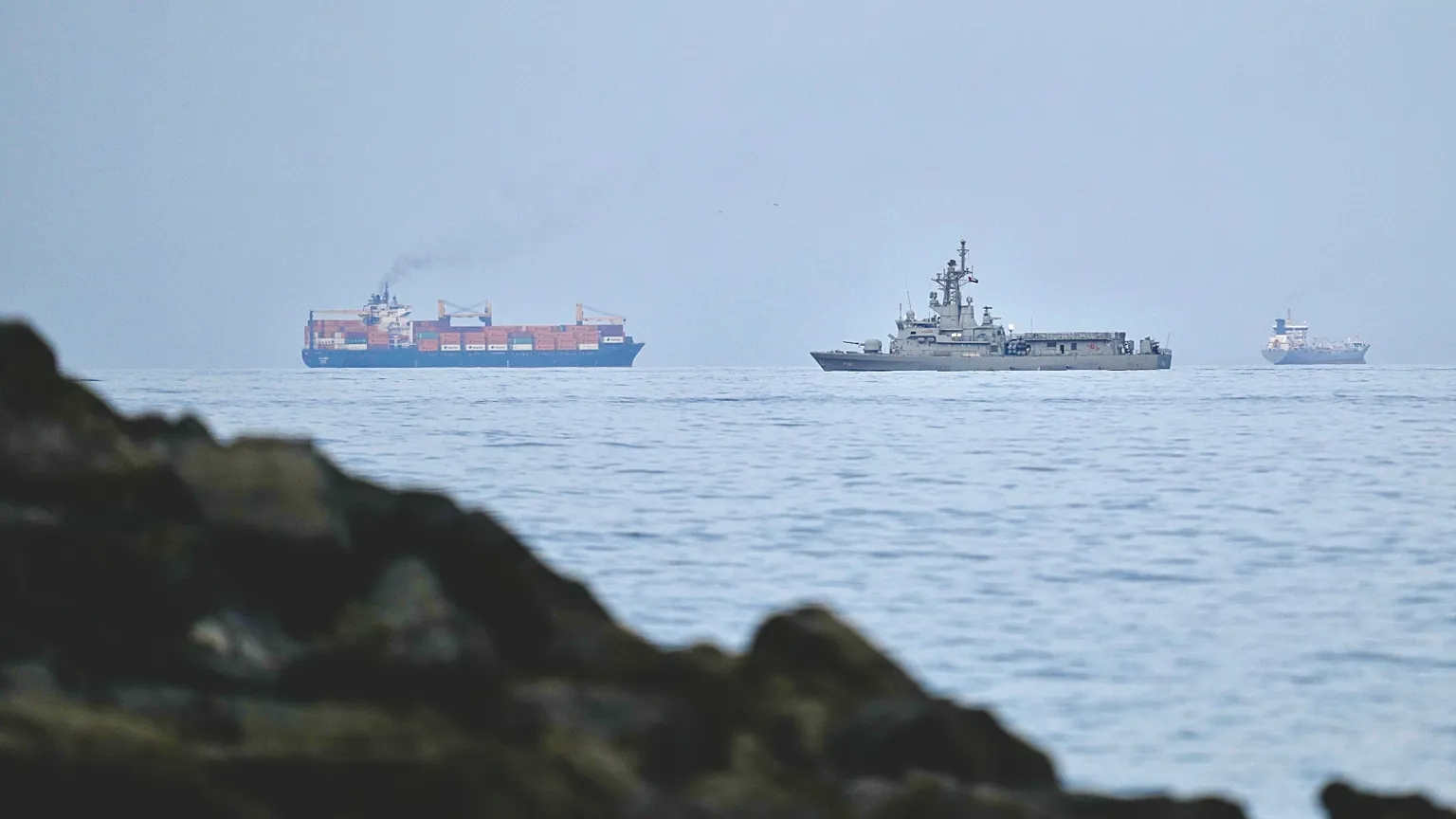
Maritime security is now a global front.
Brussels, March 2026
Five European countries and Japan have signaled their willingness to contribute to efforts aimed at protecting transit through the Strait of Hormuz, at a moment when the war with Iran continues to disrupt one of the world’s most sensitive maritime routes. The move does not yet amount to a clearly defined military intervention, but it does show that the Gulf crisis is no longer being treated as a strictly regional problem. It is now an international economic and strategic concern.
The significance of the move lies in the weight of the corridor itself. A decisive share of global oil and gas trade passes through Hormuz, which means that any sustained disruption immediately affects energy markets, transport costs and inflation expectations. In that context, the willingness shown by European powers and Japan reflects less a symbolic gesture than a practical effort to prevent maritime instability from turning into a deeper economic shock.
What remains unresolved is the precise nature of that contribution. So far, the public language points to support for guaranteeing safe passage for commercial shipping, but without clarifying whether that support would take the form of naval assets, surveillance, logistical coordination or political backing within a broader security framework. That ambiguity matters, because many governments want to protect navigation without becoming trapped in a direct military escalation.
The willingness shown by these countries also reveals a broader shift in the strategic reading of the conflict. Hormuz is no longer seen only as a military flashpoint, but as a piece of critical infrastructure for global stability. In practical terms, that forces outside powers to think not only in diplomatic terms, but also in terms of how to preserve the continuity of maritime trade under increasingly unpredictable conditions.
The political calculation is delicate. Taking part in the protection of the strait may project commitment to energy security and freedom of navigation, but it also exposes governments to the risk of being seen as part of a wider pressure architecture against Iran. That is why most have so far adopted the language of support and readiness, without immediately announcing a concrete deployment.
The economic background explains much of that caution. Energy prices remain under pressure, markets are reacting nervously to any additional disruption and supply chains depend on maritime traffic not being paralyzed for an extended period. Under those conditions, Hormuz has ceased to be only a Gulf issue and has become a central variable in wider international stability.
For now, the message is clear. The crisis around the strait is pushing more governments to think in terms of collective protection mechanisms. Whether that willingness turns into a concrete operation or remains a diplomatic signal will depend on how the conflict evolves. But the decisive fact is already on the table: the security of Hormuz has fully entered the agenda of powers that cannot afford to ignore its consequences.
Phoenix24: clarity in the grey zone. / Phoenix24: clarity in the grey zone.