

 Phoenix 24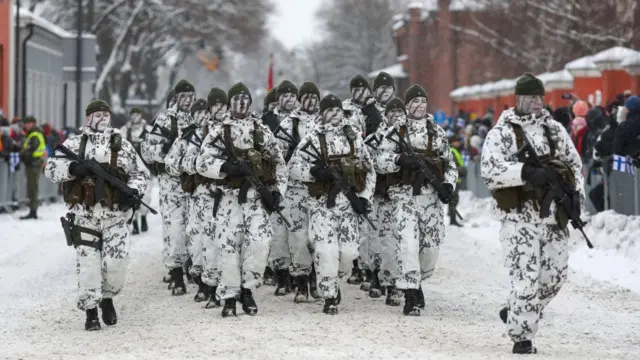
Deterrence begins long before the border burns.
Helsinki, April 2026
Finland’s conscript system is once again at the center of Europe’s security debate as new reporting shows young recruits being trained for the possibility of full scale war with Russia. The significance of that image goes well beyond barracks or routine preparedness. It reflects a national doctrine built on the assumption that geography cannot be negotiated away and that deterrence only works when society is ready to absorb the cost of defending itself. In Finland’s case, military training is not being staged as symbolism. It is being sustained as state logic.
What distinguishes Finland from much of Europe is that it never fully surrendered the habits of territorial defense. While other countries hollowed out mass readiness in the post Cold War years, Finland preserved conscription, deep reserves and a broader culture of civil preparedness. That long institutional memory now looks less like caution and more like foresight. As war in Ukraine continues to reorder Europe’s threat perception, Finland appears not as a country improvising under pressure, but as one that prepared early for the return of hard power.
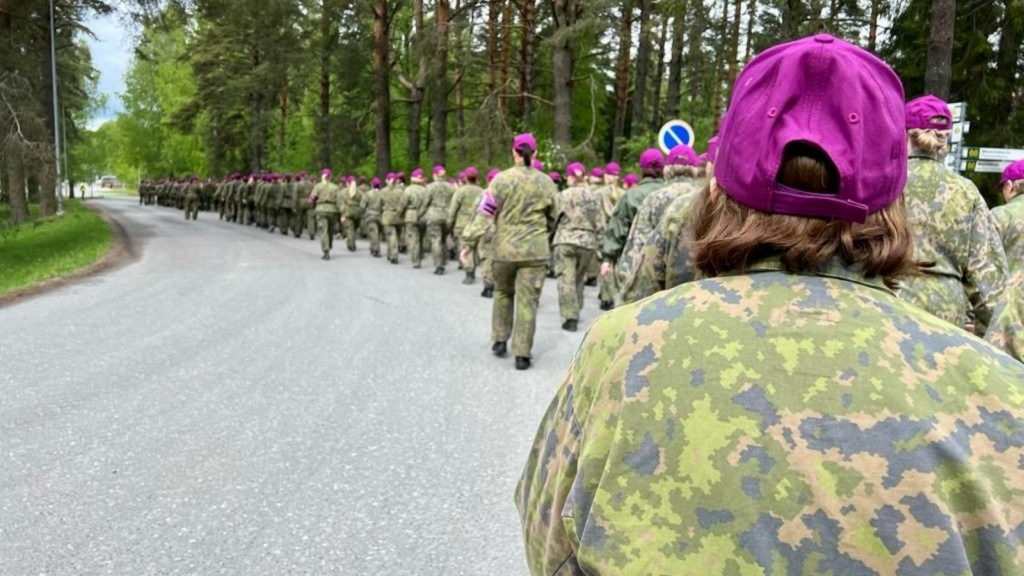
That is why the training of conscripts carries such strategic meaning. These are not just young men cycling through obligatory service. They are part of a national architecture meant to turn vulnerability into deterrent depth. On a frontier stretching more than a thousand kilometers with Russia, readiness cannot depend solely on elite units or advanced weapons platforms. It has to be distributed, repeatable and socially internalized. Finland’s model suggests that defense credibility is strongest when it is woven into the structure of national life rather than outsourced to abstract promises of alliance protection alone.
The message is also directed outward. Since joining NATO, Finland has not relaxed into institutional shelter. If anything, it has sharpened its understanding that alliance membership strengthens deterrence only when backed by domestic seriousness. That is the point many European states are now being forced to relearn. Security guarantees matter, but they do not replace trained manpower, reserve depth, territorial familiarity or civilian resilience. Finland is behaving like a state that knows treaties are strongest when they rest on preparation rather than optimism.
There is a psychological component here that matters just as much as the military one. Training conscripts for total war is not simply about weapons proficiency or battlefield procedure. It is about shaping a civic mentality in which conflict is treated as a credible possibility, not as an unthinkable anomaly. That does not mean Finland wants war. It means it refuses to build peace on the fantasy that war has become impossible in northern Europe. In the current climate, that refusal looks increasingly rational.
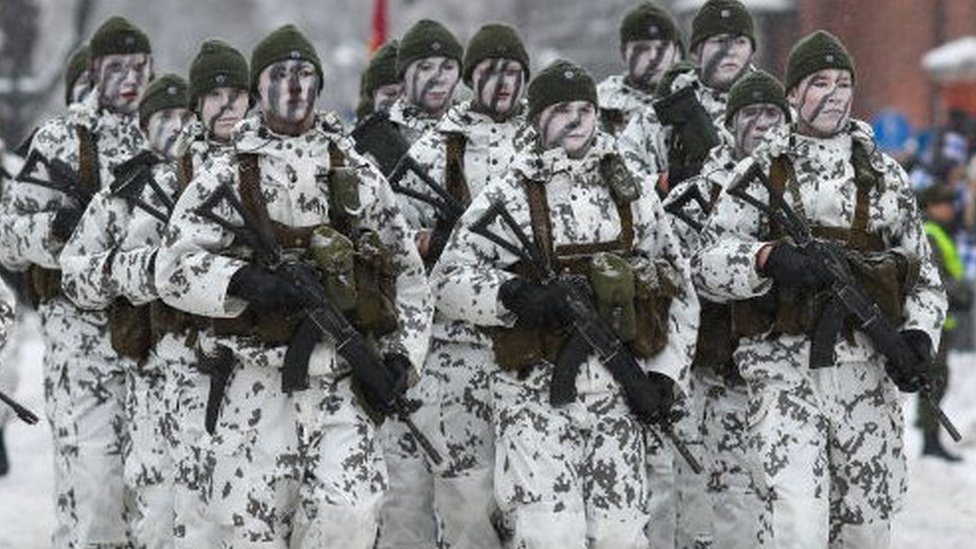
The wider European significance is difficult to ignore. Across the continent, governments are expanding defense spending, reconsidering reserve structures and speaking more openly about the possibility of long term confrontation with Moscow. Yet few have retained a model as socially embedded and operationally mature as Finland’s. Its system offers a harder lesson than the usual rhetoric of preparedness. It suggests that resilience is not something a country buys in a crisis. It is something a country builds for years before the crisis arrives.
This is why the Finnish approach resonates so strongly now. Russia’s war against Ukraine did not create Helsinki’s defensive mindset, but it has vindicated it. The country’s posture rests on an old and unsentimental principle: proximity to Russian power requires discipline, memory and readiness at scale. In that sense, Finland is not merely preparing for a hypothetical future war. It is acting on the belief that security in Europe has already entered a harsher era, one in which deterrence must be visible, credible and national before it can be multinational.
The recruits in uniform therefore represent more than a domestic training cycle. They embody a strategic culture that never fully demobilized its sense of danger and now looks increasingly aligned with Europe’s emerging reality. Finland is teaching its young citizens that national defense is not an emergency improvisation. It is a permanent condition of living next to a revisionist power. That may be an uncomfortable lesson, but at this stage of Europe’s history, it is also one of the clearest.
Phoenix24: clarity in the grey zone. / Phoenix24: claridad en la zona gris.