

 Phoenix 24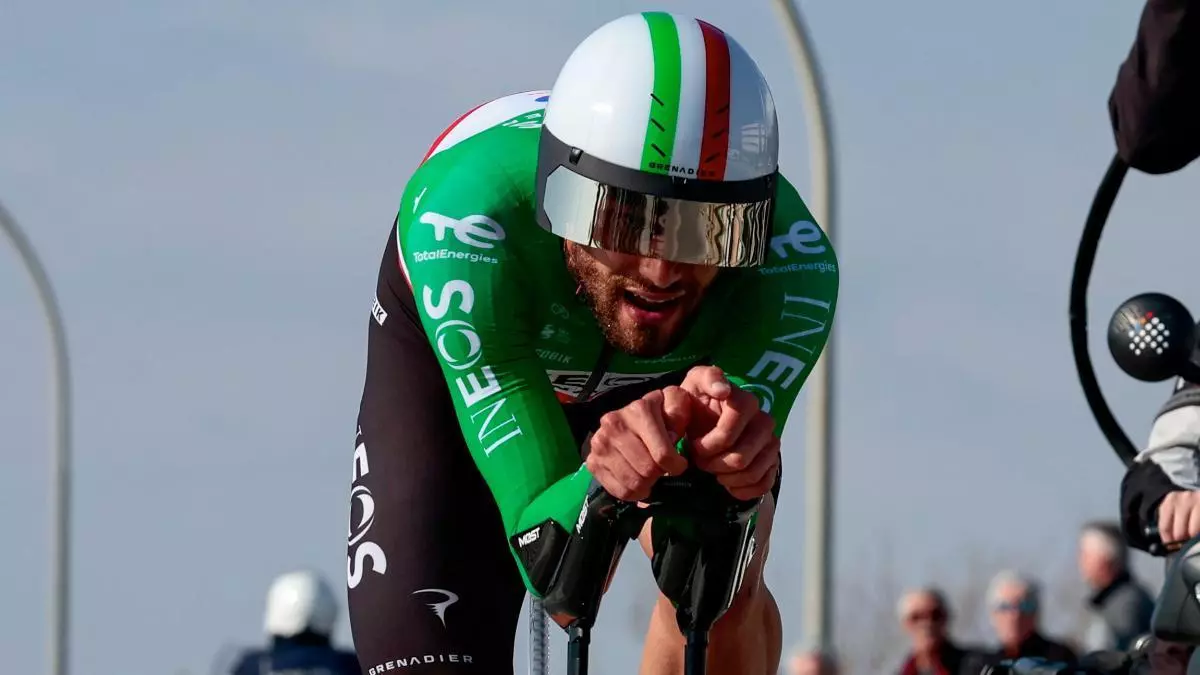
The time trial has its sovereign back.
Lido di Camaiore, March 2026
Filippo Ganna did not merely win another time trial. He reasserted ownership over a discipline that had recently begun to feel more contested than automatic. In the opening stage of Tirreno-Adriatico, the Italian champion stormed the 11.5-kilometer course in 12 minutes and 8 seconds, averaging a blistering 56.8 kilometers per hour and taking the first leader’s jersey with the kind of margin that turns a result into a message. Thymen Arensman finished second at 22 seconds, and the broader field was left racing for damage control rather than victory. The point was not that Ganna won. It was how completely he restored the old hierarchy.
That matters because time trialing at the elite level is no longer a quiet specialty. It has become one of the most technical, politically loaded spaces in cycling, where aerodynamics, pacing, equipment, and route design all shape the result, and where margins are often so small that domination itself becomes news. Ganna’s ride cut through that complexity with unusual clarity. He did not scrape out a win through a late split or a nervous favorite’s error. He imposed a gap large enough to make the rest of the field look like it had been racing a different event.
The setting amplified the effect. Lido di Camaiore has already become one of those courses where recent cycling memory matters, and Ganna knows it well. He has built a strong relationship with this opening test in Tirreno-Adriatico, and his performance here suggested not just familiarity, but control. On a fast, exposed route where hesitation can cost seconds immediately, he looked like the one rider whose pacing model aligned perfectly with the road. That is often the hidden advantage of great time trialists: they do not simply ride harder. They understand where the course allows violence and where it punishes excess.
What also stands out is the timing of the result within his season. Ganna had already shown strong condition earlier in the year, including a major time trial win in Algarve, but this ride felt more symbolic because it came in a WorldTour stage race where the general classification implications are immediate and public. A stage-one time trial does more than reward specialists. It rearranges everyone else’s week. Climbers, opportunists, and all-rounders now have to race from a position defined by Ganna’s effort, and that changes tactics before the mountains even begin.
The margins over major names underline the point. Primoz Roglic conceded around half a minute. Antonio Tiberi, Isaac del Toro, and Matteo Jorgenson all shipped meaningful time as well. In a race where general classification can remain tight for days, that is a serious opening wound. The time trial was short enough to suggest limited losses, but Ganna transformed it into a sorting mechanism. Riders who came to Tirreno with stage-race ambitions now face the old time-trial truth: one specialist can force everyone else into aggression earlier than planned.
There is also a psychological layer to this result. Ganna has spent the last few seasons living in the strange territory of being both a benchmark and a rider constantly measured against newer aerodynamic kings and evolving course profiles. In pure flat power tests, he remains one of the sport’s most feared riders, but the discipline itself has become more fragmented, with more names capable of taking major wins. This performance, then, was not only about adding another stage. It was about reminding the peloton that the discipline still bends around him when the conditions are right.
For Ineos Grenadiers, the outcome also carried strategic weight beyond the stage. Arensman’s second place completed a one-two finish and confirmed that the team arrived with more than one rider capable of shaping the early race. But Ganna remains the emotional center of this type of day. His presence gives Ineos something no tactical plan can manufacture: intimidation. When he is this dominant against the clock, the team can race with a form of calm that comes from knowing the opening blow has already landed.
The wider pattern is harder to ignore. Ganna’s victory was not just a specialist’s success in a narrow discipline. It was a reminder that cycling still contains figures who can make one category of racing feel almost feudal, as though an event belongs to them unless proven otherwise. On this day, the clock did not resist him. It confirmed him. And that is the difference between winning a time trial and ruling one.
Facts that do not bend. / Hechos que no se doblan.