

 Phoenix 24
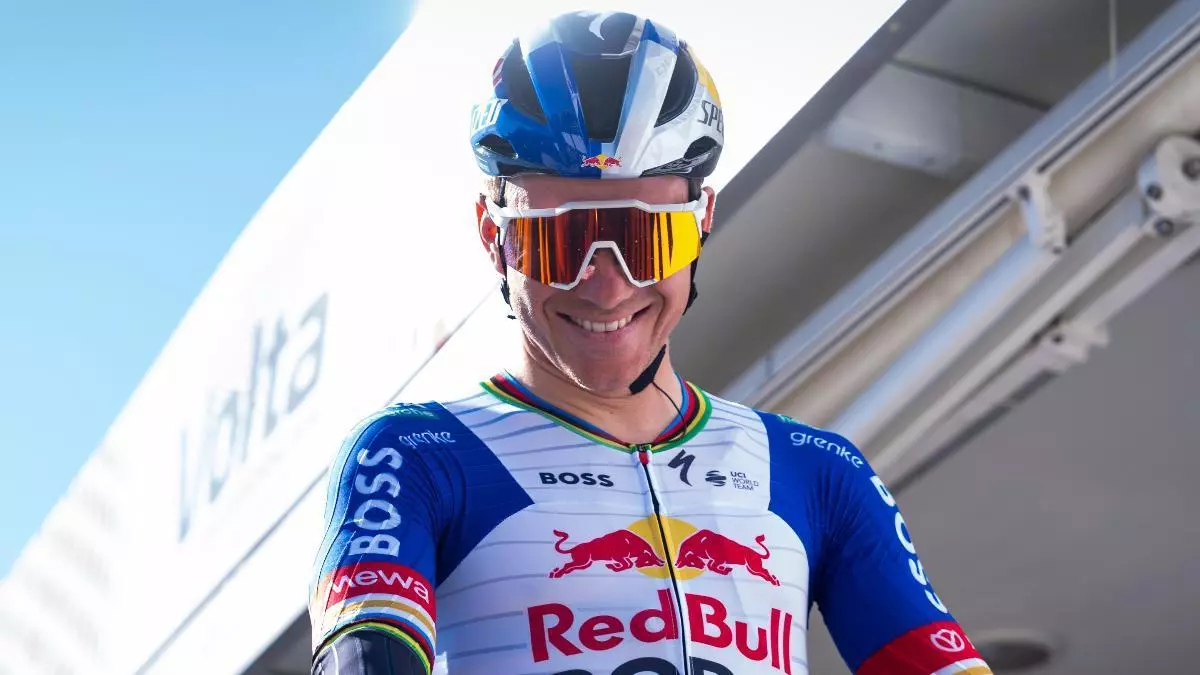
The monument just became less predictable.
Antwerp, April 2026
Remco Evenepoel’s late entry into the Tour of Flanders has transformed the race from a duel of established favorites into a more unstable and politically charged contest. Until now, the main gravitational pull of the monument seemed to revolve around Tadej Pogacar and Mathieu van der Poel, two riders whose profiles fit the race’s recent logic of force, explosiveness, and repeated violence on the cobbled climbs. Evenepoel changes that equation simply by appearing in it. He brings not only star power, but a different tactical grammar, one less tied to inherited expectations and more likely to disturb them.
That matters because Flanders is not a race that forgives improvisation easily. It is long, abrasive, territorial, and psychologically selective, built to expose positioning errors and punish any rider who confuses strength with control. Evenepoel arrives without the same historical relationship to this monument that defines some of his rivals, and that is precisely what makes his debut so disruptive. He is not entering with the burden of old scripts on these roads. He is entering with freshness, ambition, and the kind of engine that can force everyone else to reassess the race earlier than they would prefer.
For Pogacar and Van der Poel, this introduces a more complicated strategic landscape. Until now, each could imagine the other as the primary benchmark, the principal body to monitor when the race tightened around the decisive sectors. Evenepoel broadens that field of attention. He is not simply another contender added to the list. He is a rider capable of distorting rhythm, forcing commitments, and making the favorites reveal themselves before the final architecture of the race is fully in place. In monuments like this, that kind of disturbance can be more dangerous than pure favoritism.
There is also a national charge to his participation that cannot be ignored. Belgium does not experience the Tour of Flanders as a neutral sporting event. It is part ritual, part memory structure, part public test of identity through cycling. Evenepoel’s debut therefore lands not just as a sporting decision, but as a symbolic event inside a culture that has long demanded a home figure capable of carrying both pressure and possibility. That gives his start an emotional dimension beyond tactics. He is not merely joining the race. He is entering one of the most loaded theaters in Belgian sport.
What makes the story even sharper is the contrast in rider type. Van der Poel represents a kind of brutal classical authority on this terrain, a rider whose relationship with cobbles and positioning feels almost instinctive. Pogacar brings the violence of a grand tour champion who has learned to compress the classics into repeated acts of selective destruction. Evenepoel arrives with another kind of power, less organically associated with Flanders in the public imagination, but no less capable of altering the race if the conditions open. That difference matters because monuments are often won not only by the strongest legs, but by the rider who changes the race into something closer to his own shape.
There is risk in that, of course. Debuting in the Tour of Flanders is not the same as targeting it after years of apprenticeship in its nervous choreography. The race punishes unfamiliarity as much as weakness. Positioning before the climbs, surviving the tightening of the field, reading the timing of accelerations, and conserving energy through chaotic transitions are all forms of knowledge that cannot be downloaded instantly. Evenepoel may have the physiology to challenge almost anyone, yet physiology alone does not always conquer this monument. Flanders often asks for a particular kind of cruelty and patience at once.
Still, the very uncertainty around his chances is what gives the race its new volatility. If he had no real possibility, the story would remain decorative. If he were already a proven ruler of these roads, the script would feel narrower. Instead, the race now sits in a more compelling middle ground. Evenepoel is plausible enough to change how others ride, but uncertain enough to make every move open to reinterpretation. That is the ideal condition for a monument. Not clarity, but sharpened instability.
The broader effect is immediate. Flanders is no longer just a showdown between the riders most expected to dominate the spring. It has become a referendum on adaptation, hierarchy, and the ability of a new entrant to fracture an established balance before it hardens. Pogacar and Van der Poel remain the obvious pillars of the race, but they now carry one additional burden: they must absorb a rider whose mere presence can redraw the tactical map. In cycling, that can be enough to change the ending before the final climb even begins.
La narrativa también es poder. / Narrative is power too.