

 Phoenix 24
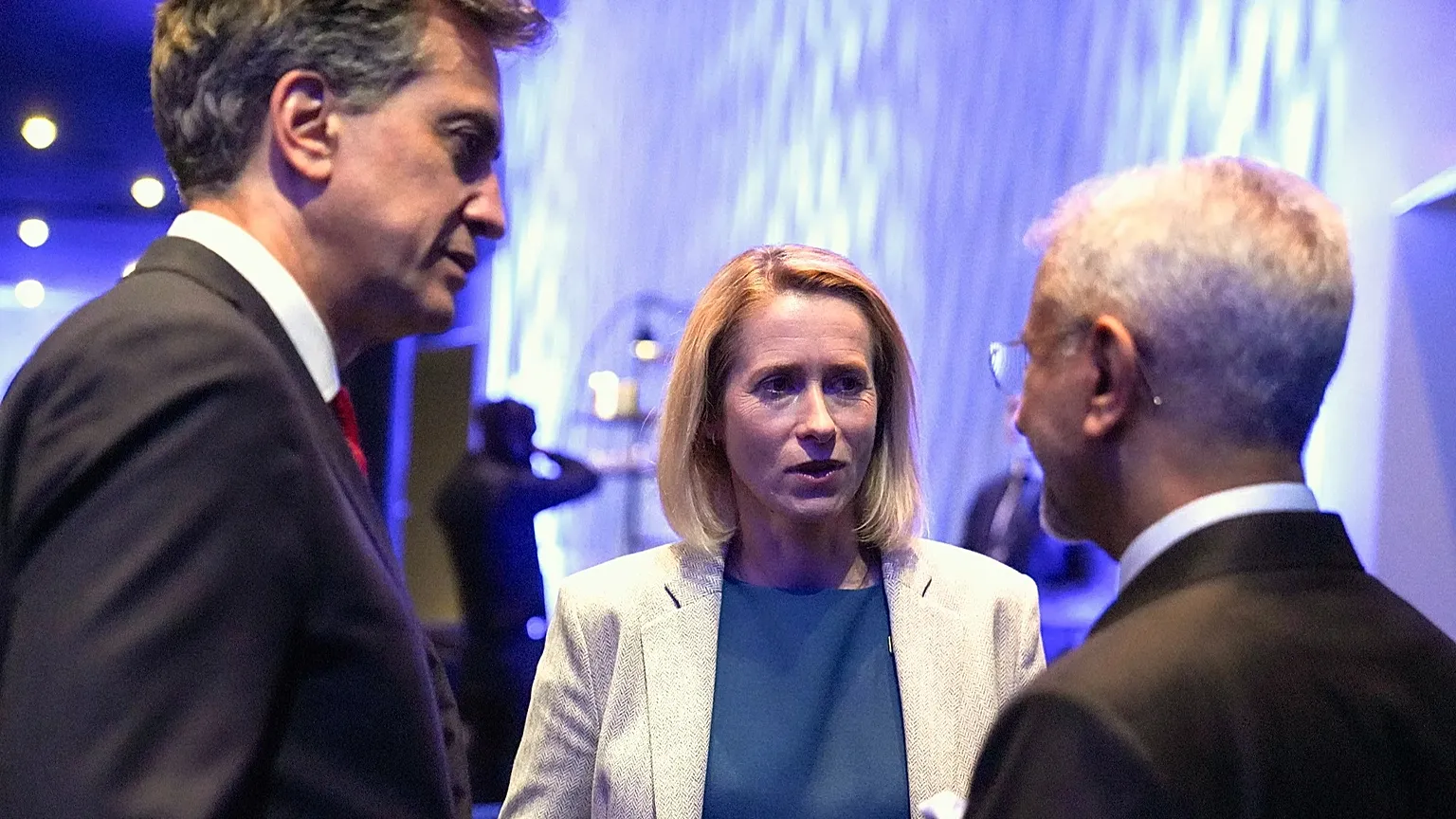
ATLANTA, UNITED STATES — October 31, 2026. A confrontation between European and Russian diplomats at the G20 foreign ministers’ meeting in Atlanta has exposed persistent divisions over the war in Ukraine, as European Union foreign policy chief Kaja Kallas accused Russian Foreign Minister Sergey Lavrov of presenting misleading accounts of the conflict. The exchange unfolded amid renewed diplomatic efforts to secure a ceasefire, growing concerns over civilian casualties and competing approaches between Washington and European governments toward negotiations with Moscow.
Speaking to Agence France-Presse following Friday’s discussions, Kallas said European representatives had directly challenged Lavrov’s statements concerning the war. She accused the Russian minister of advancing false narratives while offering no meaningful indication that Moscow was prepared to make concessions toward a negotiated settlement. Her remarks reflected the European Union’s longstanding position that a credible peace process must be supported by verifiable changes in Russia’s military conduct rather than diplomatic declarations alone.
The confrontation occurred during a gathering intended to promote international coordination on economic and geopolitical challenges. Instead, the war in Ukraine emerged as a central point of disagreement, illustrating the difficulty of maintaining constructive dialogue among major powers whose interpretations of the conflict remain fundamentally opposed.
European officials used the meeting to press Russia over its continuing military operations and to advocate a ceasefire in the Black Sea, a strategically important maritime corridor for agricultural exports and international commerce. A diplomatic source cited by AFP described Lavrov’s intervention as provocative, suggesting that the exchanges did little to narrow the distance between the negotiating positions.
Kallas also questioned Moscow’s willingness to pursue peace negotiations in good faith. According to her assessment, Russia’s actions on the battlefield provided little evidence of a genuine commitment to de-escalation, particularly as Ukrainian cities and civilian infrastructure continued to experience missile and drone attacks.
The European Union’s position rests on the argument that negotiations cannot be evaluated exclusively through official statements. Military activity, humanitarian conditions and compliance with potential ceasefire arrangements must also be considered when assessing whether the parties are moving toward a sustainable settlement.
British Foreign Secretary Ed Miliband delivered a similarly forceful message during the plenary session. He urged Lavrov to communicate directly to President Vladimir Putin that Russia would not achieve its objectives through continued military confrontation. Miliband also raised concerns about a recent attack on railway infrastructure in Dnipro that reportedly killed 15 people, emphasizing Moscow’s responsibility for launching the full-scale invasion of Ukraine in February 2022.
The exchange reflected a broader European effort to maintain diplomatic pressure while avoiding the normalization of relations with Russia in the absence of progress toward ending the conflict. Several European representatives reportedly declined to participate in the customary group photograph alongside Lavrov, prompting the American organizers to cancel the image.
Although largely symbolic, the episode illustrated how diplomatic protocol has become another expression of political disagreement. Group photographs at international summits ordinarily serve as public representations of multilateral engagement, even when participating countries maintain significant differences. Their cancellation demonstrated the extent to which the war continues to affect routine diplomatic interactions.
Lavrov rejected the European approach and criticized what he characterized as an arrogant diplomatic boycott. At a press conference on Friday, the Russian foreign minister welcomed Washington’s willingness to engage in dialogue with Moscow, contrasting the American position with what he described as Europe’s confrontational attitude.
His remarks highlighted an important distinction in the diplomatic strategies pursued by the United States and several European governments. While European officials have emphasized continued pressure on Moscow, Washington has maintained direct communication with Russian representatives as part of efforts to explore potential diplomatic arrangements.
U.S. Secretary of State Marco Rubio met with Lavrov on the sidelines of the G20 gathering, demonstrating that communication channels between the two governments remain active despite continuing disagreements over the war. The meeting did not, however, establish that the parties had reached an agreement concerning a ceasefire or the broader conditions necessary for ending hostilities.
For Ukraine, the distinction between diplomatic engagement and concrete security commitments remains critical. Kyiv has repeatedly argued that negotiations must preserve its sovereignty and territorial integrity while providing credible mechanisms to prevent renewed military aggression. Ukrainian officials have also emphasized the importance of continued international assistance as Russian attacks place pressure on civilian infrastructure and defensive capabilities.
The security dimension acquired additional significance when the U.S. State Department announced on Friday that Washington had approved a proposed package of 500 Patriot PAC-3 missile interceptors for Ukraine, valued at approximately $2.1 billion. The announcement represented a substantial potential reinforcement of Ukraine’s air defense capabilities, although authorization does not necessarily mean the equipment will be delivered immediately.
President Volodymyr Zelenskyy welcomed the American decision but expressed concern about the delivery timetable. He warned that the interceptors might not begin arriving for several years, creating a potentially serious gap between the announcement of assistance and Ukraine’s immediate defensive requirements.
The concern is especially relevant as winter approaches. Energy infrastructure, transportation systems and urban areas remain vulnerable to missile and drone attacks, making reliable air defense a central element of civilian protection and economic resilience.
Patriot interceptors are designed to engage selected aerial threats, including certain ballistic missiles, but their operational effectiveness depends on the availability of launch systems, compatible equipment, trained personnel and sufficient stocks of ammunition. Consequently, the practical significance of the newly authorized package will depend on procurement arrangements and the schedule under which the missiles become available.
The debate over military assistance also exposes the tension between immediate battlefield requirements and the longer production cycles associated with sophisticated defense technologies. Even substantial financial commitments may not translate into rapid operational improvements when manufacturing capacity, international demand and existing defense obligations constrain delivery schedules.
Beyond the military dimension, the G20 confrontation reflects competing visions of European security. For the European Union, Russia’s invasion of Ukraine has reinforced concerns about territorial sovereignty, deterrence and the credibility of international agreements. Moscow, meanwhile, continues to frame the conflict through its own security interests and opposition to Western military influence, positions rejected by Ukraine and its principal European supporters as justification for the invasion.
These competing narratives complicate negotiations because the dispute extends beyond immediate battlefield conditions. Questions concerning Ukrainian territory, military guarantees, sanctions, reconstruction and the future relationship between Russia and European security institutions remain unresolved.
The Black Sea occupies a particularly important position within these discussions. Its shipping routes connect Ukrainian agricultural production with international markets, making maritime security relevant not only to the countries directly involved in the conflict but also to food-importing economies. A verifiable ceasefire affecting the region could reduce risks to commercial navigation, although its effectiveness would depend on enforcement arrangements and compliance by the parties.
The diplomatic confrontation also unfolded shortly before the November 3 midterm elections in the United States. The vote will determine the composition of Congress for the final two years of President Donald Trump’s term, potentially influencing legislative negotiations over foreign assistance, defense spending and broader international commitments.
Nevertheless, the immediate course of negotiations remains dependent on decisions made by the governments directly involved. Neither the continuation of diplomatic contacts nor the public exchange of accusations establishes that a negotiated settlement is imminent.
The meeting in Atlanta therefore illustrates a paradox of contemporary multilateral diplomacy. International forums bring competing governments into the same room, preserving opportunities for communication even when their positions remain deeply incompatible. Such encounters can expose disagreements as readily as they generate agreements, particularly when military operations continue alongside discussions of peace.
For European leaders, maintaining pressure while participating in diplomatic negotiations presents a continuing challenge. For Russia, engaging with Washington while confronting European criticism reflects a different diplomatic calculation. For Ukraine, the essential issue remains whether these exchanges can produce measurable improvements in security and credible conditions for ending the war.
The G20 discussions have not resolved those differences. They have instead demonstrated how the conflict continues to influence relationships among major powers, turning questions of military support, diplomatic recognition and international economic cooperation into interconnected issues.
As negotiations continue and fighting persists, the significance of the Atlanta confrontation will depend less on the intensity of the public accusations than on whether participating governments translate their stated positions into verifiable diplomatic or military developments.
The unresolved question is whether direct communication among adversaries can eventually create conditions for a durable settlement, or whether the widening differences between Russian and European positions will continue to constrain international efforts to end the war.
Phoenix24: Beyond the headline, the context. / Más allá del titular, el contexto.