

 Phoenix 24
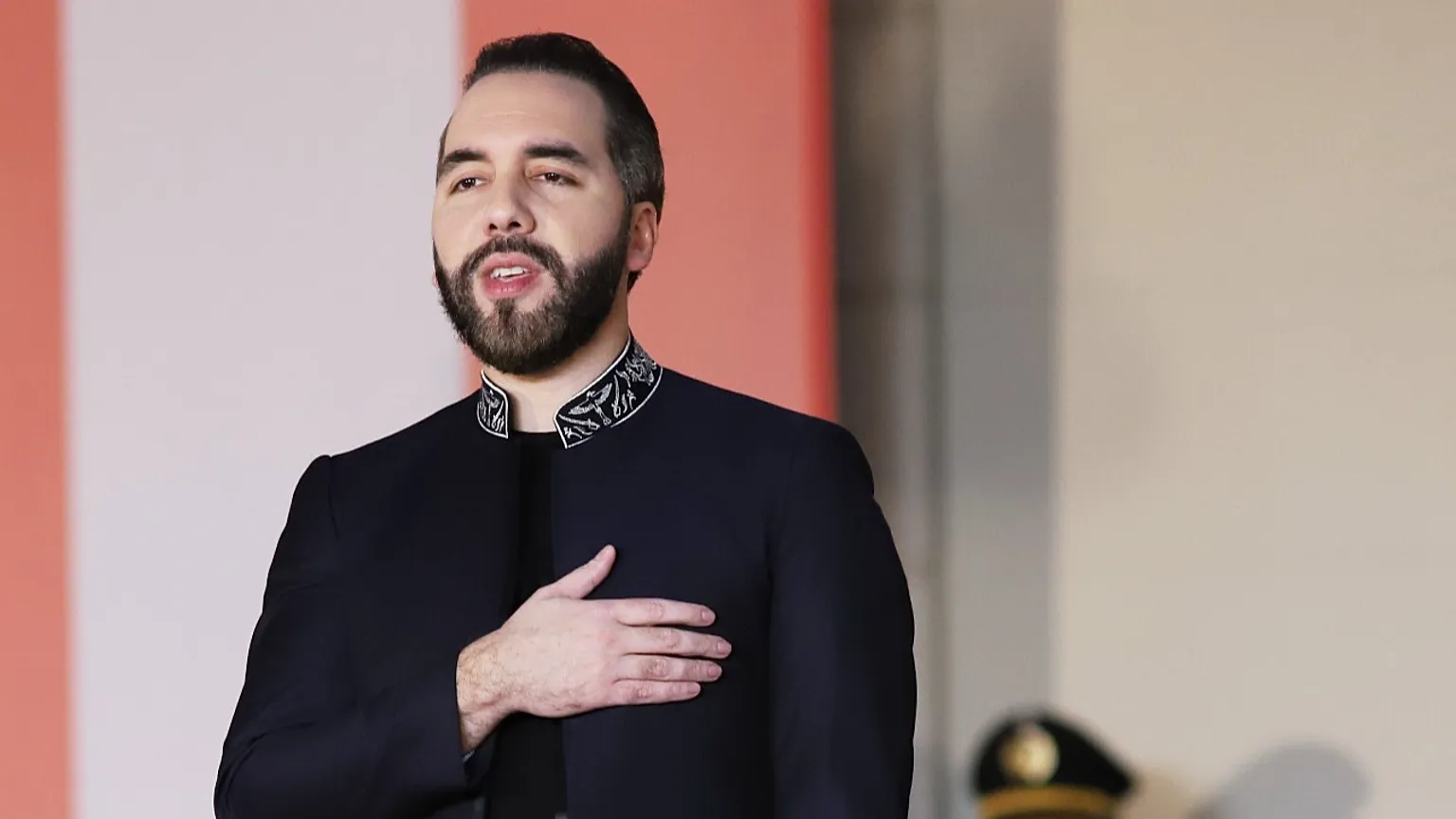
PORT-AU-PRINCE, HAITI — October 30, 2026. El Salvador has deployed more than 2,000 soldiers to Haiti in an extraordinary military operation aimed at rescuing four Salvadoran aviation technicians who disappeared following an armed gang ambush near Port-au-Prince. President Nayib Bukele has defended the intervention as a limited rescue mission rather than an invasion, while coordination with Haitian authorities has intensified amid concerns over the country’s deteriorating security conditions and the growing international military presence on its territory.
The deployment represents one of El Salvador’s most significant overseas military operations and introduces a new dimension to international efforts to confront Haiti’s armed criminal organizations. Salvadoran authorities confirmed that Bukele discussed the intervention directly with Haitian Prime Minister Alix Didier Fils-Aimé, emphasizing bilateral cooperation and the continuation of security operations associated with the international force supported by the United Nations.
The immediate crisis began on October 18, when four Salvadoran aviation technicians participating in the multinational Gang Suppression Force (GSF) disappeared after their vehicle was attacked in an area controlled by armed groups on the outskirts of Port-au-Prince. Haitian authorities have described the incident as an abduction, although the precise circumstances and current condition of the missing personnel have not been independently established.
The incident prompted Bukele to authorize a rapid military response. By October 28, approximately 2,000 Salvadoran soldiers had arrived in Haiti, according to security officials cited by Reuters. Sources familiar with the operation indicated that the deployment could eventually reach 2,500 personnel, although authorities have not fully disclosed the force’s command arrangements, operational limitations or rules of engagement.

Bukele has insisted that the operation does not constitute an occupation or an attempt to interfere with Haiti’s political sovereignty. In a statement published in Haitian Creole, the Salvadoran president maintained that his government had no intention of controlling the country or appropriating its resources, asserting that the deployment would end once the missing technicians returned safely.
The president also stated that El Salvador would cover approximately 90% of the operation’s costs. This financial commitment underscores the priority his administration has assigned to the rescue mission, but it also raises questions about the sustainability of an extended deployment should the search develop into a broader campaign against Haiti’s criminal networks.
The distinction between a limited rescue operation and a wider security intervention has become central to the diplomatic debate. Bukele has publicly argued that the tactics used to suppress gangs in El Salvador could also be effective in Haiti, while emphasizing that the immediate objective remains the recovery of the four missing technicians.
His statements reflect the security doctrine that has defined his administration, which relies heavily on military deployments, territorial control and large-scale detention operations. El Salvador has experienced a substantial reduction in reported homicides under these policies, although international human rights organizations have documented concerns involving arbitrary detention, due process and prison conditions.
Applying a comparable strategy in Haiti presents considerably different operational challenges. Armed organizations in the Caribbean country exercise influence over substantial urban territories, maintain complex local economic networks and operate amid weakened state institutions. The fragmentation of public authority, limited policing capacity and prolonged political instability complicate attempts to restore security through military operations alone.
The international dimension is equally significant. Haiti’s Gang Suppression Force was established with United Nations authorization to support national authorities in confronting armed criminal groups. Nevertheless, the rapid expansion of El Salvador’s military presence has generated questions concerning how its personnel will coordinate with the multinational mission, Haitian security forces and other international actors.
Reuters reported that the Salvadoran deployment approached, within approximately ten days, the personnel strength that the international security mission had struggled to assemble over a substantially longer period. The comparison illustrates both the speed of the Salvadoran response and the persistent operational difficulties affecting international stabilization efforts.
Security specialists have warned that large-scale military operations in densely populated urban environments carry significant risks for civilians. Armed organizations may operate within residential neighborhoods, complicating the identification of legitimate targets and increasing the importance of intelligence accuracy, proportionality and operational accountability.
Haiti’s historical experience with foreign military interventions adds another layer of sensitivity. Previous international missions have faced criticism concerning civilian protection, institutional effectiveness and the long-term consequences of external involvement. For that reason, public confidence, clearly defined objectives and coordination with Haitian authorities remain essential considerations in assessing the current deployment.
The intervention also unfolds against a difficult political transition. Haiti has not held national elections in more than a decade, while the presidency has remained vacant since the assassination of President Jovenel Moïse in July 2021. The absence of fully elected national leadership has complicated efforts to rebuild institutional legitimacy and establish sustainable security governance.
On October 30, Haiti’s Provisional Electoral Council announced a revised electoral timetable, scheduling the first round of general elections for July 18, 2027, followed by a second round on October 4. The announcement represents an attempt to restore the country’s electoral process after persistent insecurity forced the postponement of an earlier timetable.
However, implementing the electoral calendar will depend heavily on security conditions. Armed groups continue to threaten transportation routes, public institutions and communities in Port-au-Prince and central Haiti, while displacement and disruptions to essential services complicate voter registration and election administration.
The convergence of foreign military assistance and electoral preparations therefore creates an important governance challenge. Improved security could facilitate political participation and institutional reconstruction, but military operations alone cannot guarantee credible elections, effective public administration or sustainable economic recovery.
For El Salvador, the deployment represents a test of whether its domestic security experience can be transferred to a substantially different international environment. Military effectiveness, diplomatic coordination and civilian protection will all influence perceptions of the intervention, particularly if the operation extends beyond its stated rescue objective.
For Haiti, the central issue is more fundamental. International assistance may strengthen immediate security capabilities, yet durable stabilization requires functioning institutions, accountable law enforcement, judicial capacity and opportunities for communities affected by years of armed violence.
The operation also illustrates a broader shift in Caribbean and Central American security relations, as regional governments increasingly confront criminal organizations whose influence transcends traditional boundaries between domestic policing, international security and political governance.
The outcome remains uncertain. The fate of the four Salvadoran technicians has not been publicly resolved, and the precise duration and scope of the military operation remain dependent on developments in the field. What began as an emergency rescue mission now carries implications for bilateral relations, international security cooperation and Haiti’s fragile political transition.
As Salvadoran troops continue their operations and Haitian authorities prepare for elections in 2027, a critical question remains: can an externally supported military intervention create the conditions for lasting institutional recovery, or will Haiti’s underlying political and security vulnerabilities persist beyond the immediate deployment?
Phoenix24: Beyond the news, the pattern. / Más allá de la noticia, el patrón.