

 Phoenix 24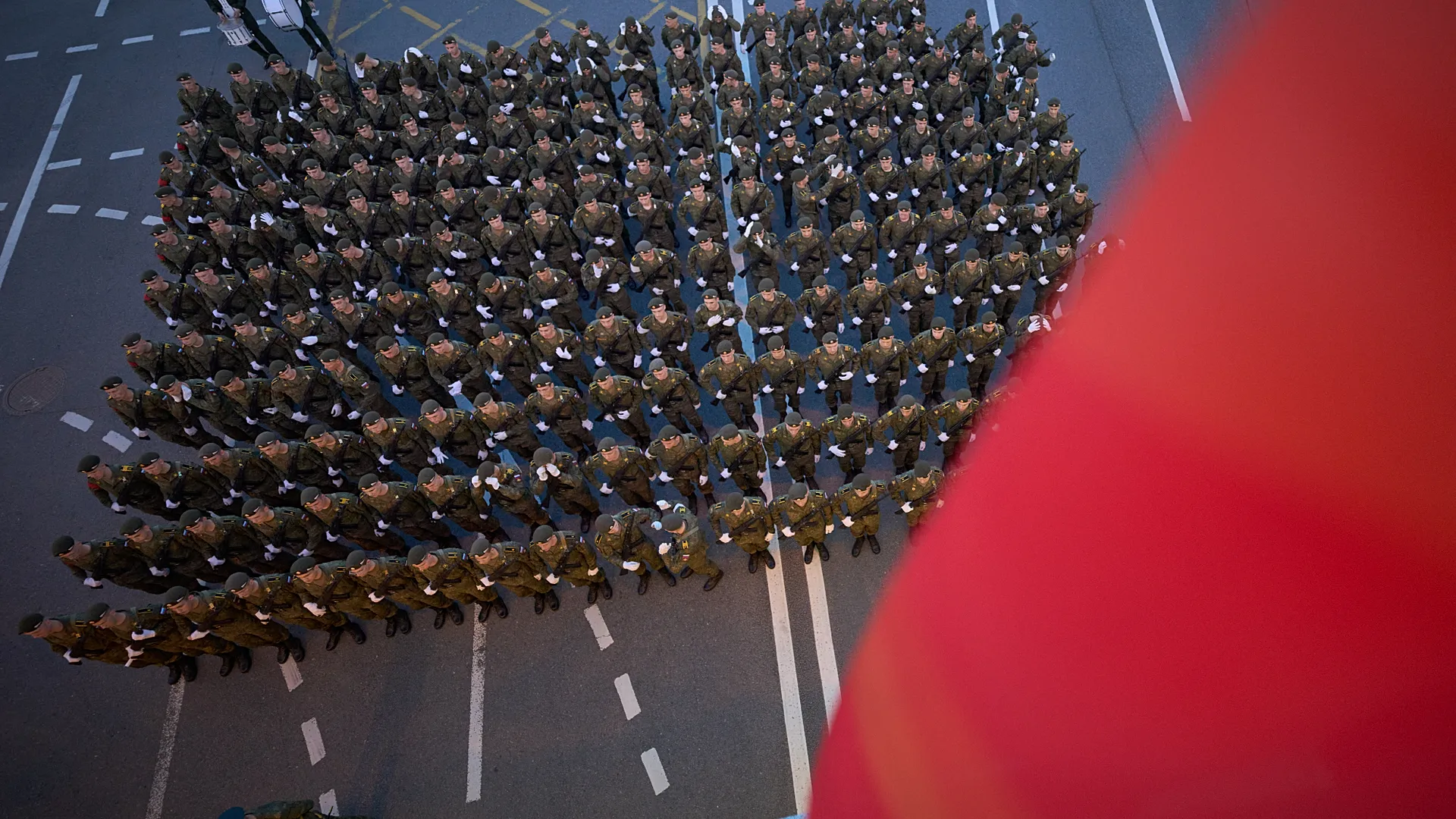
Power depends on command, not only spending.
Brussels, May 2026. The question of whether Russia is militarily superior to the European Union exposes one of the most uncomfortable contradictions in European security. On paper, Europe has money, personnel, technology and industrial potential. In practice, Russia enters the strategic equation with centralized command, combat experience, wartime production and a state apparatus already reorganized around military pressure.
The imbalance is not simply about who spends more. The European Union collectively allocates massive resources to defense, but those resources are divided among 27 national systems, different procurement cultures, fragmented weapons platforms and unequal levels of readiness. Russia, by contrast, operates through a single military command and has converted the war in Ukraine into a brutal laboratory of artillery, drones, electronic warfare, logistics adaptation and battlefield attrition.
That distinction matters more than budget tables suggest. A euro spent across fragmented European systems does not generate the same immediate military effect as a ruble spent inside a centralized Russian war economy. Europe may possess greater long-term economic depth, but Russia currently has the advantage of operational concentration. In a crisis, the side that decides faster, produces faster and deploys faster often shapes the first phase of escalation.
The personnel comparison also hides a deeper problem. Europe can count large numbers of active soldiers when national armies are added together, but that does not automatically create a unified European force. Russia’s military has been hardened by years of large-scale conventional warfare, while many European armies remain structured for alliance operations, limited deployments and national defense models that were built before the return of industrial war.
The nuclear factor adds another layer of asymmetry. Russia’s arsenal gives Moscow a strategic shield for conventional aggression, allowing it to escalate below the nuclear threshold while warning Europe against direct intervention. France and the United Kingdom retain credible deterrent forces, but their role in a truly European security architecture remains politically unresolved. Without a clearer European nuclear doctrine, deterrence remains dependent on national calculations and the uncertain depth of the American umbrella.
The central weakness, then, is not European poverty. It is European dispersion. The continent has factories, engineers, budgets, aircraft, armored vehicles and advanced technology, but it lacks a single operational brain. Russia does not need to be richer than Europe to create military pressure; it only needs to be more coherent at the moment of decision.
This is why the debate over rearmament cannot remain trapped in spending targets. Raising defense budgets may be necessary, but money alone will not solve fragmentation, duplication or strategic hesitation. Europe’s real challenge is doctrinal: whether it can move from national defense accumulation toward integrated military power, common procurement, interoperable forces and a credible command structure able to act before a crisis becomes irreversible.
The war in Ukraine has already demonstrated that modern conflict is no longer a short, surgical contest. It is a test of industrial stamina, political endurance, ammunition supply, drone adaptation, cyber resilience and social tolerance for prolonged insecurity. Russia has absorbed catastrophic costs, but it has also adapted to the logic of attritional war. Europe is trying to catch up while still negotiating internally what kind of power it wants to become.
The uncomfortable conclusion is that Russia is not superior to Europe in absolute potential. Europe’s economy, technology base and demographic depth give it the capacity to outmatch Moscow over time. But potential is not power until it is organized. Today, Russia’s advantage lies in the conversion of state resources into military effect, while Europe’s disadvantage lies in the distance between strategic awareness and collective execution.
If Europe wants to close that gap, it must treat defense integration not as a bureaucratic project, but as a survival architecture. The next decade will not be defined only by how much Europe spends, but by whether it can turn money into readiness, readiness into deterrence and deterrence into political autonomy. Until then, Russia does not need to be stronger than Europe everywhere. It only needs to be faster, harder and more unified where the next crisis begins.
Beyond the news, the pattern. / Más allá de la noticia, el patrón.