

 Phoenix 24
The arrest reveals a harder criminal threshold.
Durango, May 2026. Mexican authorities captured a man identified as “El Tyson,” allegedly linked to attacks against police officers and explosive-related assaults in Durango. The arrest places renewed attention on a security environment where organized crime is no longer limited to firearms, territorial intimidation or road blockades, but increasingly experiments with tactics designed to overwhelm local institutions.
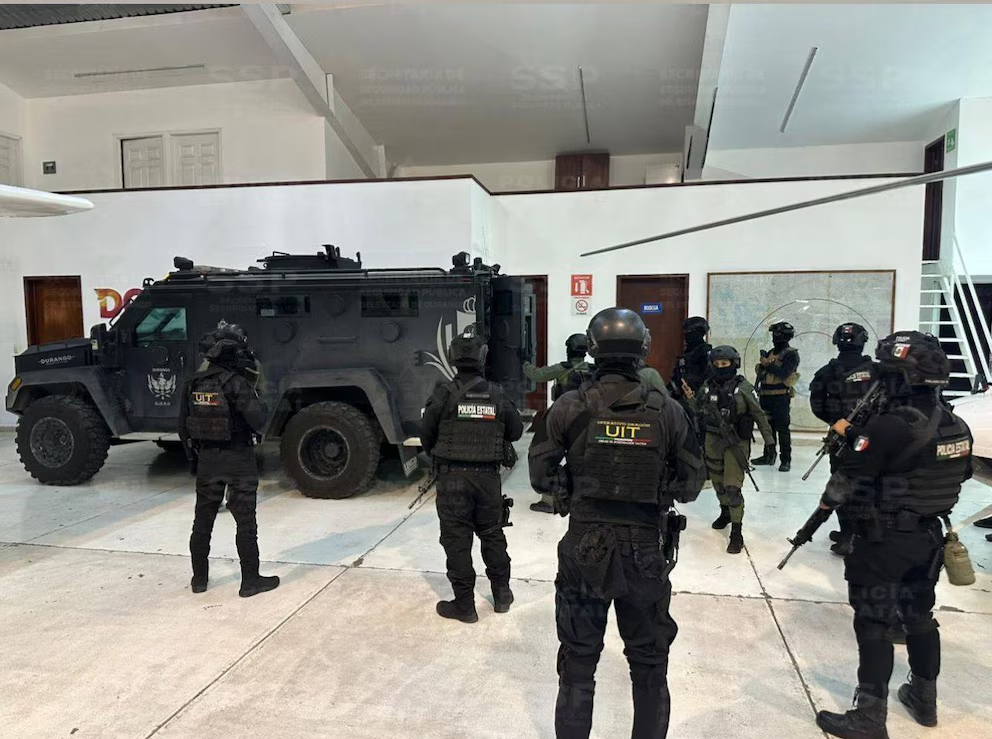
The case is significant because attacks involving explosives change the operational meaning of criminal violence. They generate fear beyond the immediate target, force police forces to modify patrol routines and create a psychological effect closer to insurgent pressure than ordinary criminal confrontation. In that sense, the arrest is not only a tactical success; it is also a warning about the sophistication of violent cells operating in parts of northern Mexico.
Durango occupies a sensitive position inside the regional security map. Its geography connects criminal corridors involving Sinaloa, Chihuahua, Zacatecas and Coahuila, making the state vulnerable to disputes over transit, refuge and operational control. When police are attacked directly, the message is not only against officers; it is aimed at the authority structure that still attempts to regulate territory.

The capture of “El Tyson” may help clarify specific attacks, but it does not eliminate the broader risk. Criminal organizations often absorb individual arrests by replacing operators, dispersing cells or shifting tactics to avoid immediate pressure. The real test will be whether authorities can convert the detention into intelligence, prosecutions and disruption of the networks behind the violence.
For Durango, the episode exposes the deeper challenge facing Mexican security policy: violence is evolving faster than many local institutions can adapt. When explosives enter the equation, public security stops being only a matter of patrols and arrests. It becomes a contest over intelligence, territorial control and the state’s ability to prevent fear from becoming governance.
Behind every data point, the intention. / Detrás de cada dato, la intención.