

 Phoenix 24
A peace deal that arrives too early can turn into the most sophisticated form of defeat.
Bruselas, noviembre de 2025
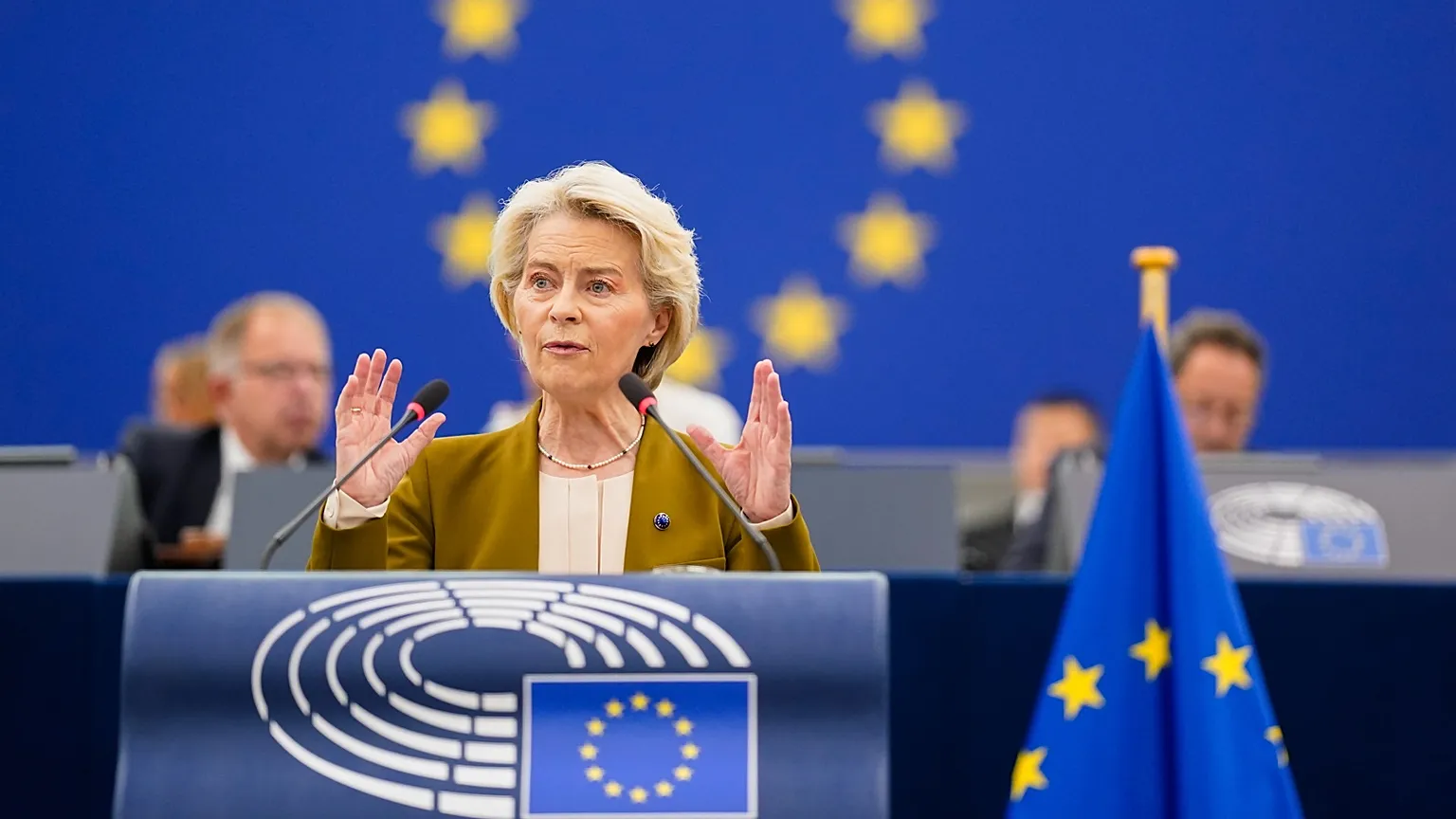
European Commission President Ursula von der Leyen delivered a stark message to lawmakers in Brussels, insisting that the European Union must maintain maximum pressure on Russia despite growing international movement around a potential peace proposal for Ukraine. Her intervention, delivered with unusual bluntness, reflected a deep concern circulating through European institutions: not every peace plan is a peace, and some carry the architecture of future instability.
She argued that any negotiated outcome must begin with a nonnegotiable premise, that Ukraine’s sovereignty cannot be fragmented under diplomatic pretexts. This stance, discussed in strategic circles across the continent, aligns with assessments from NATO officials who have repeatedly noted that Moscow’s military posture still signals an ambition to reshape security boundaries in Eastern Europe. Analysts within the CSIS added that Russia’s hybrid strategies remain active, combining front-line pressure with energy leverage and disinformation channels that operate far beyond the battlefield.
Across Western Europe, officials within the German Federal Foreign Office and the French Ministry of Defence echoed the idea that a peace deal that restricts Ukraine’s defensive apparatus would not calm Europe but expose it. They underscored how previous ceasefire proposals, prior to 2022, were systematically followed by escalations that dismantled diplomatic optimism. Those precedents, estudiados por el Instituto Peterson, se citan ahora como evidencia de que cualquier relajación prematura crea un vacío que Rusia aprovecha de inmediato.
In parallel, security observers in Eastern Europe expressed a sharper concern. Advisors in Warsaw highlighted that limiting the size or structure of Ukraine’s armed forces would open a corridor of vulnerability stretching from the Black Sea to the Baltic. Lithuanian analysts insisted that no agreement can be credible if it reduces Kyiv’s ability to deter a renewed offensive, particularly in regiones donde Moscú combina operaciones militares con presiones demográficas y económicas. These perspectives, que resonaron también en debates del Parlamento Europeo, consolidaron una idea central en la sesión de Bruselas: la Unión no aceptará un acuerdo que maquille concesiones territoriales o militares como una paz sostenible.
From outside Europe, insights from Asia introduced an additional layer of caution. Strategic researchers at the Lowy Institute noted that premature peace accords in high-tension regions often produce asymmetric dependencies that last decades. They examined the Kyiv–Moscow dynamic through a broader geopolitical lens, arguing that if Russia emerges with intact leverage, the balance of power between Europe and Asia would be altered in ways that benefit actores con intereses alineados con Moscú. Meanwhile, correspondents from the South China Morning Post señalaron que Beijing observa el proceso con prudencia, consciente de que cualquier resultado que deje debilitada a Ucrania modifica el tablero estratégico en Eurasia.
Inside the European Parliament, von der Leyen emphasized that the EU must not mistake diplomatic fatigue for strategic wisdom. Although some member states have shown interest in accelerating negotiations, she insisted that stability cannot be purchased at the cost of disarming the victim of aggression. European Council officials reinforced this position, añadiendo que la Unión debe mantenerse cohesionada y evitar que la presión externa fracture su postura común. Diplomats familiar with the discussions admitted privately que el temor principal es que ciertos borradores del plan de paz introduzcan requisitos ambiguos que, en la práctica, reduzcan las capacidades defensivas ucranianas.
Regional analysts in Latin America, consulted by international organizations, señalaron que los acuerdos de paz firmados bajo presión suelen fallar cuando no incluyen mecanismos robustos de verificación. Esa lectura coincide con los planteamientos de ACNUR, que advierte que las poblaciones desplazadas regresan solo cuando perciben garantías reales de seguridad, no cuando se anuncian pactos frágiles. Del mismo modo, economistas del Fondo Monetario Internacional recordaron que la reconstrucción ucraniana depende de un entorno seguro que permita flujo de inversión sin riesgos políticos o militares.
Back in Brussels, the conversation gravitates toward a core dilemma: Europe wants peace, but not at the expense of its long-term security. Parliamentarians insist that any agreement that limits Ukraine’s capacity to defend itself generates un vacío estratégico que Europa tendría que llenar con mayores costos militares, económicos y diplomáticos. Expertos del SIPRI han señalado que la disminución de capacidades defensivas en un país fronterizo con Rusia altera todo el equilibrio militar del continente, obligando a la UE a sostener una vigilancia permanente que no sería necesaria si Ucrania conserva un aparato militar robusto.
As debates intensify, one insight remains consistent among analysts, diplomats and security professionals: a peace that weakens Ukraine does not end the war, it simply moves it. Von der Leyen’s intervention, lejos de ser un gesto político, funciona como advertencia institucional. Europa no puede permitirse una tregua que contenga semillas de expansión rusa, ni un acuerdo que abra un ciclo nuevo de concesiones estratégicas. La presión, concluyó la presidenta, debe mantenerse porque la seguridad del continente depende de ello.
Lo visible y lo oculto, en contexto. / The visible and the hidden, in context.