

 Phoenix 24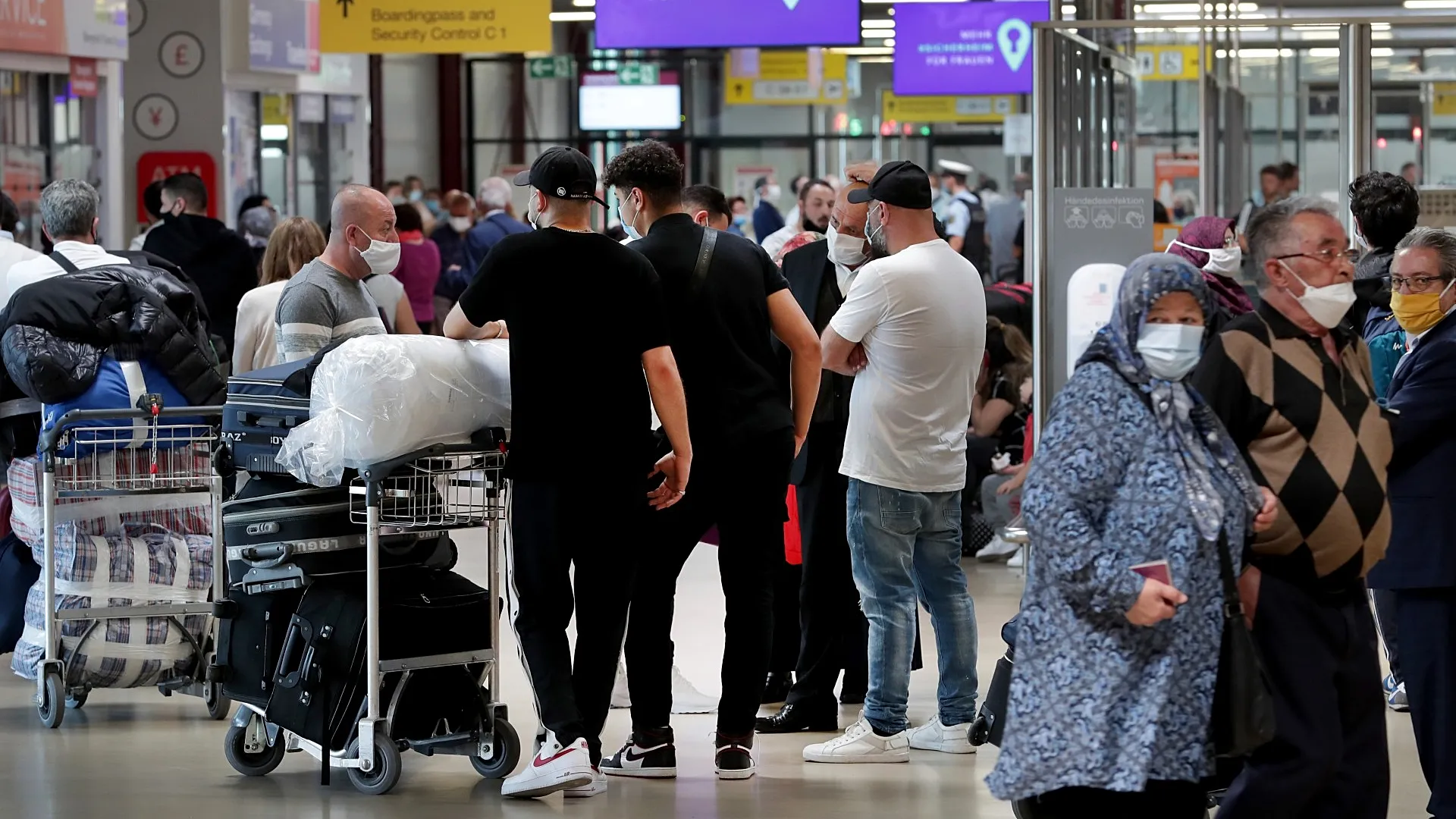
Travel friction is becoming policy by design.
Brussels, April 2026
Europe’s Entry Exit System is no longer a distant bureaucratic project. As full operational pressure builds toward April 10, the EES marks a structural shift in how the European Union manages mobility, security and sovereignty at its external borders. What may look to travelers like a technical change at passport control is, in reality, part of a deeper transformation in which movement itself is being recoded as data, risk profiling and automated verification.
The practical change is straightforward, but its implications are not. The EES replaces manual passport stamping for non EU short stay travelers entering and leaving the Schengen area with a digital record that logs identity data, travel document information, dates and places of entry and exit, and biometric identifiers such as fingerprints and facial images. That means border crossings will become less dependent on visible paper traces and more dependent on interoperable databases, machine readability and real time registration capacity. For the traveler, this may promise efficiency over time, but in the short run it also introduces uncertainty, longer processing at some checkpoints and a new layer of procedural exposure.
This matters because border modernization is never only about convenience. The EES is designed to detect overstays more accurately, strengthen external border control and make it harder for irregular movement to hide inside administrative fragmentation. In strategic terms, Brussels is turning mobility governance into a more integrated security function, one that links migration management, internal stability and digital state capacity. The border is no longer just a line where documents are checked. It is becoming a data environment where legitimacy, duration of stay and traveler traceability are continuously computed.
For international travelers, especially from visa exempt countries outside the EU, the system signals a cultural shift as much as a technical one. Europe is moving away from the older ritual of discretionary border handling and toward a model of standardized digital scrutiny. That does not mean every crossing will become chaotic, but it does mean the psychological experience of entering Europe is changing. The traveler is now processed not only as a person in motion, but as a biometric event inside a continental architecture of verification.
The operational challenge is that infrastructure rarely matures at the same pace as political ambition. Airports, ports and land crossings are uneven in readiness, staffing, equipment integration and passenger flow design. Even when the legal framework is clear, implementation can produce bottlenecks, confusion and reputational costs if the technology slows movement instead of streamlining it. This is why the EES should not be read merely as a security upgrade. It is also a stress test of whether Europe can digitize sovereignty without undermining the fluidity on which tourism, business travel and transnational confidence depend.
There is also a geopolitical subtext that should not be ignored. At a time of war on Europe’s periphery, intensified migration politics and growing pressure on strategic infrastructure, the EU is hardening the intelligence layer of its border regime without fully abandoning the language of openness. The message is subtle but unmistakable: Europe still wants circulation, but on terms that are more measurable, more sortable and more enforceable. In that sense, the EES is not simply about who enters and exits. It is about how Europe defines control in an era where security, technology and mobility can no longer be separated.
For travelers, the immediate lesson is practical. They should expect biometric registration, possible delays during the adjustment phase and closer attention to travel document compliance and permitted length of stay. For observers of power, however, the lesson is larger. The EES reveals that the modern border is no longer built primarily with fences, booths or stamps, but with databases, interfaces and the quiet authority of algorithmic administration.
Detrás de cada dato, hay una intención. Detrás de cada silencio, una estructura.
Behind every silence, there is an architecture of power.