

 Phoenix 24
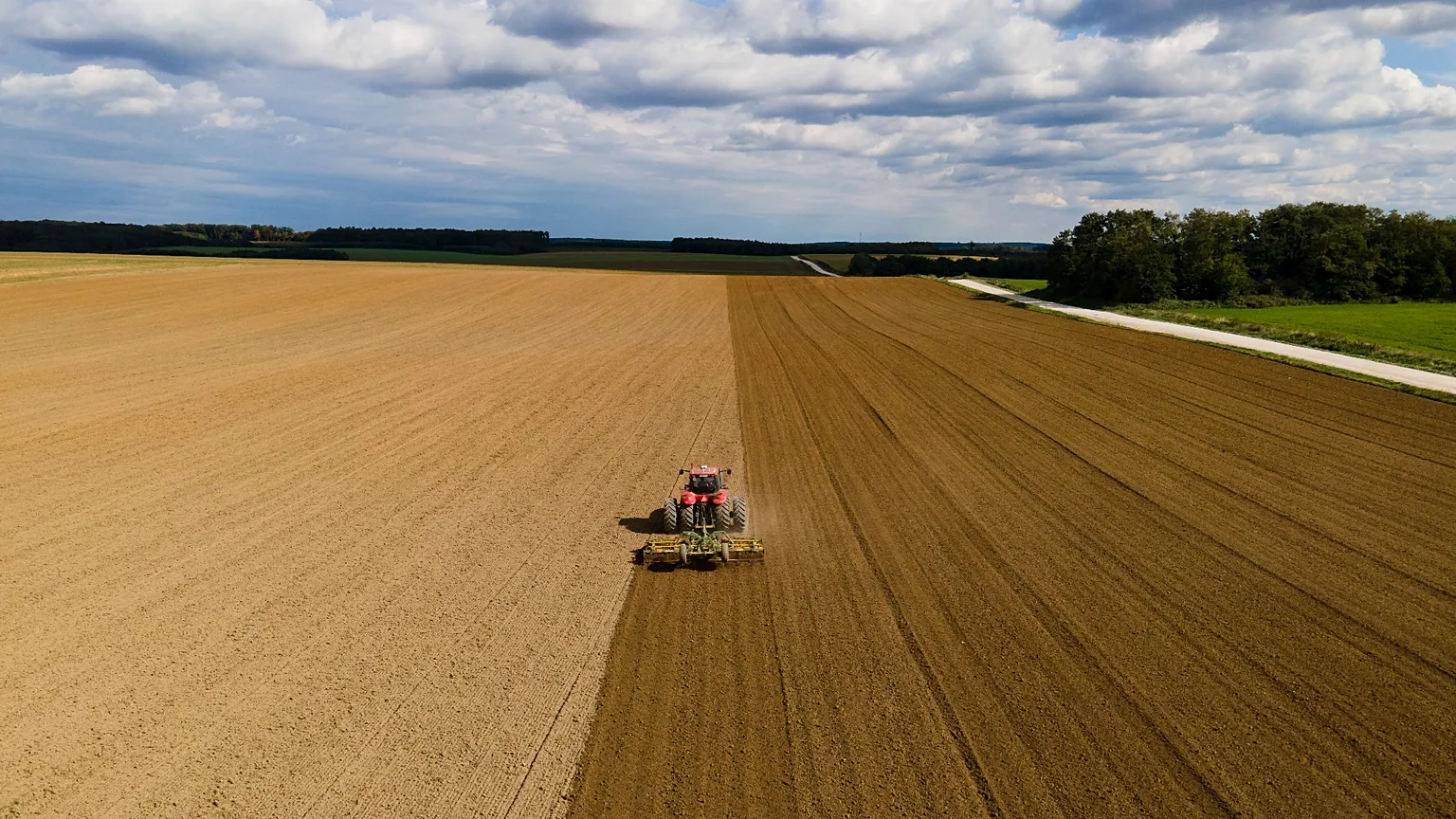
Europe’s most overlooked resource is becoming an economic liability.
Brussels, Belgium
Soil degradation could cost the European Union between €286 billion and €509 billion during its next seven-year budget cycle, according to an assessment released by the international Save Soil campaign. The warning, presented as European governments negotiate agricultural funding for 2028 through 2034, highlights the economic consequences of erosion, contamination and declining soil fertility. It also challenges policymakers to reconsider whether agricultural subsidies should focus more directly on protecting the natural resource on which food production depends.
The estimate draws on research by the European Commission’s Joint Research Centre, which places the annual economic cost of soil degradation between €40.9 billion and €72.7 billion. Save Soil extended those figures across the seven years of the forthcoming budget period, assuming that annual losses remain at their present levels. The resulting range is a projection based on existing cost estimates, rather than a forecast derived from a new economic model or an amount already lost from the EU budget.
The financial implications could be considerably greater. The assessment covers damage associated with erosion, soil contamination, compaction and declining organic carbon, but does not fully account for related consequences such as biodiversity loss, flooding, droughts and adverse health effects. European researchers have warned that incorporating these additional impacts could substantially increase the estimated economic burden.
The scale of the environmental challenge is already well documented. According to the European Commission, approximately 60% to 70% of soils across the bloc are considered unhealthy, undermining their capacity to support agriculture, retain water and maintain essential ecological functions. Soil degradation can reduce agricultural productivity while increasing dependence on fertilizers, irrigation and other interventions that impose additional costs on producers.
These vulnerabilities extend into Europe’s wider economy. The European food and beverage industry generates approximately €1.5 trillion in annual turnover and employs 4.8 million people, according to industry association FoodDrinkEurope. Although soil degradation does not directly threaten all of that economic activity, declining agricultural productivity can affect raw material availability, production costs and the resilience of food supply chains.
For farmers, the situation creates a difficult financial dilemma. Restoring soil quality may require changes in cultivation practices, additional investment and periods during which economic benefits remain uncertain. Producers already facing volatile markets, climatic pressures and rising operating expenses may struggle to finance restoration independently, even when healthier soils could improve productivity over the longer term.
Save Soil argues that the next Common Agricultural Policy should reward measurable improvements in soil health rather than relying primarily on conventional income support. The organization, established in 2022 by Sadhguru and the Isha Foundation, maintains that protecting agricultural land should be treated as an investment in Europe’s productive capacity.
Rico Rau, lead author of the campaign’s report prepared for the COP31 climate conference, emphasized the contradiction between extensive agricultural expenditure and continuing deterioration of the land supporting the sector. His argument centers on directing public resources toward rebuilding soil as a productive asset, while recognizing that farmers cannot reasonably be expected to absorb the entire financial burden.
The debate is unfolding as European institutions negotiate the next agricultural financing framework. In July 2025, the European Commission proposed protecting at least €300 billion for agricultural income and crisis support beginning in 2028. Agriculture ministers subsequently advanced their position on future policy rules, but the final financial arrangements remain tied to broader negotiations over the EU’s long-term budget.
The bloc has already introduced an important legislative instrument. Its Soil Monitoring Law entered into force in December 2025, establishing a framework for evaluating soil conditions and improving the availability of comparable environmental information. However, the legislation does not impose binding restoration targets, leaving considerable responsibility for practical improvements to national policies, agricultural incentives and future implementation decisions.
Save Soil has proposed complementary measures, including financial recognition for farmers maintaining healthy land, verified environmental benefits through carbon-farming certification and public procurement policies favoring sustainably produced food. Together, these approaches seek to connect environmental performance with economic rewards, although their effectiveness will depend on reliable measurement, administrative simplicity and equitable access for agricultural producers.
The challenge is not limited to environmental protection. Soil health increasingly intersects with food security, climate adaptation, agricultural competitiveness and public finance. Governments that postpone restoration may avoid immediate expenditure while allowing economic damage to accumulate, potentially creating larger financial obligations in subsequent decades.
Yet restoration itself requires careful policy design. Incentives must reflect regional differences in soil characteristics, farming systems and environmental conditions, while avoiding excessive administrative requirements that could disadvantage smaller producers. Transparent monitoring will also be necessary to distinguish genuine improvements from activities that generate payments without delivering measurable ecological benefits.
The economic warning from Save Soil illustrates a broader weakness in conventional development strategies: natural resources can deteriorate for years before their declining condition becomes visible in financial accounts. Agricultural land is frequently evaluated through annual production and market returns, while its capacity to sustain future harvests receives less immediate economic attention.
Europe’s forthcoming budget negotiations offer an opportunity to reconsider that imbalance. The central question is whether public agricultural spending can protect both current livelihoods and the productive foundations on which future generations will depend.
Beyond the Numbers, the Consequences.