

 Phoenix 24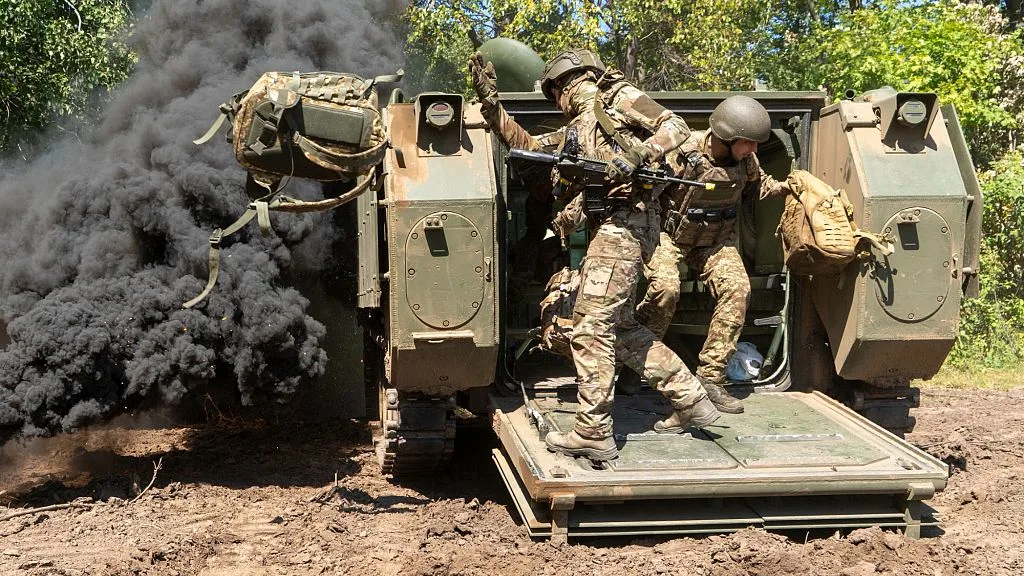
Europe is shaping a strategic shift: on-the-ground training for Ukrainian soldiers as a cornerstone of future security guarantees.
Copenhagen, August 2025
EU High Representative for Foreign Affairs Kaja Kallas reaffirmed strong political backing for extending the mandate of the European Union Military Assistance Mission in support of Ukraine, with the prospect of sending instructors directly into Ukrainian territory if a ceasefire is reached. The support, expressed at the informal meeting of EU defense ministers in Copenhagen, aims not only to consolidate immediate security but also to build a permanent training structure serving as a safeguard against renewed aggression.
Since November 2022, more than eighty thousand Ukrainian soldiers have been trained on European soil under the coordination of this mission. The proposal currently under review foresees that, once hostilities cease, instructors could be deployed inside the country to provide training. Such a move would require unanimity among the twenty-seven member states and Norway, underscoring the political complexity behind each step of the EU’s common security and defense policy.
Strategic divergences remain among European capitals. While some governments favor an immediate extension of the mandate to be triggered once a truce is declared, others believe it is more prudent to wait until Kyiv demonstrates it is ready to host trainers in a still-volatile context. This difference in pace reflects both concern for the safety of European personnel and internal tensions about the level of commitment the Union is willing to assume.
Resources already mobilized highlight the scale of Europe’s engagement. According to European institutions, military assistance provided by the Union and its member states has already exceeded sixty billion euros since the war began, with twenty-five billion delivered over the past year. Within this framework, the training mission is seen as a vital instrument to maintain political cohesion and reinforce the credibility of EU institutions.
The debate also touches upon broader issues regarding the continent’s security architecture. Training soldiers inside Ukrainian territory would not only carry symbolic value but also entail operational challenges: transportation logistics, force protection in potentially unstable regions, and the coordination of secure corridors. Such deployment requires balancing political will with real protection capacities, especially if a ceasefire proves fragile.
Diplomatic voices note that this step could send a clear message to Moscow about Europe’s determination to sustain Ukraine beyond financial aid or weapons deliveries. On-the-ground training would be a long-term commitment, difficult to reverse without significant political costs. Yet analysts caution that the move could also be interpreted as deeper involvement in the conflict, with the associated risk of escalation.
The position of the United States adds another layer. Washington has consistently supported Ukraine’s military training, and a European move to relocate instructors into the country could generate synergies with Pentagon-led programs. At the same time, strategic circles in Asia view this initiative as a precedent of military cooperation that might later be replicated elsewhere, reinforcing NATO’s role in hybrid scenarios.
If the mandate is extended by consensus, the mission could become the backbone of a stronger European presence in Ukraine’s defense. Conversely, a disruption such as renewed hostilities could derail the plan before it takes shape. In a bifurcation scenario, direct U.S. or allied involvement in training operations would reshape the EU’s role in regional security altogether.
Truth is structure, not noise.