

 Phoenix 24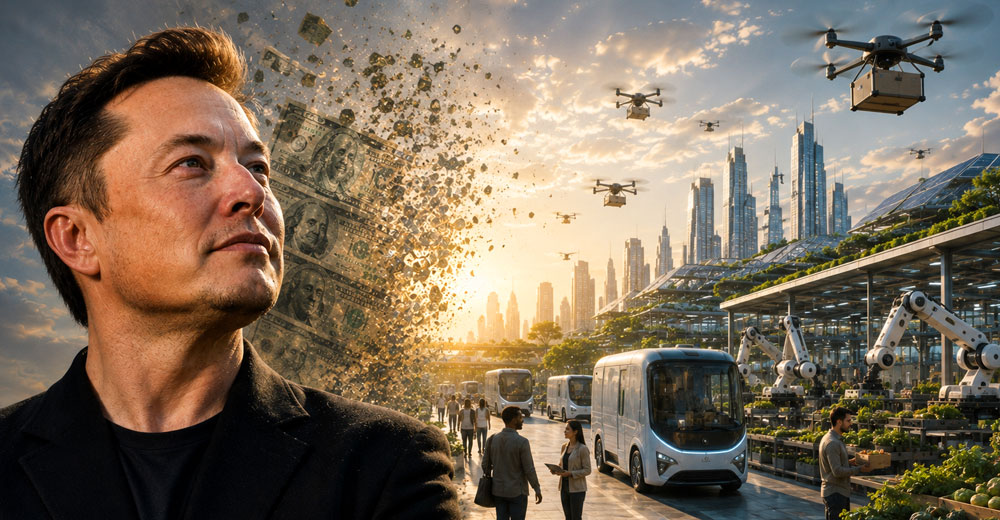
The ability to ask better questions may become more valuable than memorizing answers.
San Francisco
Elon Musk has advised children and young people to pursue the broadest education possible as artificial intelligence and robotics transform the skills demanded by society. Rather than concentrating exclusively on programming or engineering, he recommends combining science and technology with the arts, humanities and a strong base of general knowledge.
His argument centers on a changing relationship between humans and information. As artificial intelligence becomes increasingly capable of retrieving data, generating explanations and solving technical problems, simply possessing information may become less distinctive. Musk argues that the ability to understand different domains and formulate meaningful questions could become considerably more important.

That perspective challenges the assumption that technological disruption should push education toward ever narrower specialization. Musk specifically encourages students to study arts, sciences and engineering while maintaining intellectual curiosity across disciplines. In his view, broader knowledge improves the capacity to recognize connections, evaluate AI generated answers and determine which questions are worth asking in the first place.
The recommendation emerges alongside his expansive expectations for robotics. Musk has repeatedly predicted that humanoid robots could eventually become extraordinarily numerous and perform activities ranging from industrial work to elder care, childcare and individualized tutoring. If such systems become widespread, young people entering the labor market could face an environment in which machines perform both physical and cognitive tasks that previously required human workers.
Education would then need to develop capabilities that complement rather than merely reproduce automated intelligence. Critical judgment, interdisciplinary thinking, creativity, context and the ability to distinguish a useful answer from a superficially convincing one could become increasingly valuable.

His position also contains an important educational paradox. AI can provide access to extraordinary amounts of knowledge, but that accessibility may make foundational human knowledge more, not less, important. Without sufficient understanding of history, science, culture or mathematics, users may struggle to evaluate whether an automated response is accurate, incomplete or misleading.
Musk’s advice therefore points toward a model of education based less on competing with machines in information retrieval and more on developing the intellectual architecture needed to direct them.
In an era of increasingly capable artificial intelligence, the competitive advantage of the human learner may begin with something surprisingly traditional: knowing enough about the world to ask the right question.
Phoenix24: clarity in the grey zone.