

 Phoenix 24
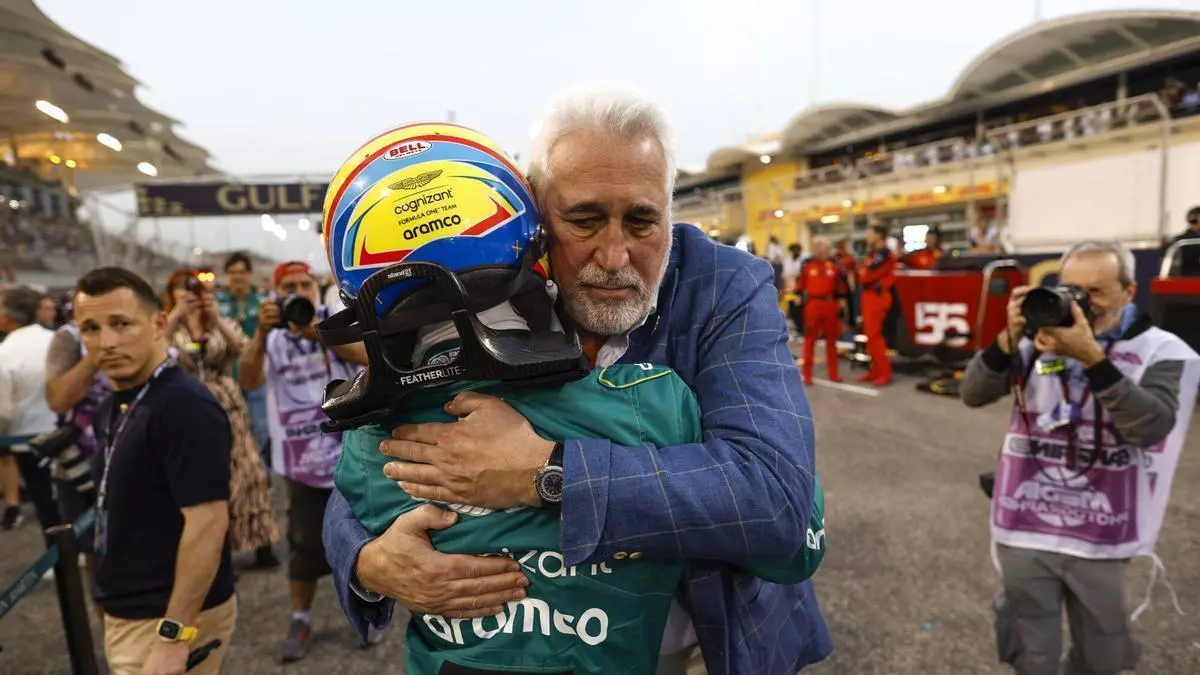
Money builds teams, but not certainty.
Silverstone, March 2026
Bernie Ecclestone’s blunt message about Aston Martin lands with force because it cuts through the glamour of Formula 1’s biggest rebuild and goes straight to the sport’s oldest truth: capital can accelerate a project, but it cannot purchase timing, convergence and competitive destiny on command. Spanish motorsport coverage summarized his point in stark terms directed at Lawrence Stroll, arguing that even enormous investment does not guarantee a world title. The comment is vintage Ecclestone in style, but it is also strategically relevant because Aston Martin now represents one of the clearest tests of whether modern F1 can still be engineered into contention through concentrated spending, elite recruitment and infrastructure scale.
The warning arrives at a moment when Aston Martin’s public story is split between long term promise and short term fragility. Recent reporting around the 2026 cycle has highlighted doubts about performance and reliability in early preparation, even as the team’s internal and external messaging remains anchored in future upside. That tension is not unusual in a regulation reset, but Aston Martin carries a different burden because its project has been marketed for years as a deliberate march toward championship contention. When a team presents itself as a strategic transformation rather than a gradual midfield climb, every delay looks less like development and more like underdelivery.
Ecclestone’s remark also resonates because the 2026 rules intensify exactly the variables he distrusts. The new regulatory era increases the centrality of hybrid energy management, deployment strategy and system integration, which critics fear could make race outcomes feel more dependent on engineering orchestration than pure driver expression. He has already publicly framed the coming cycle as a possible drift away from a drivers’ championship identity and toward a more technical contest. Whether one agrees or not, that criticism intersects directly with Aston Martin’s bet, because the team is investing heavily in technical architecture, not just drivers or branding. In other words, the rules amplify the importance of the very domain Ecclestone thinks can distort the essence of the sport.
That is where Lawrence Stroll’s project becomes more than a team story. It is a governance model for high cost sporting ambition. Aston Martin has built a competitive narrative around top tier recruitment, advanced facilities and a multi year technical reset, while also navigating pressure around the carmaker’s finances and broader corporate strategy. Financial reporting in recent days has underlined continued losses and debt pressures at Aston Martin Lagonda, even as company leadership insists Stroll remains committed and rejects the idea that recent transactions linked to F1 branding rights signal an exit plan. The overlap between the road car business and the racing identity makes every F1 result carry reputational weight far beyond the paddock.
The personnel side of the equation explains why expectations remain high despite the warning. Aston Martin’s 2026 program is tied to the Honda works partnership and the technical influence of Adrian Newey, a combination that has been framed across the sport as a potential inflection point. Honda has publicly presented the AMR26 launch as the beginning of a new works era collaboration, and Aston Martin itself has leaned into a by design narrative for the new cycle. This is not cosmetic messaging. It is an attempt to define the team as a system builder entering a favorable rule change with rare alignment between power unit, design leadership and ownership intent. Ecclestone’s intervention matters precisely because it challenges the assumption that alignment automatically converts into titles.
There is a deeper political layer inside the remark as well. Ecclestone is not only commenting on Aston Martin’s prospects, he is policing the mythology of F1 success. His line about not buying a title protects an older hierarchy of legitimacy in which championships must emerge from a harder mixture of instinct, continuity, driver quality and competitive maturity. In that framing, Aston Martin’s spending and ambition are not disqualifying, but they are insufficient. The subtext is clear: modern F1 still punishes impatience, even when impatience is disguised as strategic investment. That message will appeal to traditionalists who worry the category increasingly rewards capital concentration over sporting narrative.
For Aston Martin, the risk is not that Ecclestone is definitively right on performance. It is that he may be right on perception. If the team stumbles early in the 2026 era, the story will quickly harden into a familiar one about a billionaire backed project that bought prestige, recruited stars and still failed to crack the final layer of competitive execution. If it succeeds, the same comment will be recast as the last useful insult before lift off. Either way, his intervention has already done something important in media terms: it has reframed the Aston Martin project from a technical build to a legitimacy test.
What makes the episode significant beyond motorsport gossip is the pattern it reveals. Formula 1 is entering a regulatory period where engineering complexity, energy strategy and institutional scale are becoming even more decisive, while fans and former power brokers keep demanding that the sport remain legible as a contest of human edge. Aston Martin sits directly at that intersection. Ecclestone’s warning, then, is not merely about one team owner. It is about whether the next champions will be accepted as architects of a new era or dismissed as proof that the sport has become too expensive, too technical and too curated to feel earned in the old way.
La verdad es estructura, no ruido. / Truth is structure, not noise.