

 Phoenix 24
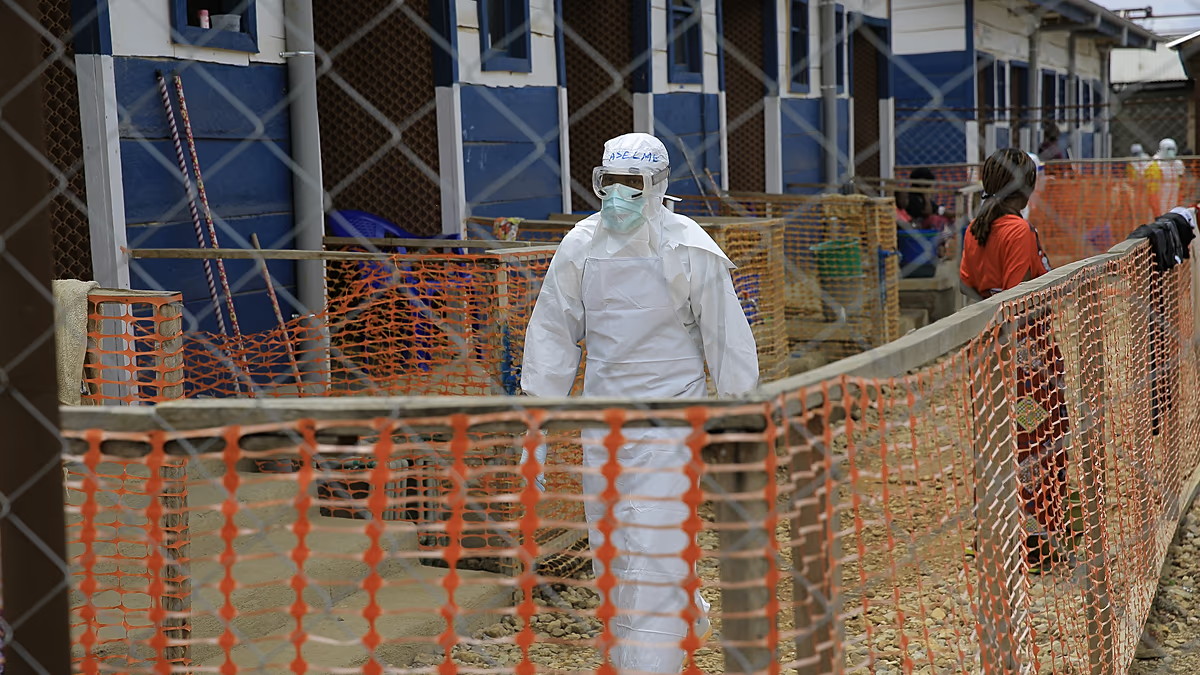
KINSHASA, DEMOCRATIC REPUBLIC OF THE CONGO — November 2, 2026. Africa’s worsening Ebola outbreak has claimed nearly 5,400 lives, according to figures released Monday by the Africa Centres for Disease Control and Prevention (Africa CDC), underscoring the severity of a public health emergency that has spread beyond the Democratic Republic of the Congo (DRC). The agency reported 5,376 deaths across the continent, including 5,372 in the DRC and two each in Kenya and Uganda. The epidemic, caused by the relatively uncommon Bundibugyo virus, has infected more than 10,000 people since emerging in May, placing extraordinary pressure on healthcare systems already weakened by insecurity, displacement and limited medical resources.
The outbreak has become the second-deadliest Ebola epidemic on record, surpassed only by the devastating West African crisis of 2014–2016. Its geographic expansion has also raised international concern, with confirmed infections reported in Kenya and Nigeria and earlier transmission documented in Uganda. The World Health Organization (WHO) declared the emergency a Public Health Emergency of International Concern in May, recognizing the severity of the situation and the risk of further cross-border transmission. Nevertheless, the organization has distinguished this designation from a pandemic emergency, emphasizing the importance of proportionate public health responses.
The latest mortality figures require careful interpretation because reporting systems are still being reconciled. Although Africa CDC provided the continental total of 5,376 deaths on November 2, the Congolese Ministry of Health’s official situation report dated October 31 recorded 10,467 confirmed cases and 5,103 confirmed deaths within the DRC. That report calculated a case fatality ratio of 48.8%, while the higher figure attributed to Africa CDC suggests a different reporting total. The precise reason for the discrepancy has not been publicly established, making it essential to distinguish figures by reporting authority and date rather than present them as interchangeable.
Eastern Congo remains the epidemic’s principal center. The October 31 national surveillance report identified Ituri as the most severely affected province, with 7,412 confirmed infections and 3,483 deaths. North Kivu followed with 2,479 cases and 1,382 deaths, while Haut-Uélé registered 460 infections and 204 fatalities. In total, the outbreak had affected 67 health zones across eight provinces, demonstrating that transmission remains geographically extensive despite efforts to strengthen surveillance and treatment services.

The expansion into neighboring countries has complicated containment efforts. Uganda recorded 20 confirmed infections and two deaths before declaring its outbreak over in August. Kenya subsequently reported its first Ebola infections in October, documenting nine cases and two deaths, while Nigeria confirmed an imported case involving a traveler who had previously visited Uganda. These developments illustrate how regional mobility can facilitate the international movement of infectious diseases, although imported cases do not necessarily indicate sustained community transmission in the receiving country.
The Bundibugyo virus presents particular challenges because no vaccine or disease-specific treatment has received regulatory approval for its prevention or treatment. Unlike the better-known Ebola virus associated with the Zaire species, Bundibugyo belongs to a different viral species for which available medical countermeasures remain under investigation. The licensed Ebola vaccine Ervebo has demonstrated effectiveness against the Zaire Ebola virus, but its ability to protect humans against Bundibugyo has not been established. Consequently, WHO guidance recommends its use during the current outbreak only within carefully designed research protocols.
Scientific investigations are advancing despite these uncertainties. A Phase 2/3 vaccine trial known as TUMAINI began in Bunia, Ituri province, on October 23, with researchers evaluating potential protection against Bundibugyo infection. Other vaccine candidates and experimental treatments are also undergoing scientific assessment. However, clinical trials cannot be interpreted as evidence of established effectiveness before their results are evaluated, and immediate outbreak control continues to depend on early diagnosis, isolation, supportive medical care, infection prevention and contact tracing.
The humanitarian environment has made these measures particularly difficult to implement. Armed conflict, population displacement and attacks affecting healthcare operations have restricted access to vulnerable communities in eastern Congo. WHO reports have also highlighted the substantial proportion of patients dying outside treatment centers, suggesting persistent delays in disease detection and access to clinical care. These conditions increase the likelihood that transmission chains will remain undetected, particularly where families and healthcare workers lack adequate protective equipment, reliable transportation or access to functioning medical facilities.
Beyond its immediate consequences, the epidemic exposes structural inequalities in global health preparedness. Countries facing repeated infectious disease emergencies often possess limited laboratory infrastructure, insufficient medical personnel and restricted access to pharmaceutical innovation. Strengthening response capacity therefore requires sustained investment in disease surveillance, healthcare systems, community engagement and scientific research. International cooperation remains essential, particularly when developing vaccines and treatments for pathogens that receive comparatively limited commercial attention.
The WHO has assessed the outbreak’s risk as very high within the DRC and high for neighboring countries sharing its borders, while maintaining a lower risk assessment for the wider international community. It has also advised against generalized travel and trade restrictions, emphasizing targeted surveillance and coordinated preparedness instead. The distinction is important because the severity of an epidemic in affected communities does not automatically imply an equivalent level of risk worldwide.
As the death toll continues rising, the international response faces two interconnected challenges: interrupting transmission through immediate medical and public health interventions, and developing effective preventive technologies against the Bundibugyo virus. The crisis demonstrates how infectious diseases can exploit weaknesses in healthcare infrastructure, particularly where conflict and humanitarian displacement complicate access to essential services. Its lasting significance will depend not only on bringing the current epidemic under control, but also on whether international institutions strengthen the scientific and operational capabilities needed to respond more effectively to future outbreaks.
Phoenix24: Beyond the outbreak, the human consequences. / Más allá del brote, las consecuencias humanas.