

 Phoenix 24
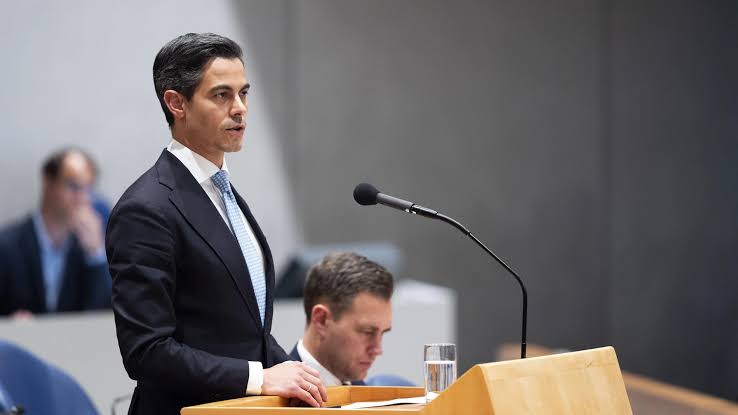
Political divisions threaten the stability of the Netherlands’ minority government.
THE HAGUE, Netherlands. Dutch Prime Minister Rob Jetten is seeking to prevent the collapse of his minority coalition following a parliamentary dispute over tax reforms that has exposed deep disagreements between his centrist party and its conservative governing partners.
The political crisis intensified after lawmakers from Jetten’s Democrats 66 (D66) and the Christian Democratic Appeal (CDA) supported amendments negotiated with two opposition parties, PRO and Volt, during a parliamentary vote on November 12.
The agreement enabled a tax package to pass the lower house but provoked strong objections from the conservative-liberal People’s Party for Freedom and Democracy (VVD), the coalition’s third partner.
At the center of the dispute is a proposed 38.5% tax rate on investment returns exceeding €60,000. The measure has been described by PRO leader Jesse Klaver as a tax targeting millionaires, although its proposed threshold concerns investment income rather than an individual’s total wealth.
VVD leader Dilan Yeşilgöz-Zegerius criticized the agreement, arguing that the coalition partners had moved toward the political left without adequately consulting her party.
The disagreement is particularly significant because the Netherlands is governed by a minority administration that depends on support from parties outside the coalition to secure parliamentary majorities.
Following more than seven hours of negotiations on November 13, Jetten announced that the governing parties would remain together while continuing discussions aimed at restoring cooperation.
However, Yeşilgöz questioned whether the existing arrangement could function effectively, describing the minority-government experiment as unsuccessful and demanding fundamental changes.
Jetten acknowledged that relationships within the coalition had deteriorated and called for a renewed commitment to cooperation.
The prime minister has continued consultations over the weekend, seeking an agreement that would preserve government stability without abandoning the compromises necessary to pass legislation.
The dispute reveals competing approaches to fiscal policy.
Supporters of the proposed changes argue that higher taxation of substantial investment returns could strengthen public finances and distribute the tax burden differently.
Opponents express concern that additional taxation could discourage investment, affect businesses and undermine economic competitiveness.
The legislation has passed the lower house but still requires further parliamentary consideration in the Senate.
The political confrontation comes less than nine months after Jetten assumed office, following a prolonged period of coalition negotiations.
Its implications extend beyond taxation. The dispute raises questions about whether minority governments can maintain consistent policy agendas while negotiating with ideologically diverse parliamentary partners.
Although the coalition has avoided an immediate collapse, its future depends on whether the three governing parties can restore sufficient trust to continue working together.
For the Netherlands, the episode illustrates the increasingly complex relationship between political fragmentation, fiscal decision-making and institutional stability.
Behind Every Decision, a Larger Consequence.