

 Annika Voigt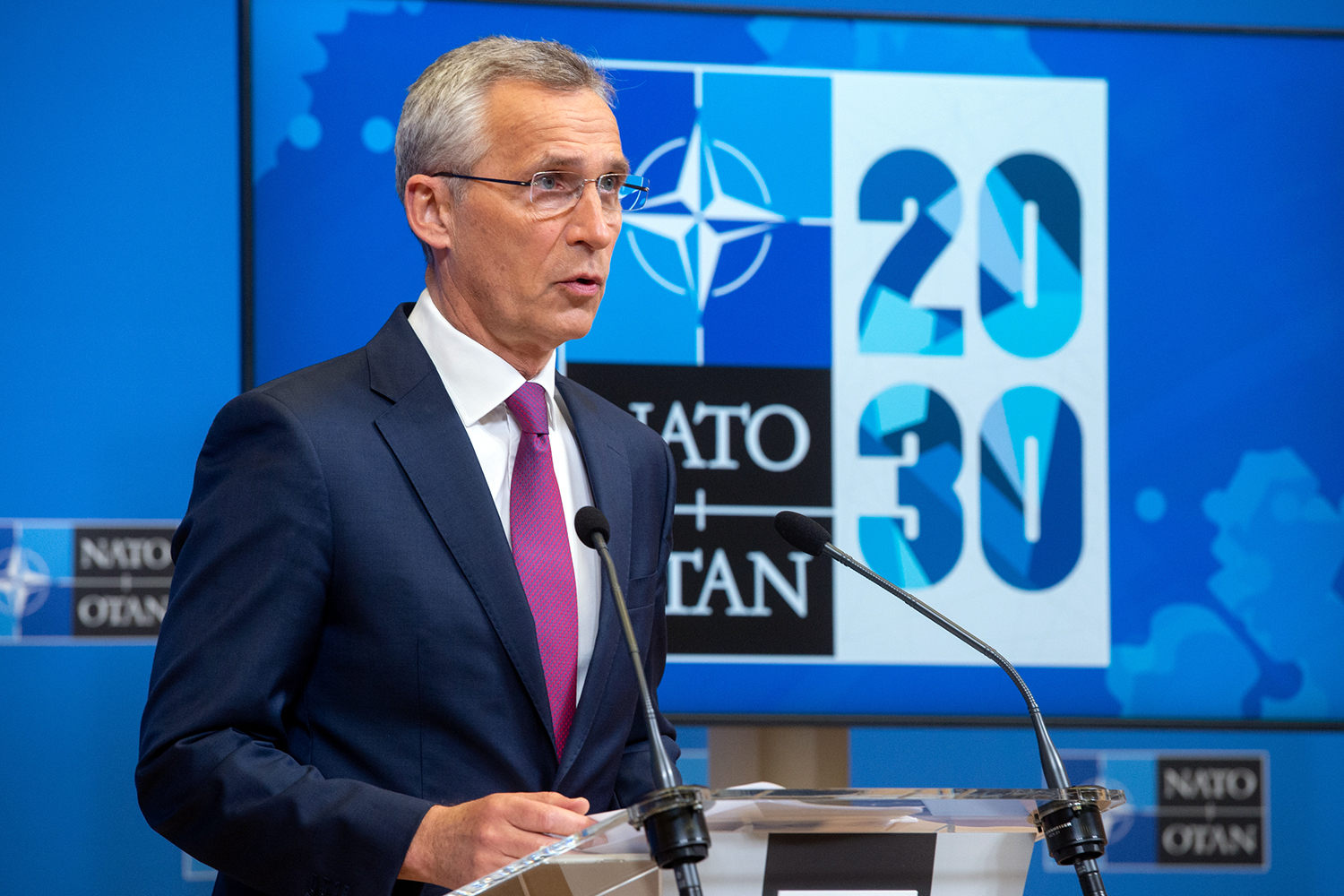
Brussels, August 2025
There are no gunshots, no tanks. Yet capitals tremble. In a continent etched by the trauma of two world wars, Europe has entered a new type of conflict—one not fought in trenches, but through fiber-optic cables, decentralized servers, and security protocols that evolve faster than the laws designed to regulate them.
Cyber defense is no longer a strategic option for the European Union—it is an existential imperative. Following cyberattacks attributed to Russia’s GRU against rail networks in Poland and Germany earlier this year—according to NATO’s Cyber Security Centre in Mons—the Alliance has intensified joint digital response operations, while the EU hastens regulatory efforts under the banner of “technological sovereignty.”
But the most sensitive front is not technical—it’s diplomatic. While NATO’s Cooperative Cyber Defence Centre of Excellence (CCDCOE) in Tallinn leads joint exercises with member states, the true battlefield lies in strategic divergence among allies. Washington favors preemptive action—including digital disruption operations targeting critical Russian and North Korean infrastructure—while Brussels advocates for a defense-oriented posture grounded in International Humanitarian Law adapted to cyberspace.
This doctrinal fault line was exposed during the most recent Brussels Cyber Forum, where French and German delegates pushed for a binding framework on the “non-proliferation of state-sponsored malware,” a proposal met with skepticism from the U.S., the U.K., and Estonia. “The right to respond digitally is embedded in collective defense,” a Lithuanian delegate insisted, invoking Article 5 of the North Atlantic Treaty as a potential umbrella for cyber retaliation.
Beyond doctrine, however, lies a stark asymmetry of capabilities. According to a recent report by the Peterson Institute for International Economics, 65% of NATO’s cyber defense spending remains concentrated in just four countries: the U.S., the U.K., France, and Germany. Meanwhile, southern and eastern European states such as Greece, Bulgaria, and Croatia depend on interoperability agreements and multinational technical support—creating systemic vulnerabilities in the digital defense chain.
Brussels, for its part, is attempting to secure Europe’s digital governance through increasingly sophisticated legislation. The upcoming Cyber Resilience Act (CRA), set to take effect in 2026, will require software and connected device manufacturers to report critical vulnerabilities within 24 hours and maintain mandatory update protocols for at least five years. Yet experts consulted by Phoenix24 warn that while this framework appears strong on paper, it lacks real-time audit mechanisms to counter advanced persistent threats (APTs) linked to state actors.
Meanwhile, Russia and China are watching—not passively, but strategically. Moscow has reinforced its cyber cooperation with Minsk and Tehran, while China’s Ministry of State Security (MSS) is reportedly training cadres in digital hybrid warfare, according to cross-referenced intelligence from Stratfor and Citizen Lab. Both axes operate through a “proxy war” logic in cyberspace, exploiting legal vacuums and the fragmented regulatory landscape of the West.
In this context, NATO’s role is being redefined—not merely as a military shield, but as an invisible infrastructure of civilian protection in times of deceptive peace. The recent launch of the European Cyber Rapid Reaction Team (ECRRT)—with rotating headquarters in Vilnius, Bucharest, and Prague—marks a strategic shift: to respond within 60 minutes to confirmed attacks on banks, hospitals, or electrical grids.
Yet not all actors play by the rules. Front organizations disguised as tech foundations, “auditing” software firms, and NGOs promoting “digital freedom” increasingly function as parallel nodes of surveillance or intervention. A recent study by the European Journalism Centre, in which this author participated, documented at least 27 entities with opaque ties to defense contractors, operating through mixed funding schemes based in Luxembourg, Cyprus, and Delaware.
Europe’s silent war has already begun—and it does not wait for formal declarations. Citizens may not feel they are under attack simply because they cannot hear the hits. But the silence itself may be the anesthesia of a highly advanced conflict waged without uniforms. If Europe is to survive this era of digital disruption without becoming a technological colony of external powers, it must reconfigure not only its hardware but its very architecture of sovereignty.
Because in this new battleground, those who fail to update their firewalls may soon find themselves forced to redraw their borders.
Annika Voigt, investigative journalist and European affairs analyst at Phoenix24, during a special field report on cyber defense in Brussels. Known for her ethical rigor and analytical precision, Voigt reports from the institutional heart of the European Union on the tensions between digital security, regulatory diplomacy, and technological governance.