

 Phoenix 24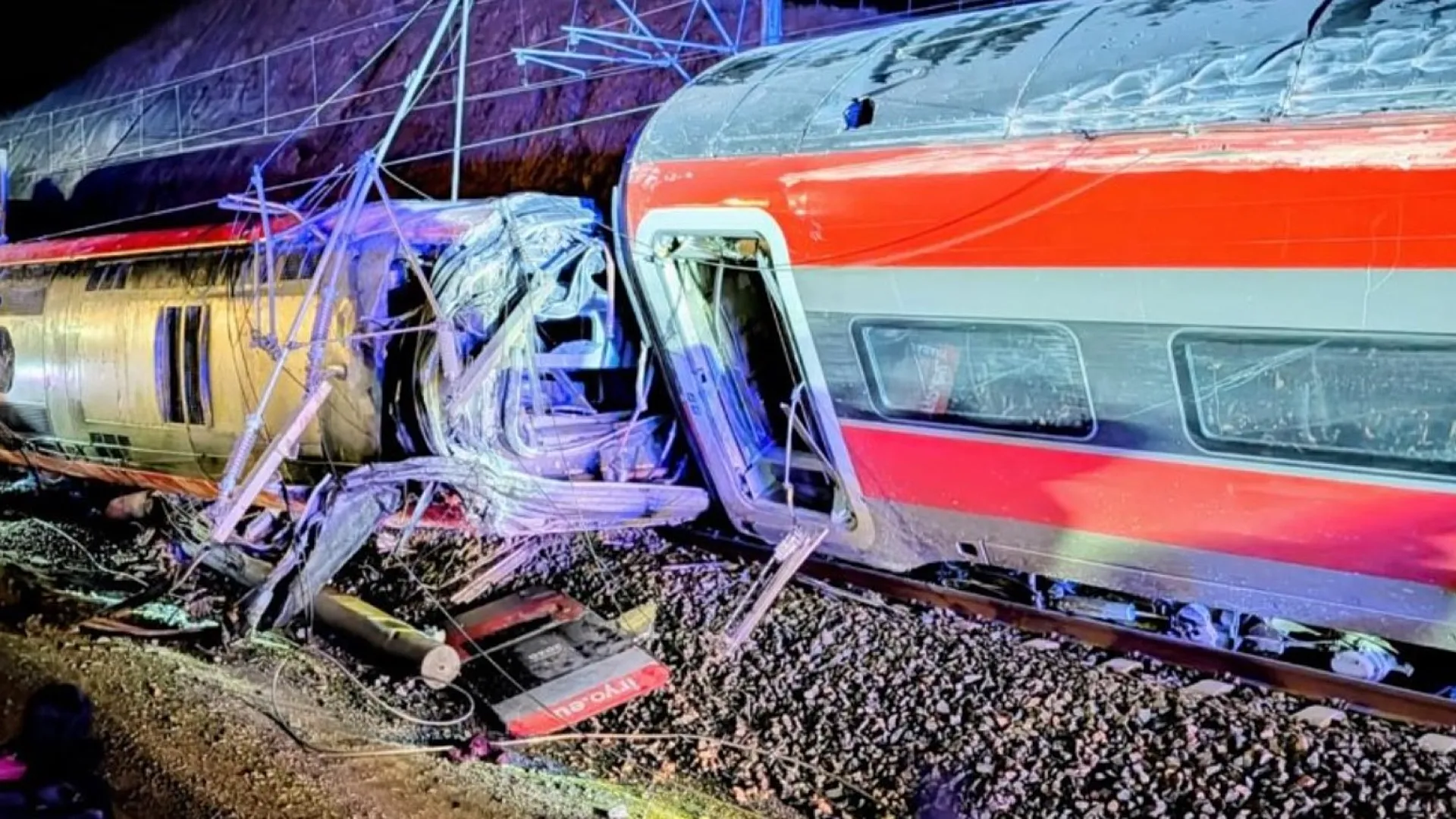
Control is assumed, until it breaks.
Adamuz, January 2026.
The night fractured without warning in the countryside of Córdoba when a high speed train operated by Iryo derailed near Adamuz, crossed into the opposite track and collided with an Alvia train heading toward Huelva. What followed was not just a crash but a collapse of certainty. Preliminary figures released by Spanish emergency services spoke of at least twenty people killed and around one hundred injured, many of them in serious condition. The numbers shifted as rescue teams worked through twisted metal and overturned cars, a reminder that in large scale disasters, statistics arrive late and pain arrives first.
According to Euronews, the Iryo convoy had left Málaga bound for Madrid and was carrying several hundred passengers. Near Córdoba, it left the rails and slid into the adjacent track just as the Alvia train approached from the opposite direction. The impact derailed the second train as well. Some cars tipped onto their sides, others compressed into shapes that barely resembled rail vehicles. Inside, luggage became projectiles and corridors became traps. Survivors described the sensation not as a crash but as an earthquake, a sudden violence that turned routine travel into chaos.
Emergency response unfolded through the night. Firefighters, medical teams, police units and the military emergency service were deployed to extract the trapped and stabilize the wounded. Windows were broken from the inside to create escape routes. Stretchers moved through narrow gaps between crushed cars. Lighting rigs were installed to fight the darkness. Associated Press reported that hospitals across the region activated mass casualty protocols, receiving patients with fractures, internal injuries and severe trauma, while psychologists were sent to attend those whose bodies survived but whose minds were still inside the wreck.
The rail network reacted as a system under shock. Adif suspended traffic between Madrid and Andalusia, paralyzing one of Spain’s busiest corridors. Renfe and Iryo announced refunds, route changes and special assistance points in major stations. Families gathered around phones and screens, searching for names, waiting for calls, clinging to fragments of information. Hotlines were opened, not just to give data but to absorb panic. In crises like this, information itself becomes a form of first aid.
Political leaders issued statements of solidarity, but the real test lies beyond condolences. High speed rail is not merely transport; it is a symbol of state capacity and technological promise. When it fails, the damage is not only physical but institutional. Reuters reported that investigators began examining signaling systems, track conditions, train speed and operational protocols to determine how a single derailment could evolve into a head on collision. Modern rail systems are built on the principle of layered safety. One error should be caught by another barrier. A tragedy of this scale implies that more than one barrier failed.
Inside the technical language of rail safety, there are quiet questions that carry enormous weight. Why did the first train leave the track. What data did control centers receive in the seconds that followed. Was there time to stop the second train, or was the window too small. These are not abstract puzzles. Each answer redraws the boundary between accident and negligence.
For passengers, the experience has already redrawn personal boundaries. Many described moments of silence after the impact, followed by screams, smoke and the smell of metal. Some helped strangers climb through shattered windows. Others waited in darkness, pinned by debris, listening to voices fade as rescuers worked toward them. Trauma does not end when the ambulance doors close. It lingers in memory, in sound, in the reflex to tense when a train accelerates.
Spain has lived through rail disasters before, and each one leaves behind not only victims but reforms, inquiries and promises. The credibility of the system now depends on transparency. Vague explanations or premature certainty would only deepen distrust. Euronews emphasized that authorities urged patience while evidence is collected, but patience must be matched with rigor. A public that boards trains every day needs more than empathy. It needs proof that lessons will be learned in steel, software and protocol.
The economic ripple is also real. The Madrid Andalusia corridor is a commercial artery. Its closure disrupted business travel, tourism and logistics. Hotels filled with stranded travelers. Freight schedules shifted. Every hour of suspension translated into financial loss, but those numbers, unlike casualty figures, can be calculated precisely. They will appear later in reports, budgets and insurance claims, silent companions to the human cost.
Beyond Spain, the incident resonates across Europe, where high speed rail is promoted as the clean, efficient future of mobility. Systems in France, Germany, Italy and beyond will quietly review their own procedures, because accidents travel faster than trains. A failure in one network becomes a warning in another. Safety cultures are international, even when tracks are national.
What remains most fragile is trust. Travelers step into high speed trains believing in invisible systems: signals, algorithms, engineers, maintenance crews, control rooms. They rarely think about them, which is precisely the point. Safety works best when it is boring. This night in Córdoba was not boring. It was loud, violent and unforgettable.
As investigations move forward, every detail will matter, from the condition of a single rail segment to the decision made in a control center miles away. But beyond the technical narrative lies a human one: families who will never receive a final message, passengers who will measure time from this night forward, workers who must carry the memory of what they saw while doing their jobs tomorrow.
High speed rail sells the idea of mastery over distance. The crash in Adamuz reminded everyone of something older and harder: mastery is never complete. Technology reduces risk, it does not erase it. What societies owe their citizens is not the illusion of perfection but the discipline to confront failure honestly and rebuild safety where it broke.
“Cada silencio habla. / Every silence speaks.”