

 Phoenix 24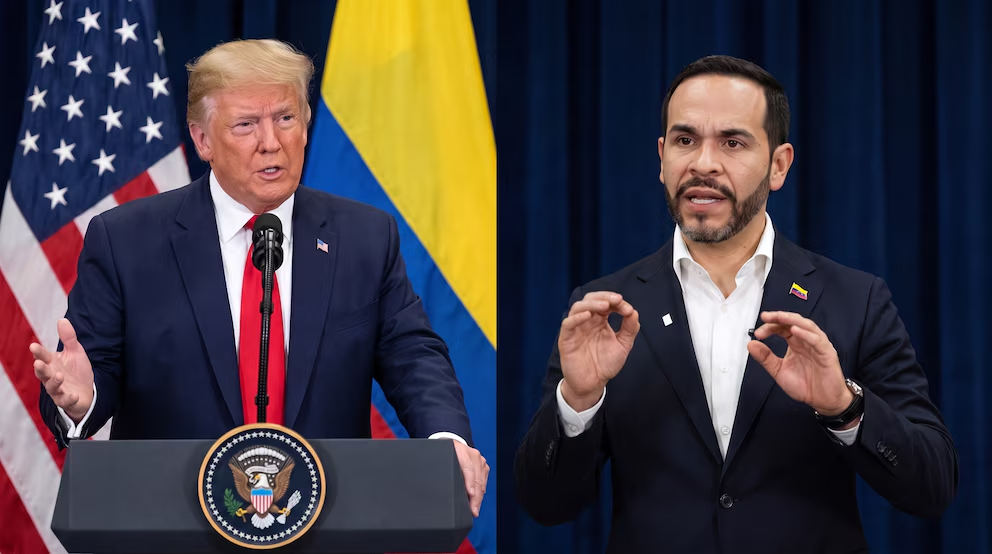
President Abelardo de la Espriella has appealed to Washington for temporary trade relief, arguing that tariffs on Colombian exports could deepen the economic consequences of the country’s deadliest natural disaster in years.
BOGOTÁ, COLOMBIA | POLITICS & ECONOMY | AUGUST 2026
Colombian President Abelardo de la Espriella asked United States President Donald Trump to suspend tariffs on Colombian products as the country confronts the humanitarian and economic devastation caused by the August 10 earthquake.
The appeal follows the magnitude 7.4 quake that struck southwestern Colombia, severely affecting Valle del Cauca, Risaralda, Chocó and Caldas. Hundreds of people have died, thousands have been injured and rescue teams continue searching for residents reported missing beneath collapsed structures.
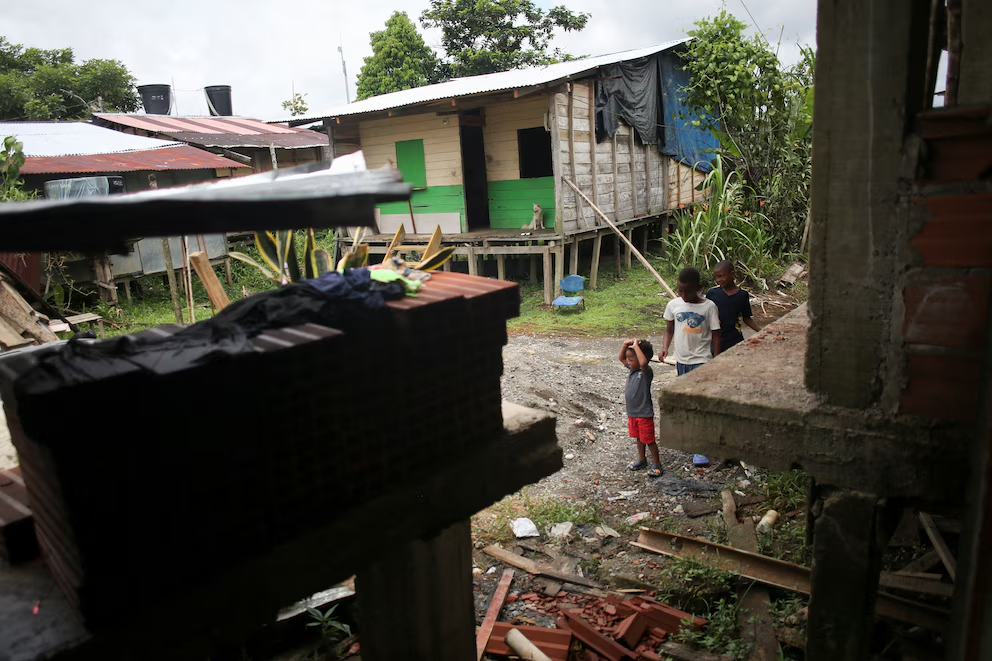
De la Espriella argued that maintaining trade restrictions during the emergency could further damage agricultural producers, manufacturers and exporters already facing disrupted transportation networks, damaged infrastructure and declining regional economic activity.
The United States imposed a 12.5% tariff on several Colombian imports in July, replacing an earlier temporary rate of 10%. The measure particularly affects products that previously entered the US market without duties under the bilateral free-trade agreement.
Among the sectors exposed are flowers, processed coffee, sugar, textiles, clothing, footwear and certain food products. Many of these industries support thousands of jobs in rural and urban communities now confronting the additional pressures created by the disaster.
The Colombian president framed the request as a humanitarian measure rather than a permanent renegotiation of commercial policy. Suspending the tariffs, his government maintains, would protect employment, preserve export revenue and provide businesses with greater capacity to participate in national reconstruction.
The appeal also tests the political relationship between De la Espriella and Trump. Both administrations have moved toward closer cooperation on regional security, counternarcotics operations and the fight against armed groups, creating expectations in Bogotá that the strategic alignment could produce economic concessions.
Washington, however, has linked its tariff policy to concerns about enforcement against goods associated with forced labor and other practices it considers harmful to American commerce. Any exemption could therefore require negotiations with the Office of the US Trade Representative and commitments regarding supply-chain oversight.
For Colombia, the urgency extends beyond bilateral diplomacy. Damage to roads, hospitals, homes and commercial infrastructure will require substantial public resources, while affected companies face interrupted production and difficulties transporting goods to domestic and international markets.
Temporarily lifting the tariffs would not resolve the country’s reconstruction challenges, but it could provide immediate relief to export-dependent industries and send a political signal that economic pressure can be adjusted in response to an extraordinary humanitarian crisis.
De la Espriella’s request now places the decision in Washington’s hands: whether to preserve the tariff as an instrument of trade policy or suspend it in recognition of a disaster that has transformed Colombia’s economic priorities almost overnight.
Análisis que trasciende al poder. / Analysis that transcends power.